
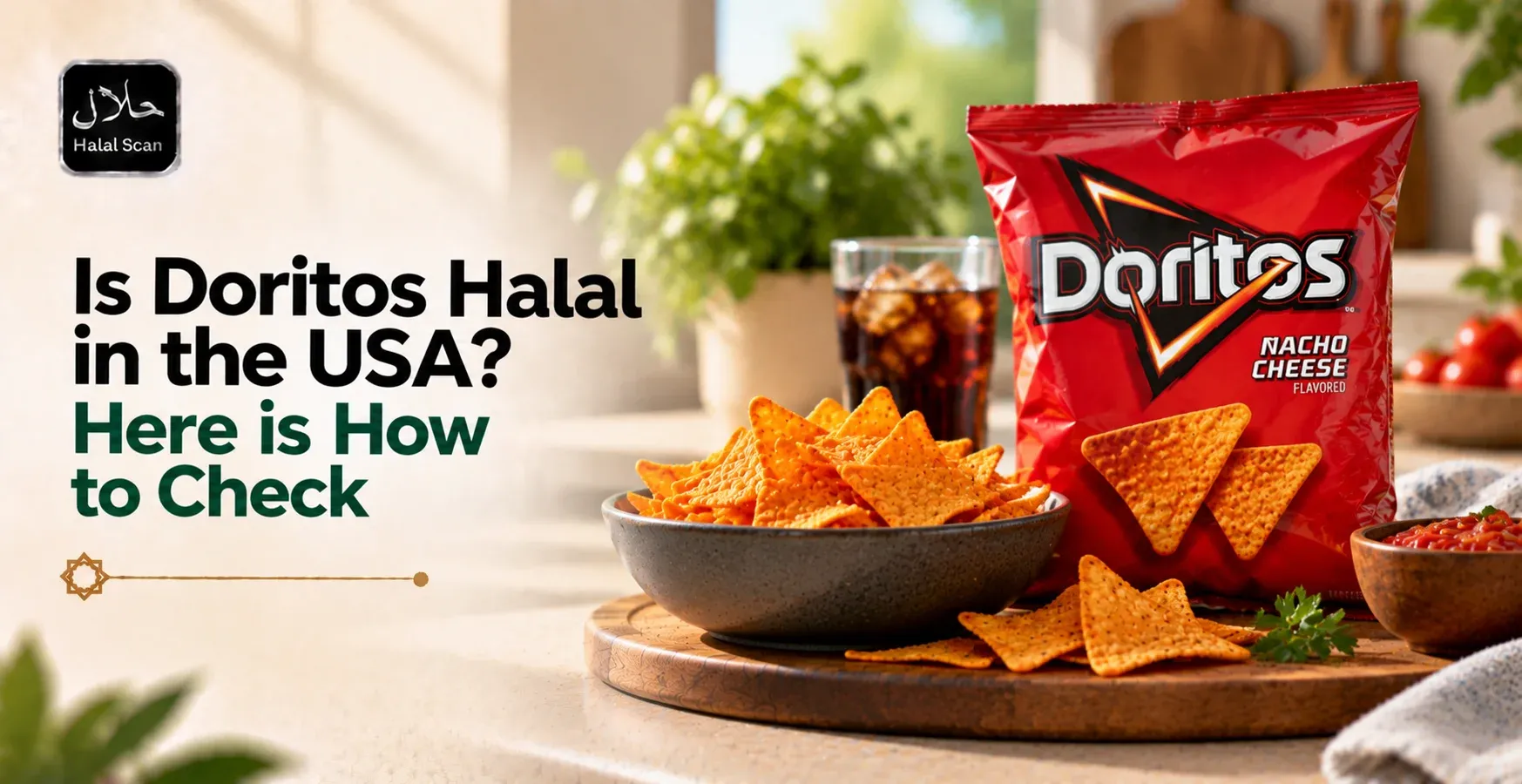
Without official halal certification from recognized bodies like the Islamic Food and Nutrition Council of America (IFANCA), the halal status of Doritos in the USA depends entirely on the specific flavor and its manufacturing date. Many popular US Doritos flavors contain animal-derived enzymes (rennet) or whey, placing them in the Doubtful (mashbooh) or Non-Halal category. Because regional recipes change without warning on the packaging, relying on static online lists carries a spiritual risk.
To know the exact status of the bag in your hand, you must verify its barcode against a current database.
Frito-Lay North America does not produce a certified halal line for its core snack brands. While some Muslim shoppers in the US look for the Kosher dairy (U or Triangle-D) symbol on the back of the bag as a baseline, this does not guarantee halal compliance. Kosher standards allow for certain alcohol-based flavorings that many Islamic scholars consider mashbooh or impermissible.
What Makes Certain Tortilla Chips Doubtful?
When you ask what chips are halal in the American market, the answer usually comes down to the seasoning dust. Plain tortilla chips made strictly with corn, vegetable oil, and salt rarely present an issue. The complications arise when brands add complex flavor profiles.
Two specific ingredients consistently push US tortilla chips into the Doubtful or Non-Halal categories:
Animal Enzymes (Rennet): Cheese-flavored snacks, including the classic red Nacho Cheese Doritos bags, require cheese cultures. In the United States, Frito-Lay confirms on its official US dietary needs page that it uses animal enzymes (porcine or bovine) in many of its cheese seasonings. If a label just says "enzymes" under the cheese ingredients, the source is ambiguous.
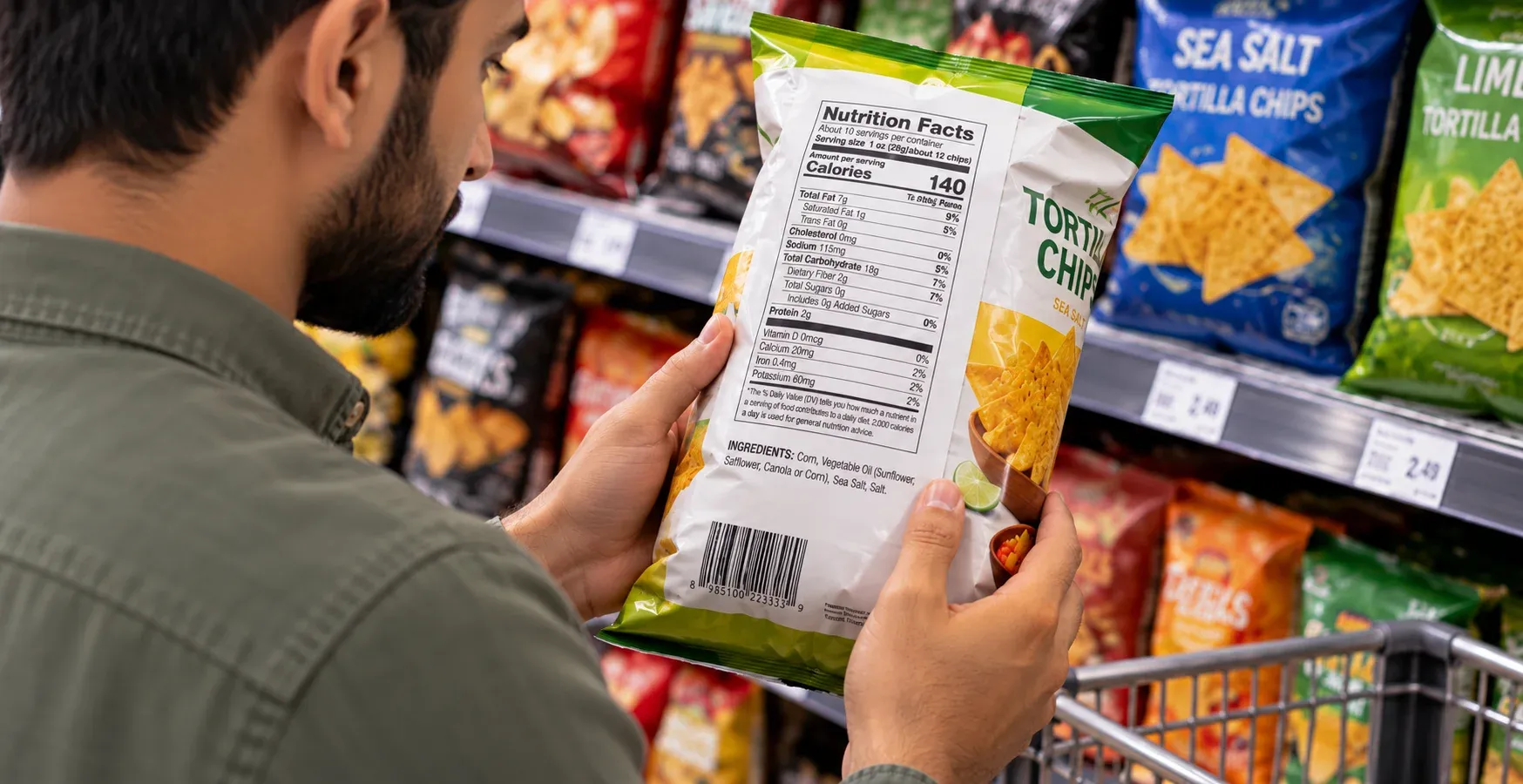
Whey and Natural Flavors: Whey is a byproduct of cheese making. If the original cheese was made using animal rennet, the resulting whey is contaminated. US FDA food labeling regulations also allow companies to hide complex extracts under the umbrella term "natural flavors." These can include animal derivatives or alcohol used as a carrier solvent.
Is Lays Halal in the USA?
The same manufacturing realities apply across the Frito-Lay portfolio. Are Lays halal in the USA? Classic salted Lays contain only potatoes, vegetable oil, and salt, making them generally permissible. However, flavored varieties like Barbecue or Sour Cream & Onion carry the exact same risks regarding doubtful whey powder, animal enzymes, and ambiguous natural flavorings.
Because Frito-Lay operates multiple manufacturing plants across North America, a specific flavor might use a plant-based enzyme in one state and an animal-derived enzyme in another. This is why reading the label—or using a verification tool—is a daily reality for the American Muslim shopper.
Rather than memorizing complex chemical breakdowns for every snack aisle, you can scan the barcode and get the result for the specific product in your hand. Halal Scanner is free to download with premium via subscription on iOS and Android.
How to Check This With Halal Scanner
Instead of standing in the aisle searching Google for outdated forum posts, you can verify the exact bag you want to buy. Here are practical ways to check your snacks, including how to use the Halal Scanner app:
- Check for plain ingredients first: Turn the bag around. If the ingredients are just corn, oil, and salt, the risk is incredibly low.
- Look for the Kosher symbol: A Kosher certification is a helpful filter for pork derivatives, though you still need to be aware of potential alcohol-based carriers in "natural flavors."
- Open Halal Scanner: Tap the camera icon and point it at the product's barcode.
- Read the result: The app instantly checks the exact item against its database. It returns a clear classification: Halal, Doubtful, or Non-Halal.
- Add to a shared list: If the item clears the check, you can add it to a shared household shopping list right in the app. One person builds the list; another shops from it later.
The scan takes less time than reading the label. Tap the App Store or Google Play link to download.
Built for the Daily Shop
Halal Scanner draws on verified halal sources across 50+ countries to classify products. With over 1 million verified products in the database and 100,000+ daily scans from our community of 500,000+ trusted users, the app removes the uncertainty from your grocery run.
You no longer have to guess what "enzymes" means on a bag of chips. You get a direct, immediate answer based on current food science and verified data.
Shop With Confidence
Uncertainty in the snack aisle does not have to be a permanent frustration. By checking your exact items at the point of purchase, you protect your family and your deen. Download Halal Scanner on the App Store or Google Play and check your next bag in seconds.