

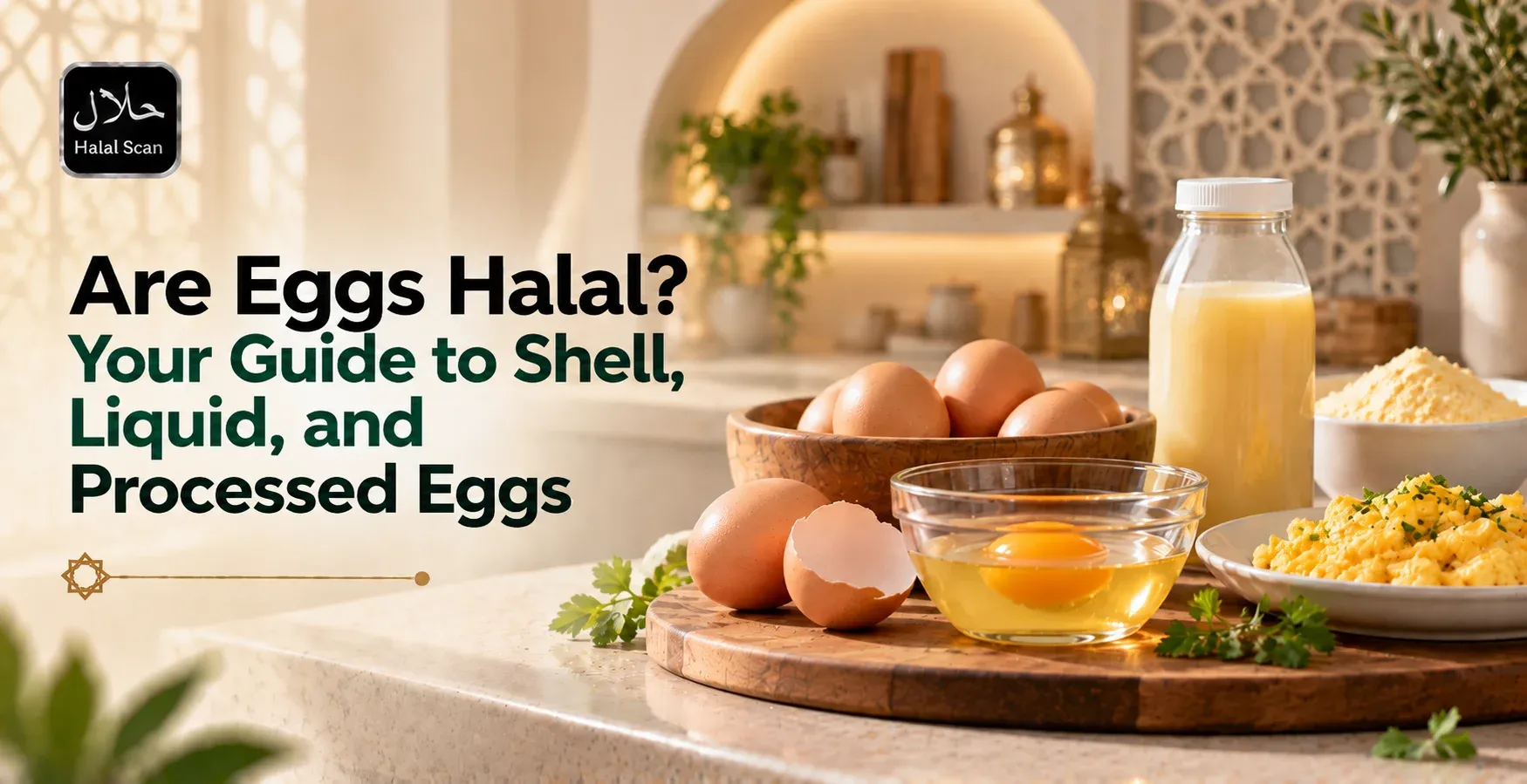
Yes, eggs from halal birds such as chickens, ducks, and quails are universally halal to consume. Because an egg is not meat, it does not require zabiha (Islamic slaughter) certification. You can buy standard shell eggs from any local grocery store without checking for a halal logo.
However, modern grocery shopping is rarely that simple. While a raw egg in its shell is straightforward, finding a blood spot on the yolk raises fiqh questions, and buying processed liquid or powdered eggs introduces hidden additives that require careful label reading.
Here is exactly how to handle eggs and egg-based products in your weekly shop.
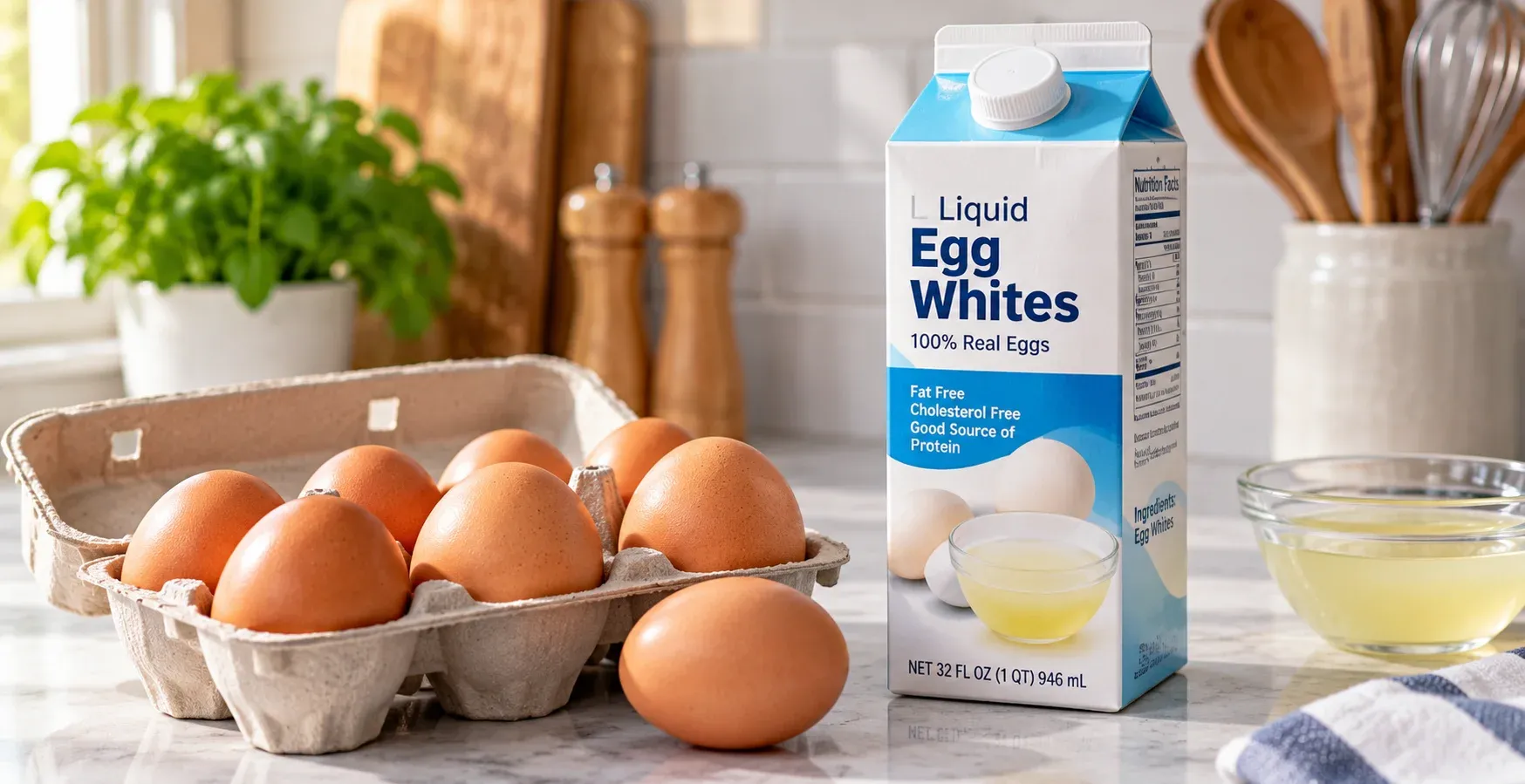
The Raw Egg: No Zabiha Required
The baseline rule in Islamic dietary law is that anything produced by a halal, living animal is permissible to eat. Milk from a cow is halal. Honey from a bee is halal. Eggs from a chicken are halal.
You do not need to seek out "halal-certified" shell eggs. The method of slaughter applies only to the meat of the animal, not its by-products while alive. According to fundamental Muslim dietary restrictions, plant-based foods and live animal by-products are broadly permissible unless contaminated by a haram substance.
What If You Find a Blood Spot?
This is the most common concern when cracking an egg for breakfast. Consuming flowing blood is haram, which leads many shoppers to wonder if a blood spot ruins the whole egg.
According to major Islamic councils, including guidance from MUIS (Majlis Ugama Islam Singapura), a small blood spot in a commercially farmed unfertilized egg does not make the egg haram. These spots are simply ruptured blood vessels that occurred during the egg's formation.
What to do: You can simply spoon out the blood spot and consume the rest of the egg. If the blood has completely mixed into the yolk and white, making it impossible to separate, scholars generally advise discarding the egg to avoid consuming the blood.
Does the Chicken's Diet Matter?
Some egg cartons are marketed as "vegetarian-fed," while others come from chickens fed a standard commercial diet, which can include animal by-products.
In Islamic fiqh, an animal that primarily consumes filth or haram substances is classified as jalalah. Consuming the meat or eggs of a jalalah animal is prohibited until the animal is quarantined and fed a pure diet. However, modern commercial chicken feed—even if it contains some animal protein—does not generally reach the threshold to classify the flock as jalalah. Major halal certification bodies agree that standard commercial eggs remain halal regardless of the feed, though many families prefer vegetarian-fed eggs for added peace of mind.
Egg Products Halal Status Summary
Egg Format | Baseline Status | What to Watch For |
|---|---|---|
Raw Shell Eggs | Halal | Naturally permissible. Remove isolated blood spots before cooking. |
Vegetarian-Fed Eggs | Halal | Permissible. A preferred option for shoppers avoiding commercial feed. |
Liquid Egg Whites | Doubtful | Often contain emulsifiers (like E471) that may be animal-derived. |
Powdered Eggs | Doubtful | Can be mixed with anti-caking agents or dough conditioners. |
Liquid and Powdered Eggs: Where Doubt Creeps In
The real confusion begins when eggs leave their shells.
Cartons of liquid egg whites, powdered eggs, and commercial mayonnaise are not just raw eggs. Manufacturers add preservatives, anti-caking agents, and stabilizers to extend shelf life. This is where a universally halal food can quickly become Doubtful (mashbooh) or Non-Halal.
Watch out for these common additives in processed egg products:
- E471 (Mono- and diglycerides of fatty acids): Used as an emulsifier in liquid egg products. It can be derived from plant sources (soy) or animal fat (pork or non-zabiha beef). If the source is not specified, the product is Doubtful.
- L-cysteine (E920): Sometimes used in commercial baking mixes alongside powdered eggs. It is often derived from poultry feathers or human hair, making it haram under many scholarly rulings.
- Carmine (E120): Used for red coloring in some egg-based desserts. It is derived from crushed insects and is considered haram by several Islamic schools of thought.
Processed Egg Additives & E-Number Risk
Additive | Common Name | Classification | Source & Risk |
|---|---|---|---|
E471 | Mono- and diglycerides | Doubtful | Emulsifier in liquid eggs. Can be plant-based (soy) or animal-based (pork/beef). |
E920 | L-cysteine | Doubtful / Non-Halal | Dough conditioner in baking mixes. Often derived from poultry feathers or human hair. |
E120 | Carmine | Doubtful / Non-Halal | Red food dye in egg-based desserts. Derived from crushed insects. Status varies by madhab. |
How to Check Processed Egg Products With a Halal Scanner
You do not need a scanner for a carton of raw shell eggs. But when you are buying liquid egg whites, mayonnaise, baking mixes, or protein powders, the ingredient list requires scrutiny.
Instead of memorizing every E-number and its potential origins, you can verify the product instantly via Halal Scanner.
- Open Halal Scanner: The app uses your phone's camera to read the product barcode.
- Scan the Barcode: Hold it over the liquid egg carton or mayonnaise jar.
- Read the Result: The app cross-references the ingredients against a verified database and returns a clear status: Halal, Doubtful, or Non-Halal.
- Review Doubtful Ingredients: If a liquid egg product is flagged as Doubtful, Halal Scanner will highlight the specific ingredient causing the issue (like an unspecified E471) so you can make an informed decision based on your standard of practice.
Halal Scanner is free to download with premium via subscription. The scan takes less time than reading the label. Download it now on the App Store or Google Play.
Build Your Safe Shopping List
When you find a brand of liquid eggs or mayonnaise that passes the scan, you can save it to a Shared Halal List within the app. One person builds the list at home, and another shops from it in real time at the supermarket.
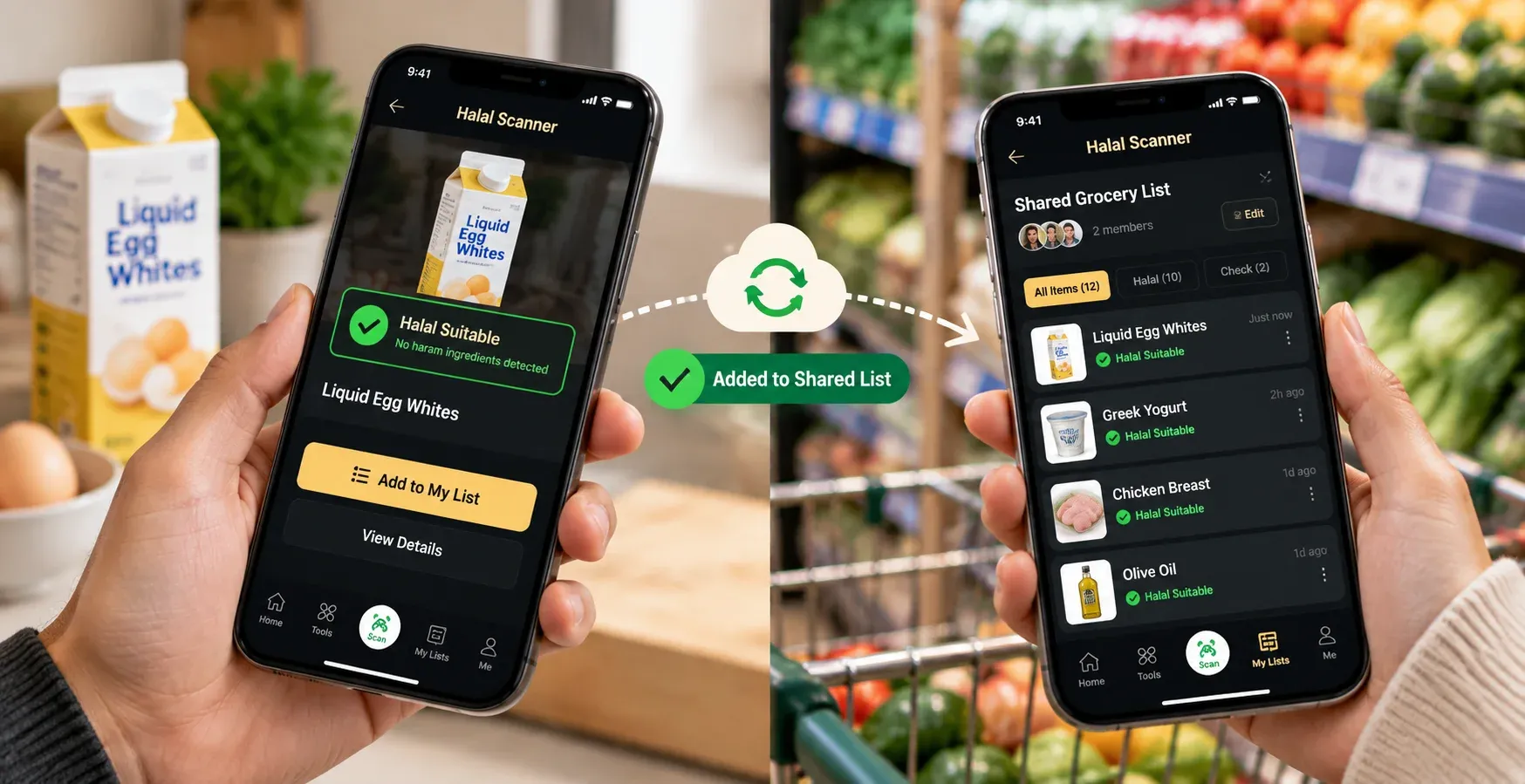
With over 1 million verified products in the database and 100,000 daily scans from Muslim shoppers globally, Halal Scanner removes the guesswork from the grocery aisle.
Tap the App Store or Google Play badge below to get Halal Scanner and check your groceries in seconds.