

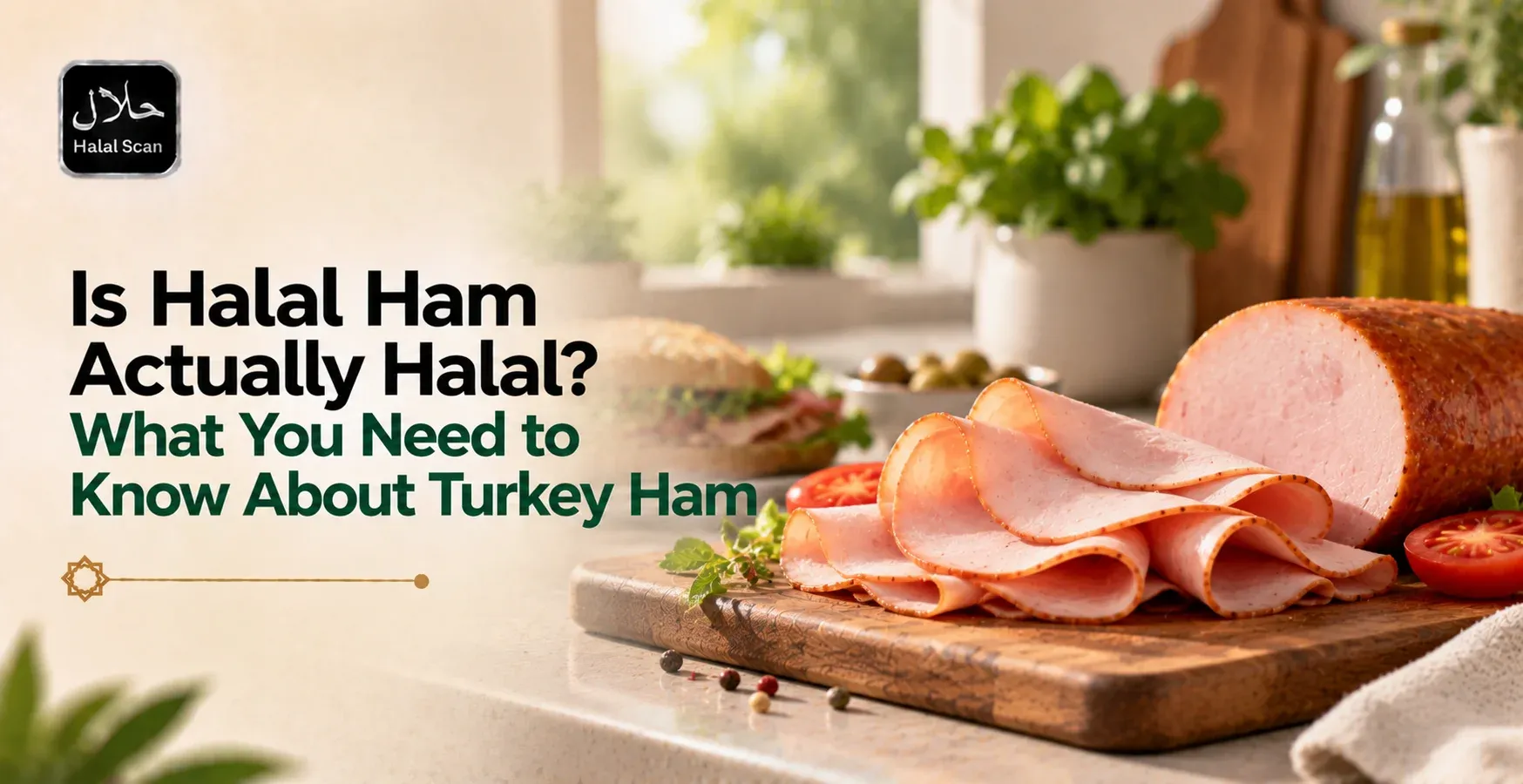
Halal ham is a processed deli meat made from halal-certified beef, turkey, or chicken that is cured and smoked to mimic the texture of traditional pork. While traditional pork ham is strictly Non-Halal, poultry and beef alternatives exist. However, picking up a pack of turkey ham requires verifying the zabiha status of the meat and checking for hidden doubtful ingredients like artificial casings or natural flavorings.
When you stand at the deli counter or browse the cold aisle, seeing the word "ham" can cause immediate hesitation. Many brands now offer beef ham or turkey ham catering to Muslim shoppers. Understanding how these products are made helps you avoid crossing into Doubtful territory.
Try Halalscan now to start scanning your products to confirm whether all ingredients are halal, haram or mashbooh!
What Is Halal Ham Made Of?
The term "ham" historically refers to a specific cut of pork from the hind leg. In modern food processing, the word often describes the curing and smoking method rather than the animal source.
Brands create halal compliant versions using alternative meats. These are typically processed into a loaf, cured with salts, and thinly sliced. The most common varieties include:
- Turkey Ham: Made from cured turkey thigh meat.
- Beef Ham: Crafted from lean beef cuts, often resembling pastrami or corned beef.
- Chicken Ham: Formed from chicken breast or thigh meat pressed with binders.
The base meat must be zabiha. If the animal was not slaughtered according to Islamic principles, the entire product is Non-Halal, regardless of whether it is turkey or beef.
The Hidden Risks in Turkey Ham
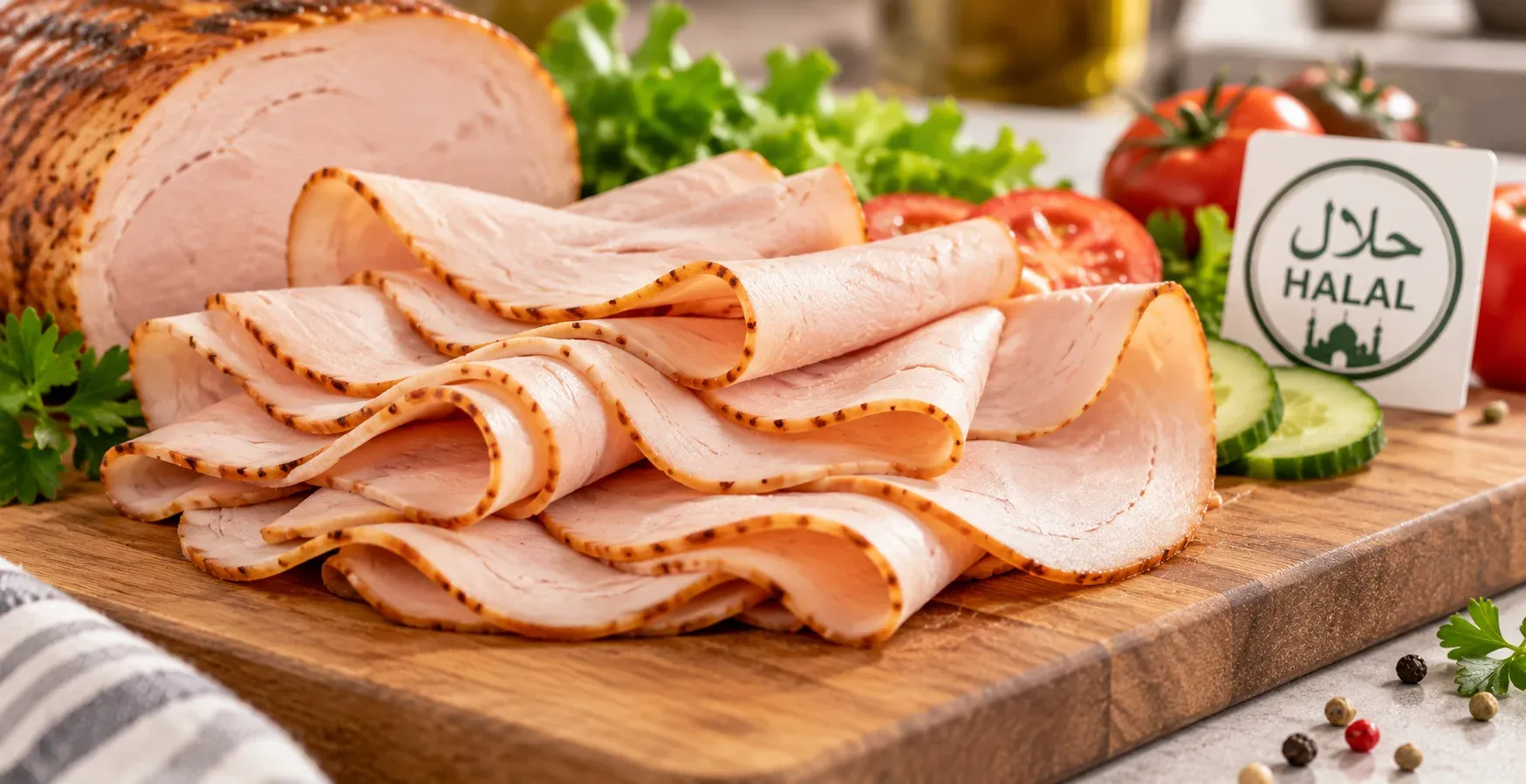
Even if the package clearly states the meat is turkey, the final sliced product is not automatically Halal. Deli meats undergo heavy processing. Ingredients added during this phase often push the product into the Doubtful (mashbooh) category. You can also read our full guide to Halal Diet Food: Rules, Ingredients, and Grocery Shopping.
Here is what to watch for on the ingredient label:
- Casings: Deli meats are often shaped using casings. Some artificial casings contain animal derived collagen. If the source is not specified, this collagen could come from Non-Halal animals.
- Flavorings: Ingredients listed simply as "natural flavorings" or "smoke flavor" can sometimes use alcohol based carriers.
- Binders and Fillers: Additives like gelatine (E441) are sometimes used to hold processed meats together. Unless certified plant based or zabiha derived, gelatine origin is highly variable.
- Cross Contamination: In standard supermarkets, deli slicers are used for pork and turkey alike. Buying prepackaged, certified meat eliminates the risk of shared equipment at the deli counter.
Rather than guessing about E numbers or flavoring carriers, you can scan the barcode and get the result for this specific product in the app. The Halal Scanner app is free to download with premium via subscription on iOS and Android.
How to Check Deli Meats With Halal Scanner?
Processed meats have some of the most complex ingredient lists in the supermarket. Here is how to verify your groceries instantly:
- Open the Halal Scanner app while shopping.
- Point your camera at the barcode on the packaged turkey ham.
- Read the immediate result categorizing the product as Halal, Doubtful, or Non-Halal based on its exact formulation.
- Tap the "Share" icon to add safe brands to your family grocery list.
You can take action right now without the app. First, always look for a recognized certification logo on the packaging from trusted bodies like the Halal Food Authority (HFA) or IFANCA. Second, stick to prepackaged deli meats rather than buying sliced meat from a shared counter to prevent cross contamination.
The scan takes less time than reading the label. Download Halal Scanner free on the App Store or Google Play badge below.
Global Verification You Can Trust
Halal Scanner data draws on verified halal sources across 50+ countries. With over 1 million verified products in the database and 100,000 daily scans, more than 500,000 users rely on the platform to navigate complex food labels. Whether you are checking beef ham in London or turkey slices in Toronto, the database cross references the exact barcode against known manufacturer ingredients.