
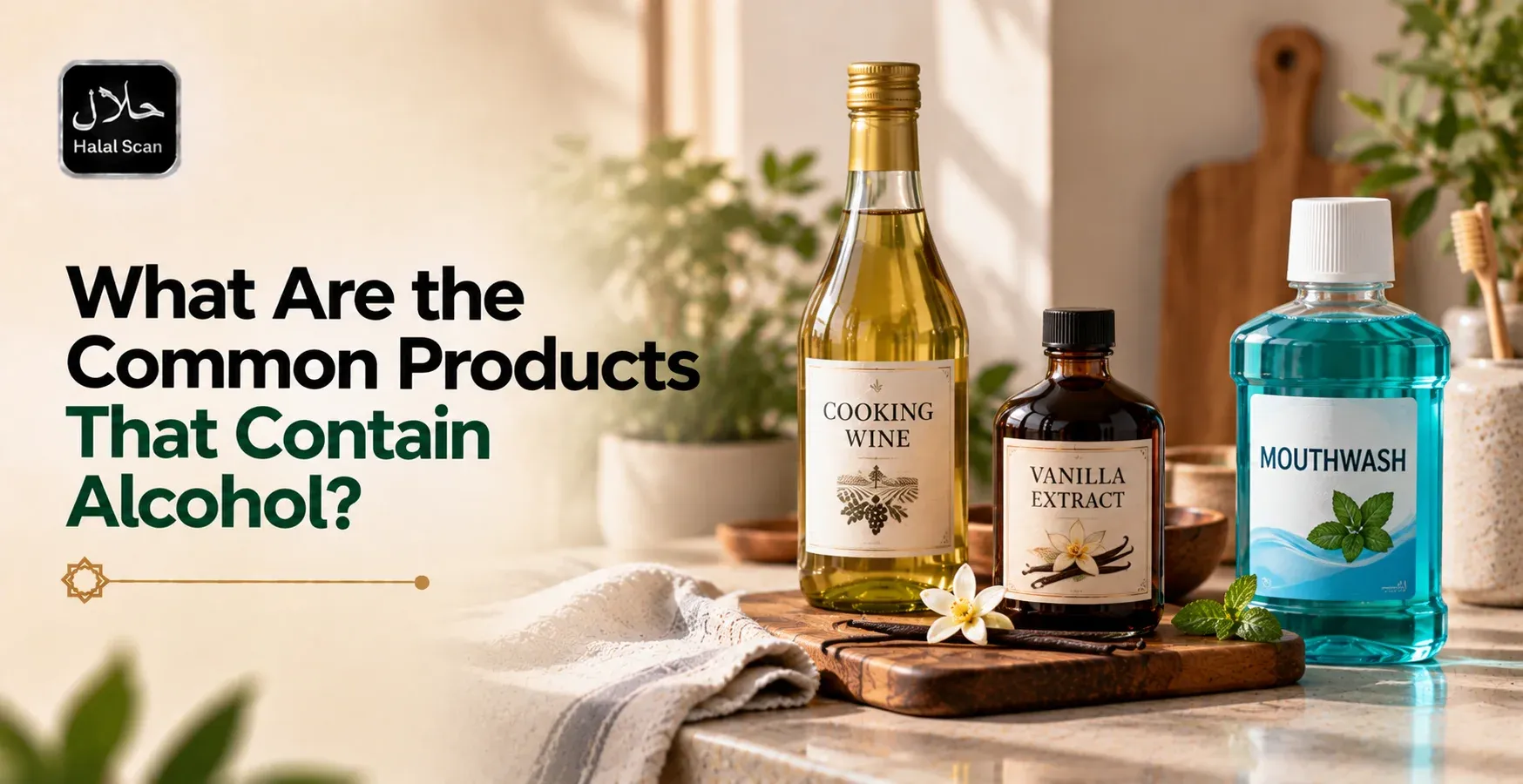
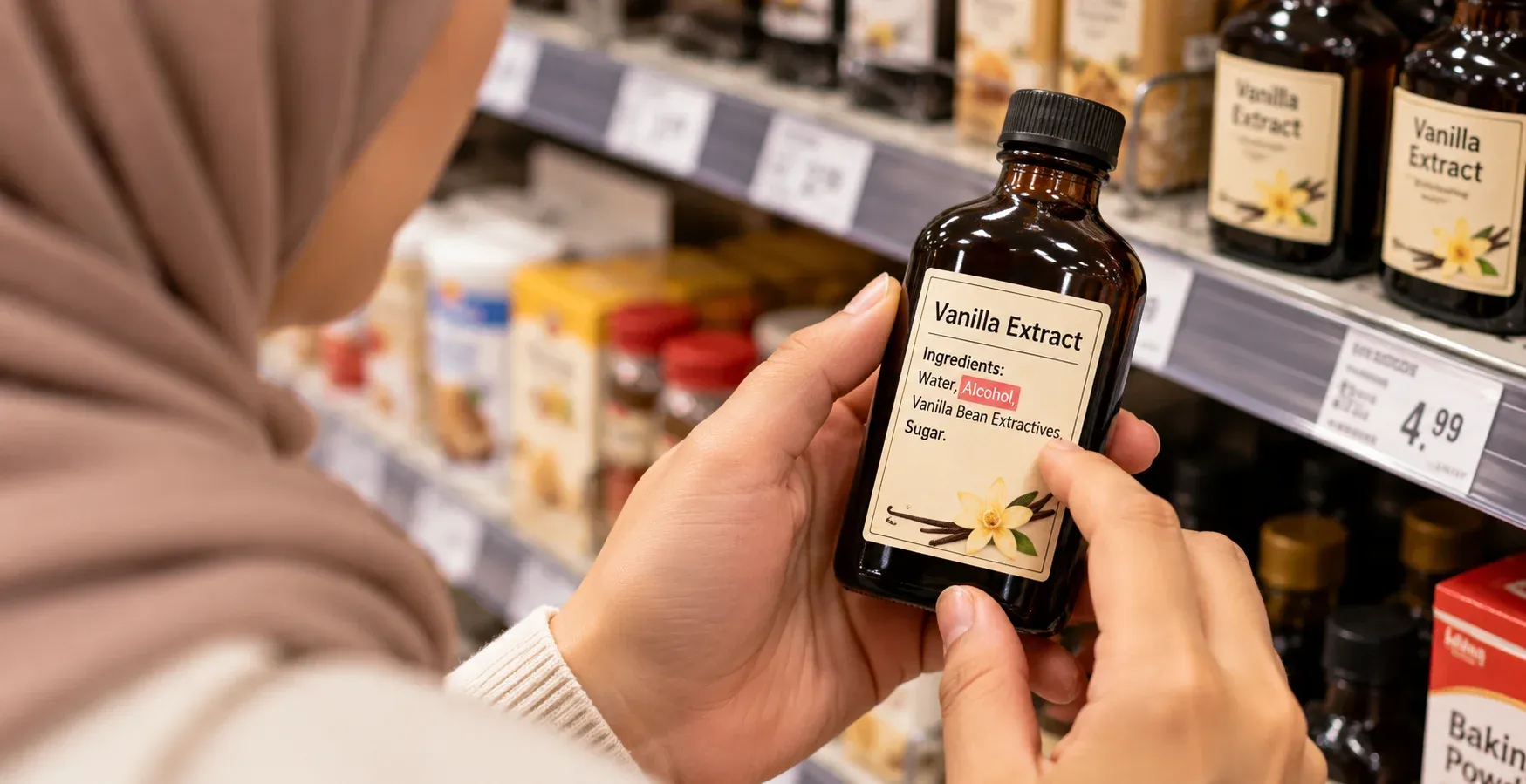
You are standing in the baking aisle reading a label, trying to figure out exactly what are the common products that contain alcohol. Everyday grocery items that frequently contain hidden ethanol include vanilla extract, fermented condiments like soy sauce, Dijon mustard, and packaged baked goods where alcohol acts as a flavoring solvent or surface preservative.
For a Muslim household shopper, identifying which products that contain alcohol belong in your cart requires looking past the main ingredients. A snack might not look like an intoxicant, but hidden ethanol often acts as a carrier for flavors, colors, and extracts.
What Contains Ethanol Naturally vs. Added?
When asking what contains ethanol, you have to separate naturally occurring traces from added solvents.
Ripe fruit, fruit juices, and everyday yeast breads naturally produce microscopic ethanol levels through biological fermentation. According to Islamic Fiqh Academy rulings on trace additives, as well as most global certifying bodies, these naturally occurring, unavoidable traces do not intoxicate and are generally considered permissible (halal).
The dietary concern begins when manufacturers intentionally add ethanol to extract flavors or use it as a carrier. If alcohol is introduced into a food product deliberately from an external source, it requires careful verification against your personal standard of practice.
List of Products That Contain Alcohol
If you want to protect your family's weekly shop, watch out for this list of products that contain alcohol. Because formulas change based on the country of manufacture, you should always verify these generic categories.
Common Grocery Items with Hidden Alcohol
Product Category | How Alcohol is Introduced | Authoritative Reference |
|---|---|---|
Vanilla Extract | By law, pure extracts require an ethanol base to draw out the vanilla bean flavor. | |
Traditional Soy Sauce | Yeast fermentation of wheat and soybeans naturally yields 1-2% ethanol. Some commercial brands also add extra alcohol as a preservative. | |
Packaged Breads & Buns | Industrial bakeries frequently spray ethanol on the packaging interior as an anti-mold agent to extend shelf life. | |
Dijon Mustard | The traditional French recipe replaces standard vinegar with white wine or unfermented grape juice (verjuice). | |
Pre-Packaged Desserts | Sponge cakes, tiramisu, and trifles are frequently soaked in coffee liqueurs or rum to keep the pastry moist. |
What Does Alcohol Have in It When Listed as a "Flavoring"?
If a label simply says "natural flavors," what does alcohol have in it? Very often, ethanol is the invisible solvent holding that flavor together.
Food manufacturers use alcohol to extract chemical compounds from plants and spices. Because the alcohol acts as a processing aid rather than a primary ingredient, local food labeling laws in the US or UK often do not require it to be explicitly listed on the package.
Additives That Often Use Ethanol Solvents
Additive Label | Function | Halal Status |
|---|---|---|
Natural Flavors | Adds taste profiles extracted from plants/fruits. | Doubtful (mashbooh) unless certified; frequently uses ethanol carriers. |
Artificial Colors | Dyes food for aesthetic appeal. | Doubtful (mashbooh); liquid dyes sometimes use alcohol bases. |
Preservative Sprays | Prevents mold on baked goods. | Doubtful (mashbooh); requires checking the manufacturer's specific process. |
This lack of transparency leaves the ingredient doubtful (mashbooh). To resolve this, strict certifying bodies require the residual alcohol in the final food product to fall below a specific, microscopic threshold to earn a certified halal stamp.
How to Check for Hidden Alcohol with Halal Scanner
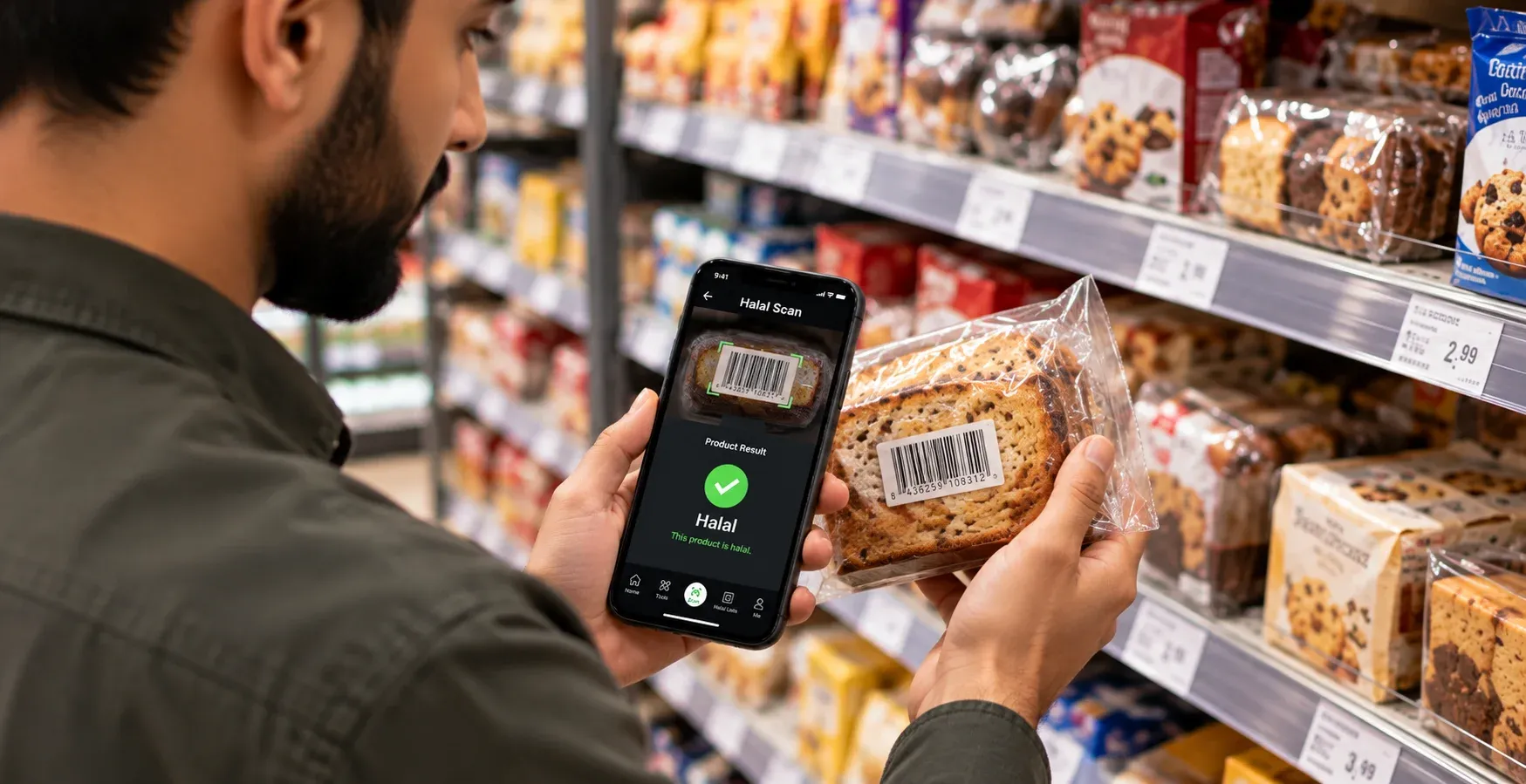
Instead of memorizing chemical codes or guessing about "natural flavors," you can verify products right in the aisle. Halal Scanner cross-references ingredients against verified halal data sources to give you a clear answer in seconds.
- Open the app: Tap the camera icon to activate the barcode scanner.
- Scan the item: Hold your phone over the product's barcode.
- Read the result: The app immediately shows Halal, Doubtful, or Non-Halal. If an item flags as Doubtful due to unknown flavoring solvents, you can easily put it back.
- Save to a list: Add safe items to a shared halal list so your spouse knows exactly which brand of soy sauce to buy next time.
You can always check a manufacturer's website or look for a trusted halal logo, but the scan takes less time than reading the label. Halal Scanner is free to download with premium via subscription on the App Store or Google Play.
A Database You Can Trust
When your family's dietary compliance is at stake, accuracy matters. Halal Scanner relies on a database of 1 million+ verified products, processing over 100,000+ daily scans. With 500,000+ users across 50+ countries, it helps you shop with confidence whether you are at your local grocery store or traveling abroad.
Shop With Confidence
Protecting your weekly grocery haul from hidden ethanol doesn't have to require a degree in food science. By knowing what to look for on the label and keeping the right tool in your pocket, you can shop quickly and confidently.
Tap the App Store or Google Play badge to start scanning today.