

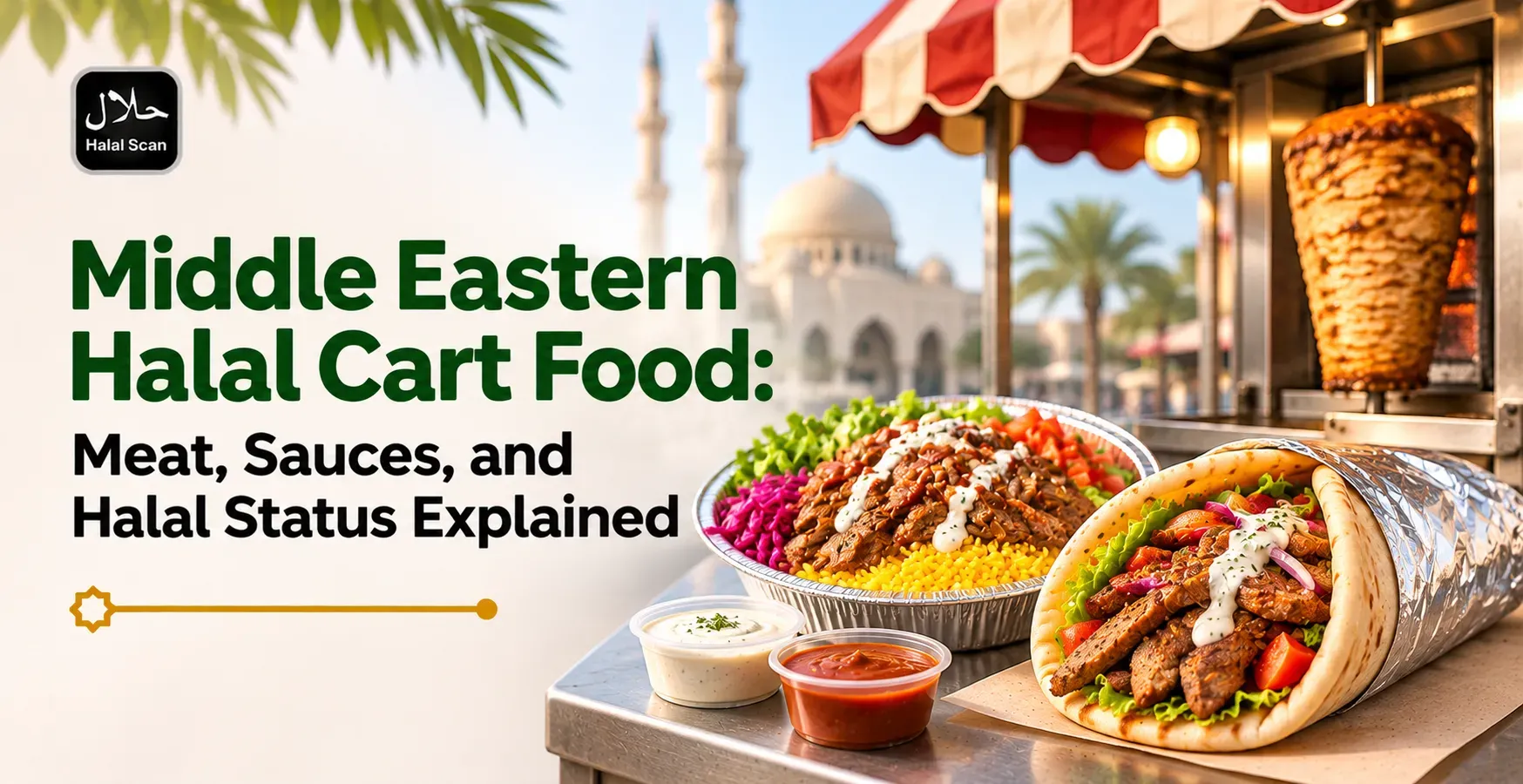
A Middle Eastern halal cart serves street food like chicken over rice and falafel, typically sourcing meat slaughtered according to Islamic law. However, cross-contamination risks and hidden ingredients in proprietary white sauces—like doubtful emulsifiers—mean shoppers must verify the vendor's physical certificate and scan any pre-packaged items before eating.
The Rise of the Street Food Cart
Middle Eastern halal carts exploded in popularity during the early 1990s in New York City. Muslim taxi drivers needed quick, affordable, and religiously compliant meals during long shifts. Today, over 8,000 street food vendors operate across NYC alone, and the halal cart model—featuring spiced chicken, gyro meat, and bright yellow rice—has spread to cities worldwide.
While the concept is built around Islamic dietary laws, the reality of street food requires consumers to look past the neon "Halal" sign. You have to ask the right questions about meat sourcing, sauce ingredients, and cross-contamination.
Are Middle Eastern Halal Carts Fully Zabiha?
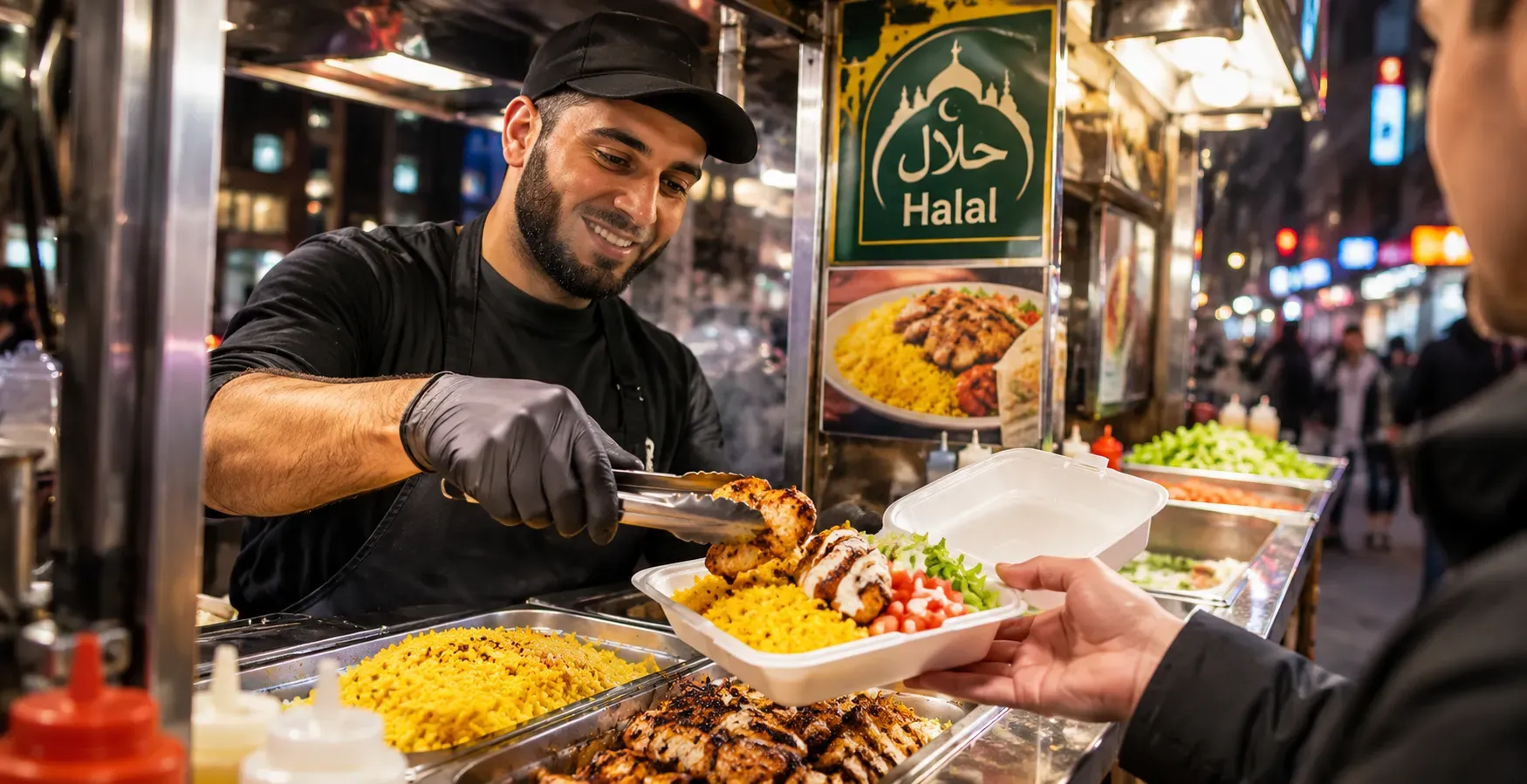
A sign painted on a food truck does not equal a scholarly endorsement. When buying from a cart, the primary concern is the meat.
Zabiha vs. Machine Slaughter Vendors buy their meat wholesale. Some sources are from hand-slaughtered (zabiha) suppliers approved by bodies like the Halal Food Standards Alliance of America (HFSAA), while others rely on machine-slaughtered poultry. If you follow a strict zabiha standard, a generic halal sticker on the cart is not enough. Ask the vendor which local butcher or wholesale brand supplies their chicken and lamb.
The Cross-Contamination Risk Dedicated halal carts rarely cook non-halal items. However, some mixed-menu food trucks serve both halal chicken and bacon on the same grill. Shared spatulas, cooking oils, and grill space instantly compromise halal meat. Always ensure the cart is 100% halal or uses strictly divided cooking zones.
The White Sauce Risk: Hidden E-Numbers
The famous white sauce drizzled over chicken and rice is delicious, but its ingredients are often a tightly guarded secret. Most white sauces start with a base of mayonnaise, yogurt, or sour cream.
This introduces hidden risks:
- Emulsifiers: Commercial mayonnaise often contains E471 (mono- and diglycerides of fatty acids). If derived from plant fat, it is halal. If derived from animal fat, it is haram. Without an ingredient label, E471 sits firmly in the Doubtful (Mashbooh) category.
- Gelatine: Some cheap commercial yogurts use E441 (gelatine) as a thickener. In North America and Europe, gelatine defaults to pork or non-zabiha beef unless explicitly marked otherwise.
- Vinegar & Flavorings: White vinegar is widely accepted as halal, but complex natural flavorings in commercial sauces might use alcohol as a carrier solvent.
Item at the Cart | Common Halal Status | Key Risk Factors |
|---|---|---|
Chicken / Gyro Meat | Halal (varies by standard) | Machine vs. hand slaughter; cross-contamination |
Yellow Rice | Halal | Usually safe; check if cooked with animal broth |
White Sauce | Doubtful | Emulsifiers (E471), animal-derived gelatine thickeners |
Falafel | Halal | Fryer oil cross-contamination with meat items |
Pre-packaged Drinks | Varies | E120 (Carmine) in red juices, alcohol solvents in flavorings |
How to Check Pre-Packaged Items with Halal Scanner
While you cannot scan a plate of hot chicken over rice, almost every halal cart sells pre-packaged drinks, bagged snacks, and branded condiment packets on the side. You don't have to guess if that imported soda or packet of hot sauce is safe.
Here is how to check it on the spot:
- Open Halal Scanner: Keep it on your home screen for quick access while waiting in line.
- Scan the Barcode: Point your camera at the drink bottle or snack wrapper.
- Read the Result: The app instantly cross-references the ingredients against over 1 million verified products.
- Check the Status: You will see a clear result: Halal, Doubtful, or Non-Halal. If a drink contains a Doubtful coloring agent, the app highlights it so you can make an informed choice.
The app is free to download with premium via subscription. The scan takes less time than handing cash to the vendor. Download it today via the App Store or Google Play badge below.
Verifying the Cart's Halal Certificate
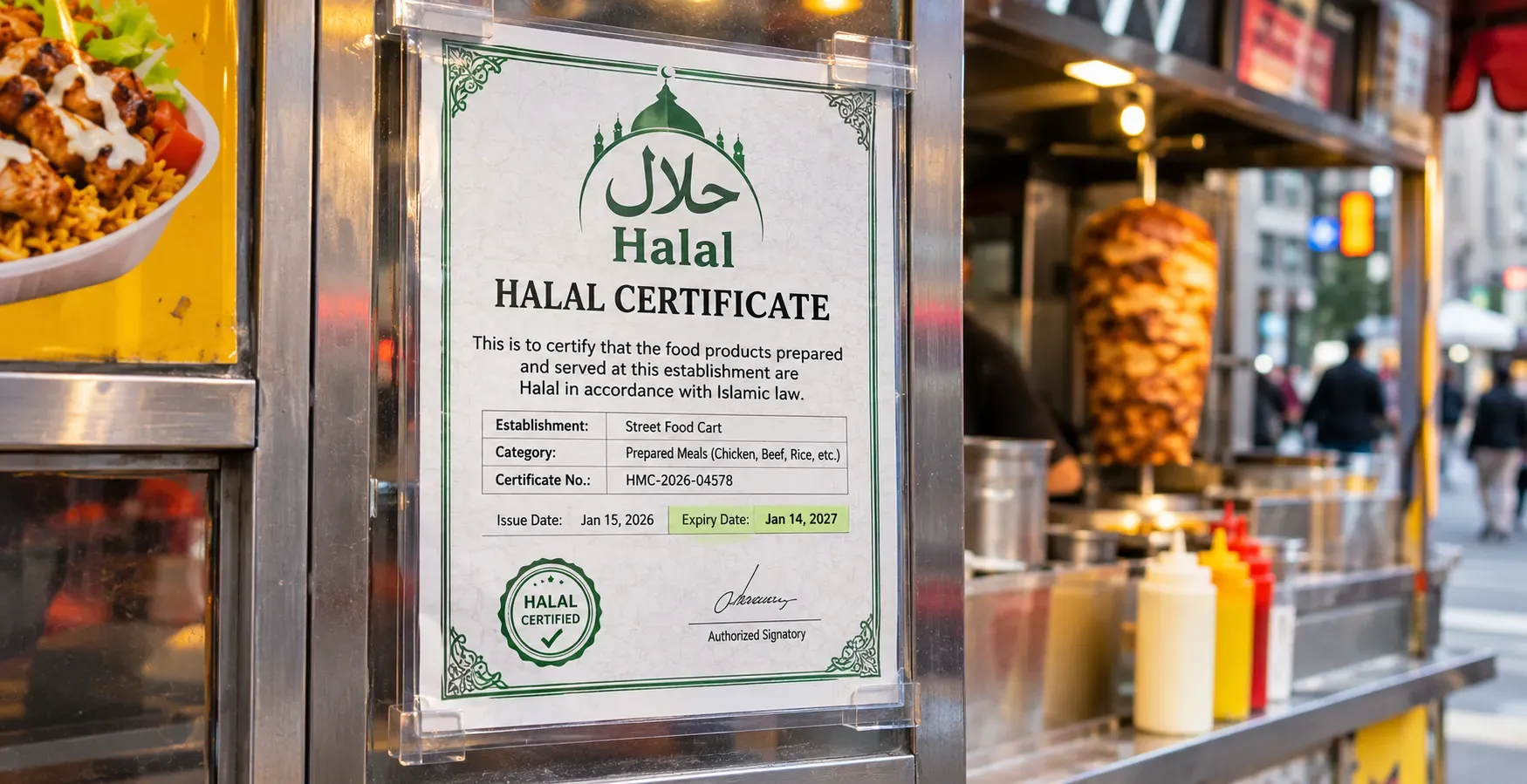
Before you order, look for physical proof. A reputable Middle Eastern halal cart will proudly display a certificate from a recognized Islamic organization or local mosque.
When you spot a certificate, check two things:
- The Date: Halal certifications expire. A certificate from 2018 means the vendor has not been audited in years. Suppliers change, and oversight drops.
- The Organization: Recognize the name. Certifications from HFSAA, HMS, or a prominent local Islamic center carry heavy weight. A generic printed paper that just says "Certified Halal" with no contact information holds zero authority.
If you don't see a certificate, ask. Most honest vendors are happy to show you wholesale boxes or local butcher receipts.
Conclusion
Eating at a Middle Eastern halal cart is a staple experience for many Muslims in Western cities. By verifying physical certificates, asking direct questions about meat sourcing, and checking the ingredients in proprietary sauces, you protect your dietary practice. For everything else on the cart—from sodas to bagged snacks—let technology do the heavy lifting.
Make aisle and street-side verification instant. Tap the App Store or Google Play badge below to get Halal Scanner on your phone.