

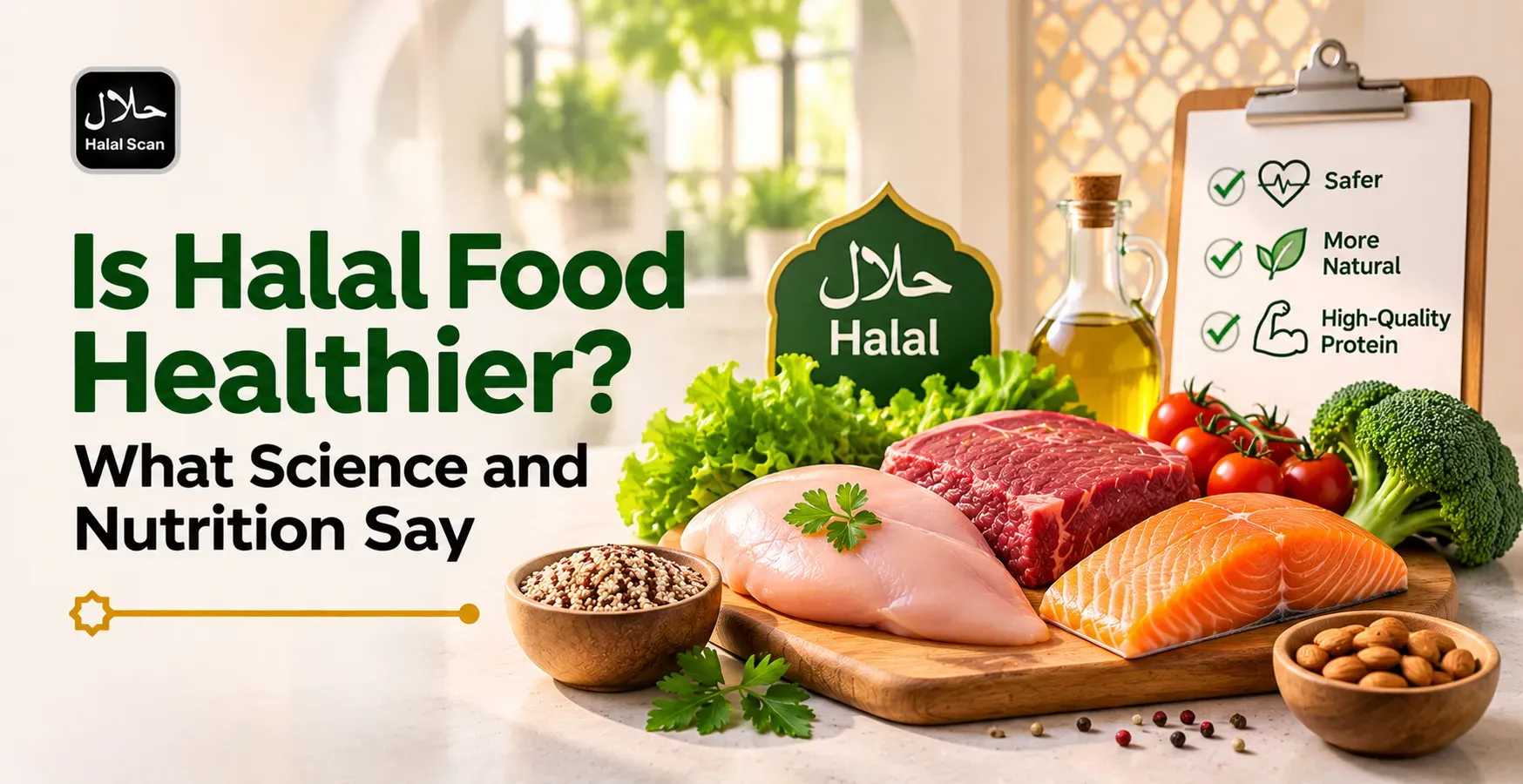
Halal food is not automatically healthier than non-halal food. Studies show that halal and non-halal meat from the same species has similar nutrition, and halal slaughter does not drain measurably more blood. The clearest health gains come from what halal rules exclude, such as alcohol, and from the food choices you make within a halal diet.
Picture a weekly shop with your kids. Two packs of chicken sit side by side, one with a halal mark. If your daughter asks which is healthier, this guide gives you the answer the research supports.
This guide covers only the health evidence. For what you can and can't eat, read our halal diet guide.
What Does Halal Food Mean?
Halal means "permissible" under Islamic law. For food, it sets which animals may be eaten, how they are slaughtered, and which ingredients are excluded, such as pork and alcohol. It is a permission standard, not a nutrition label.
Many standards add the idea of halalan tayyiban: permitted and wholesome. Malaysia's MS 1500:2019 halal food standard includes a full section on hygiene and food safety.
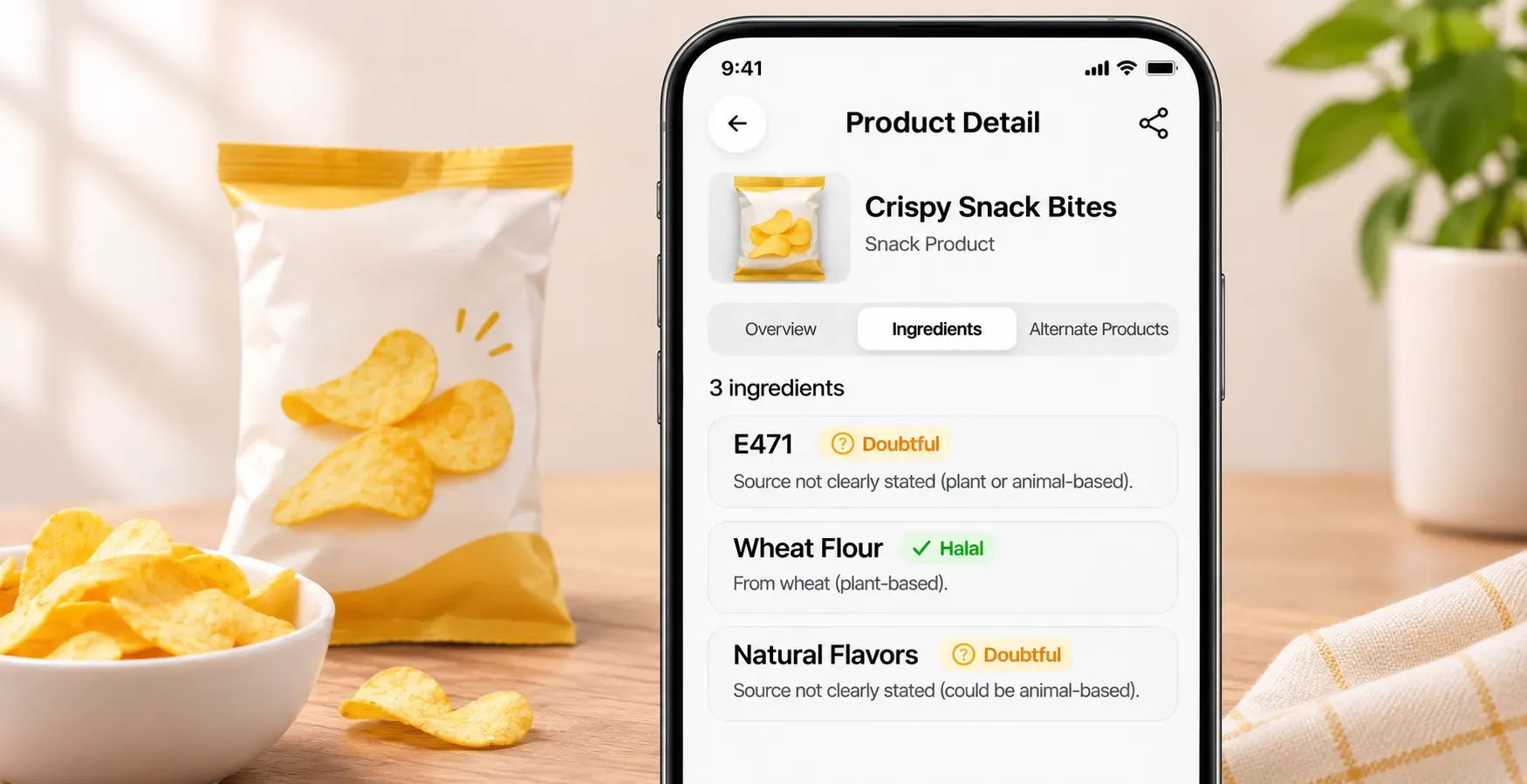
Products fall into three groups: Halal, Doubtful (mashbooh) and Non-Halal. Doubtful means an ingredient's source can't be confirmed. E471, an emulsifier made from either plant or animal fat, is a common example.
Is Halal Food Healthier Than Non-Halal Food?
No, not by default. A halal doughnut has the same sugar as any other doughnut.
The World Health Organization's healthy diet fact sheet (updated January 26, 2026) sets the targets that matter:
- At least 400 g of fruit and vegetables a day
- Free sugars (added sugars plus those in honey, syrups and juice) under 10% of daily energy, about 50 g on 2,000 calories
- Less than 5 g of salt a day
Halal rules do bring two clear benefits: no alcohol and no pork.
Claim | What the evidence says | Verdict |
|---|---|---|
"Halal meat has more nutrients" | Same species and cut give similar nutrition | Not proven |
"Halal slaughter drains more blood" | Lamb, cattle and goat studies found no significant difference | Not supported |
"Halal meat is cleaner" | A 2024 US study found near-identical bacteria levels | Depends on the shop |
"Halal processed meat is fine daily" | IARC links all processed meat to bowel cancer | Not true |
The alcohol advantage
In 2023 the WHO stated that no level of alcohol is safe. Alcohol is a Group 1 carcinogen, the category with the strongest evidence of causing cancer, and is linked to at least seven cancers, including bowel and breast cancer. Trace alcohol in flavorings is a separate question, covered in our ethyl alcohol guide.
The pork question
According to the WHO (January 2022), the pork tapeworm spreads through raw or undercooked infected pork, and its larvae can reach the brain and cause epilepsy. A pork-free diet removes that route. Thorough cooking also prevents it, as the CDC notes for pork parasites (accessed November 2026), so this benefit is real but narrow.
Check any packaged product in seconds with Halal Scanner, free to download on iOS and Android.
Nutritional Differences Between Halal and Non-Halal Meat
Halal and non-halal meat from the same species and cut have very similar nutrition. Protein, fat, iron and B vitamins come from the animal and the cut, not the slaughter method.
A 2022 pilot study in Food Bioscience did report a healthier lipid (fat) profile in halal beef and lamb. However, it was small and local to Spain, so treat it as a lead, not proof. Taste is a separate question, covered in our guide on how halal meat tastes compared with regular meat.
Factor | Changes in nutrition? |
|---|---|
Halal or non-halal status | Rarely on its own |
Species and cut | Yes: chicken breast is leaner than lamb mince |
Processing | Yes: sausages add salt and fat |
Cooking method | Yes: grilled vs deep-fried |
Most halal standards don't regulate antibiotics or hormones, though a few certifiers do, as TIME reported.
Does Halal Slaughter Make Meat Healthier?
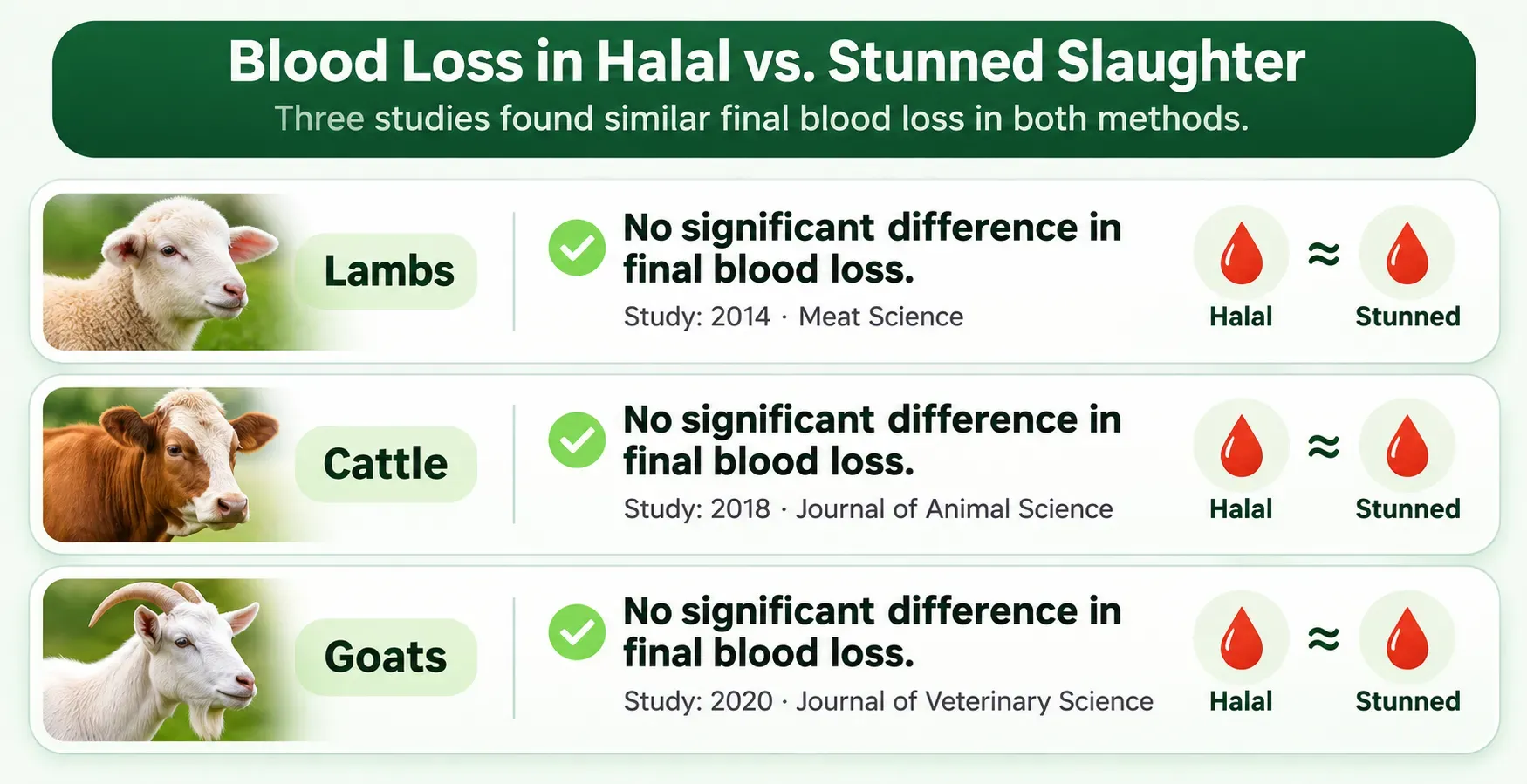
No strong evidence shows it does. The claim is that halal slaughter drains more blood. Controlled studies tested this:
- Lambs: A 2015 Meat Science study of 440 lambs found no significant difference in final blood loss with or without head-only stunning (an electric current that makes the animal unconscious).
- Cattle: A 2006 study in Animal Welfare found similar bleed-out and meat quality with captive-bolt stunning (a bolt fired against the skull).
- Goats: A 2015 Malaysian study found no difference in blood loss or fat oxidation (fat turning rancid).
Technique still matters: a 2016 PLOS ONE study found one stunning method bled out worse. Whether stunning is allowed is a religious question; Can Muslims eat beef? explains scholars' views.
Halal Food, Hygiene, and Food Safety
Halal certification adds checks against haram contamination, but it doesn't replace national food-safety rules. A clean, cold, well-run shop matters more than the label.
A 2024 study in Applied Microbiology tested 138 raw beef samples from halal and non-halal US shops over one year. Bacteria levels were almost identical: 4.93 vs 4.92 log CFU/g, the standard measure of live bacteria per gram.
Certification does its own job well. A 2021 Food Safety Authority of Ireland audit found that halal claims held up at 18 of 19 outlets checked.
Three checks for any shop:
- Look for a recognized certifier's logo, such as IFANCA, HFA, JAKIM or MUI.
- Check the cold chain (meat kept chilled from farm to shelf), with clean, separate tools.
- Cook meat thoroughly to kill bacteria and parasites.
Does Eating Halal Help You Maintain a Healthy Diet?
It helps, but it doesn't do the work for you. A halal diet can still be high in sugar, fried food and processed meat.
The International Agency for Research on Cancer classes processed meat as Group 1, a cause of bowel cancer. Each 50 g eaten daily raises that risk by about 18%. That applies to halal beef sausages and chicken salami too.
To make halal habits healthy ones:
- After checking the ingredients, read the nutrition panel for sugar, salt and fat.
- Keep processed halal meat occasional; choose fresh chicken, fish and lentils most days.
- Fill half your plate with vegetables.
Halal Food vs. Organic Food: What's the Difference?
Halal asks whether food is permitted in Islam. Organic asks how it was farmed. One label doesn't guarantee the other.
Under the USDA National Organic Program, organic animals eat organic feed and get no antibiotics or hormones.
Options | Halal | Organic (USDA) |
|---|---|---|
Main question | Permitted in Islam? | How was it farmed? |
Slaughter method | Specified | Not specified |
Pork and alcohol | Not permitted | Can be organic |
Antibiotics and hormones | Usually not regulated | Prohibited |
Better nutrition guaranteed? | No | No |
How to Check a Product's Halal Status With Halal Scanner
Halal Scanner tells you whether a product is halal; the nutrition panel tells you whether it's healthy. Use both:
- Scan the barcode, or search for an ingredient by name.
- Read the result: Halal, Doubtful or Non-Halal, checked against verified halal data sources.
- Check Doubtful items: see the flagged ingredient, then look for a certifier's logo.
- Turn the pack over to check sugar, salt and fat.
- Save it to a shared list the whole household shops from.
The scan takes less time than reading the label. Download free on the App Store or Google Play.
Why Shoppers Trust Halal Scanner
- 1 million+ verified products
- 100,000+ daily scans
- 500,000+ users
- 50+ countries
Halal Scanner is a verification tool, not a certifier.
The Bottom Line
Halal food isn't healthier just because it's halal. What it gives you is an alcohol-free diet and a habit of checking your food. Point that habit at sugar, salt and processed meat, and your family gets the real benefit.
Download Halal Scanner free on the App Store or Google Play.