

The best figures come from a 2016 study in the Journal of Analytical Toxicology. Researchers at the University of Kaiserslautern tested five orange juice brands bought in German shops. Ethanol ranged from 0.16 to 0.73 g/L.
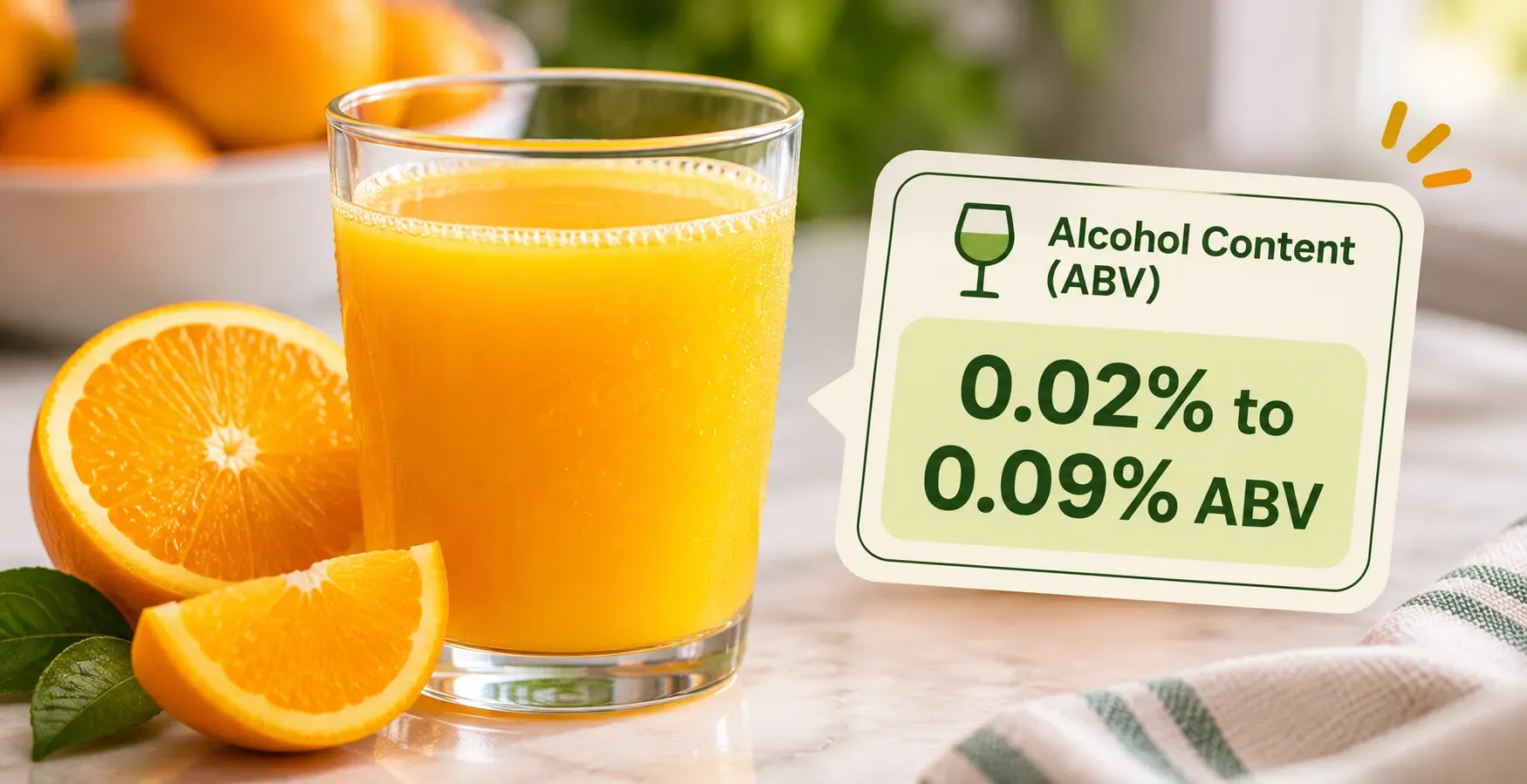
ABV means alcohol by volume: the share of a drink that is pure alcohol. Converting the study's figures gives roughly 0.02% to 0.09% ABV.
Here's what that looks like in a normal glass:
Measure | Low end | High end |
|---|---|---|
Ethanol per litre | 0.16 g | 0.73 g |
ABV (approx.) | 0.02% | 0.09% |
Ethanol in a 250 ml glass | 0.04 g | 0.18 g |
For comparison, a 330 ml can of 5% beer holds about 13 g of ethanol. You would need more than 70 glasses of the strongest juice in that study to match one can.
Is the alcohol in orange juice safe for children?
For normal amounts, yes. The same 2016 study looked at this question directly, because children drink a lot of juice. The researchers estimated that a child eating bread, bananas and juice in one day could pass 6 mg of ethanol per kg of body weight.
That figure is a "signal" value regulators suggested for children's herbal medicines, not a harm threshold. The authors used it to ask why medicines face stricter alcohol rules than everyday food. They did not report any harm from juice.
Why Does Orange Juice Contain Alcohol?
Orange juice contains alcohol because fruit sugar ferments naturally. Wild yeasts, which live on fruit skins and in the air, turn some of the juice's sugar into ethanol. Nobody adds it.
This starts in the fruit itself. A 1974 study in HortScience found that ethanol rose in stored oranges, especially at 10°C. Indonesia's halal body, LPPOM MUI, also notes that ethanol occurs naturally in ripe fruit like oranges, pineapple and durian.
Three things push the level higher:
- Time: juice keeps fermenting slowly after it's opened.
- Heat: warm rooms speed up yeast.
- Freshness: unpasteurised juice still has live yeast in it.
Orange Juice Alcohol Content vs Other Drinks
Orange juice sits near the bottom of the scale, close to apple juice. Grape juice tends to run a little higher.
Drink | Typical ethanol | Source |
|---|---|---|
Orange juice | 0.16–0.73 g/L | |
Apple juice | 0.06–0.66 g/L | Gorgus et al., 2016 |
Grape juice | 0.29–0.86 g/L | Gorgus et al., 2016 |
UK "alcohol-free" label | Up to 0.05% ABV | |
UK "low alcohol" label | Up to 1.2% ABV | UK government |
Notice that a strong orange juice (about 0.09%) can slightly exceed the UK's 0.05% "alcohol-free" mark. That label rule covers drinks that once contained alcohol, such as beer. It doesn't apply to juice, so juice cartons don't list an ABV.
Is Orange Juice Halal If It Contains Alcohol?
Yes. The major halal authorities treat natural alcohol in fruit juice as halal, provided the juice isn't intoxicating and wasn't made like wine.
Here is how three bodies handle it:
Authority | Ruling | Limit |
|---|---|---|
MUI, Indonesia (Fatwa No. 10, 2018) | Drinks may contain ethanol if medically harmless | Under 0.5% in the final drink |
Natural alcohol in fruit is not impure (najis) and is permissible | Soft drinks under 1% v/v | |
Ethanol as a flavour solvent is allowed | Must not come from prohibited sources |
Ordinary orange juice, at under 0.1%, sits well inside all three limits.
The religious basis goes back to the Prophet ﷺ himself.
In Sahih Muslim 2004, Ibn Abbas reports that raisins were soaked in water for the Prophet ﷺ. He drank it that day, the next day, and until the evening of the third day. After that, it was given away or poured out, because the drink could start to ferment.
That drink, called nabidh, naturally held some alcohol too. It stayed permissible until it risked becoming intoxicating.
Why "a small amount" rules don't apply here
You may know the hadith: "If a large amount of anything causes intoxication, a small amount of it is prohibited" (Sunan Abi Dawud 3681). This rule covers drinks that intoxicate when you drink a lot of them.
Orange juice can't do that. No amount of normal orange juice will get you drunk, so the rule doesn't reach it. Our guide on ethyl alcohol in food explains the difference between khamr (intoxicating drink) and incidental ethanol in more depth.
When Orange Juice Stops Being Halal
The trouble starts when juice is fermented on purpose or left long enough to ferment strongly.
Watch out for:
- Homemade juice left out for days. In a 2023 Malaysian study, sugarcane juice kept at 28°C for 14 days rose from 2.11% to 7.32% ABV, according to the Current Science and Technology journal. That's beer strength.
- "Hard" orange drinks and mimosas. These are mixed with wine or spirits and are haram.
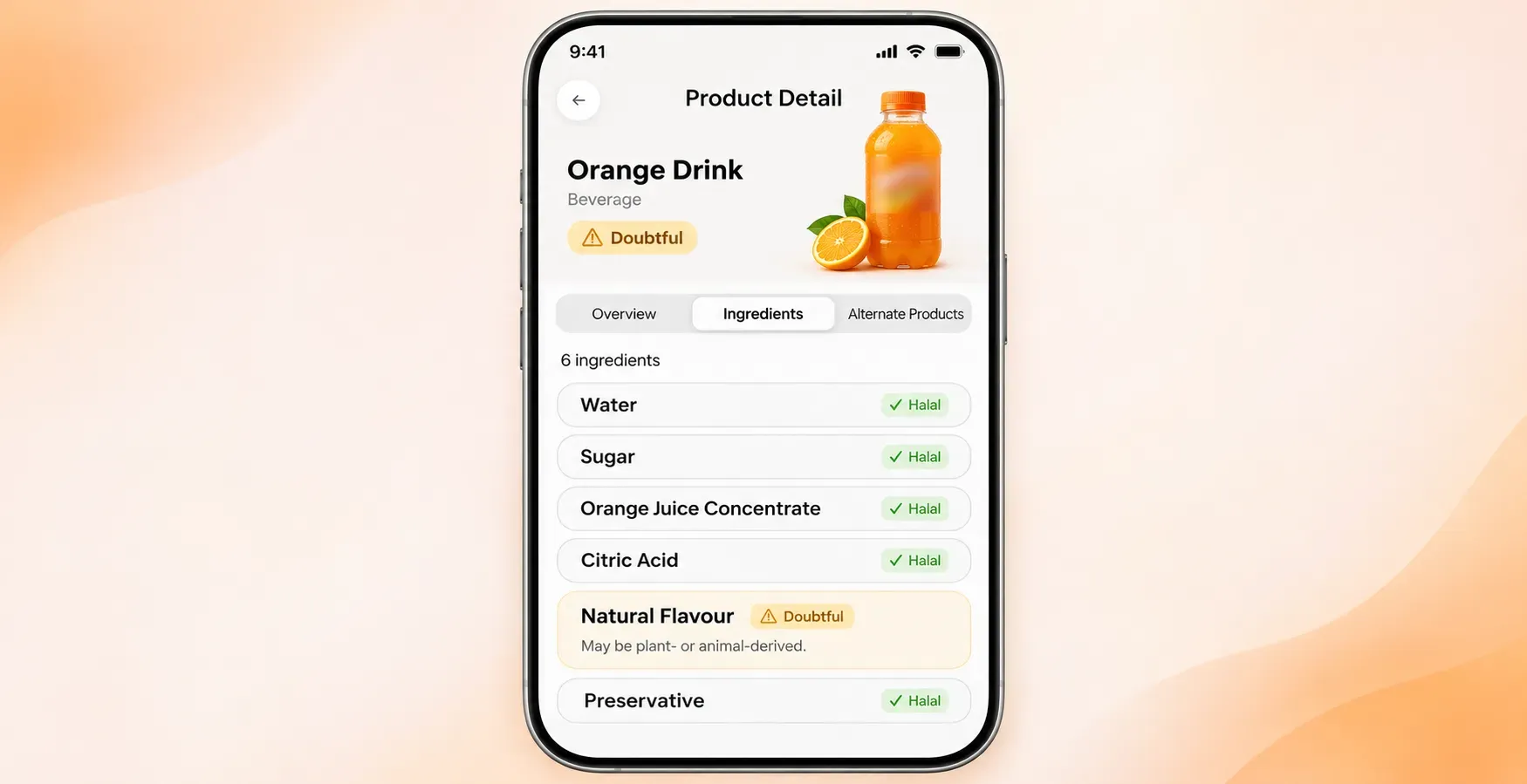
- Orange-flavoured drinks with "natural flavours". Flavourings can be carried in alcohol. Our guide to common products that contain alcohol covers which labels to watch.
Simple habits keep juice safe:
- Refrigerate juice as soon as you open it.
- Finish fresh-squeezed juice within a day or two.
- If it fizzes, smells sour, or tastes like wine, throw it away.
How to Check Juice and Drinks With Halal Scanner
Plain orange juice is almost always fine. It's the flavoured drinks, juice blends and imported brands that deserve a second look. Halal Scanner checks them for you.
- Scan the barcode on the carton or bottle.
- No barcode? Type an ingredient, like "natural flavour" or "ethanol", into the search.
- Read the result: Halal, Doubtful or Non-Halal, checked against verified halal data sources.
- Tap a Doubtful result to see what caused it, then look for a halal certifier's logo on the pack.
- Add safe drinks to a shared list so the whole family buys the same ones.
Halal Scanner is free to download, with premium features via subscription. Get it on the App Store or Google Play.
The app covers 1 million+ verified products in 50+ countries, with 100,000+ daily scans from 500,000+ users. It's a checking tool, not a certifying body.
The Bottom Line
Orange juice contains a trace of natural alcohol, roughly 0.02% to 0.09% ABV. It can't intoxicate, and halal authorities in Indonesia, Malaysia and Singapore all accept natural ethanol at this level. Keep juice cold, drink it fresh, and check flavoured drinks before they go in the basket.
Download Halal Scanner free on the App Store or Google Play.