
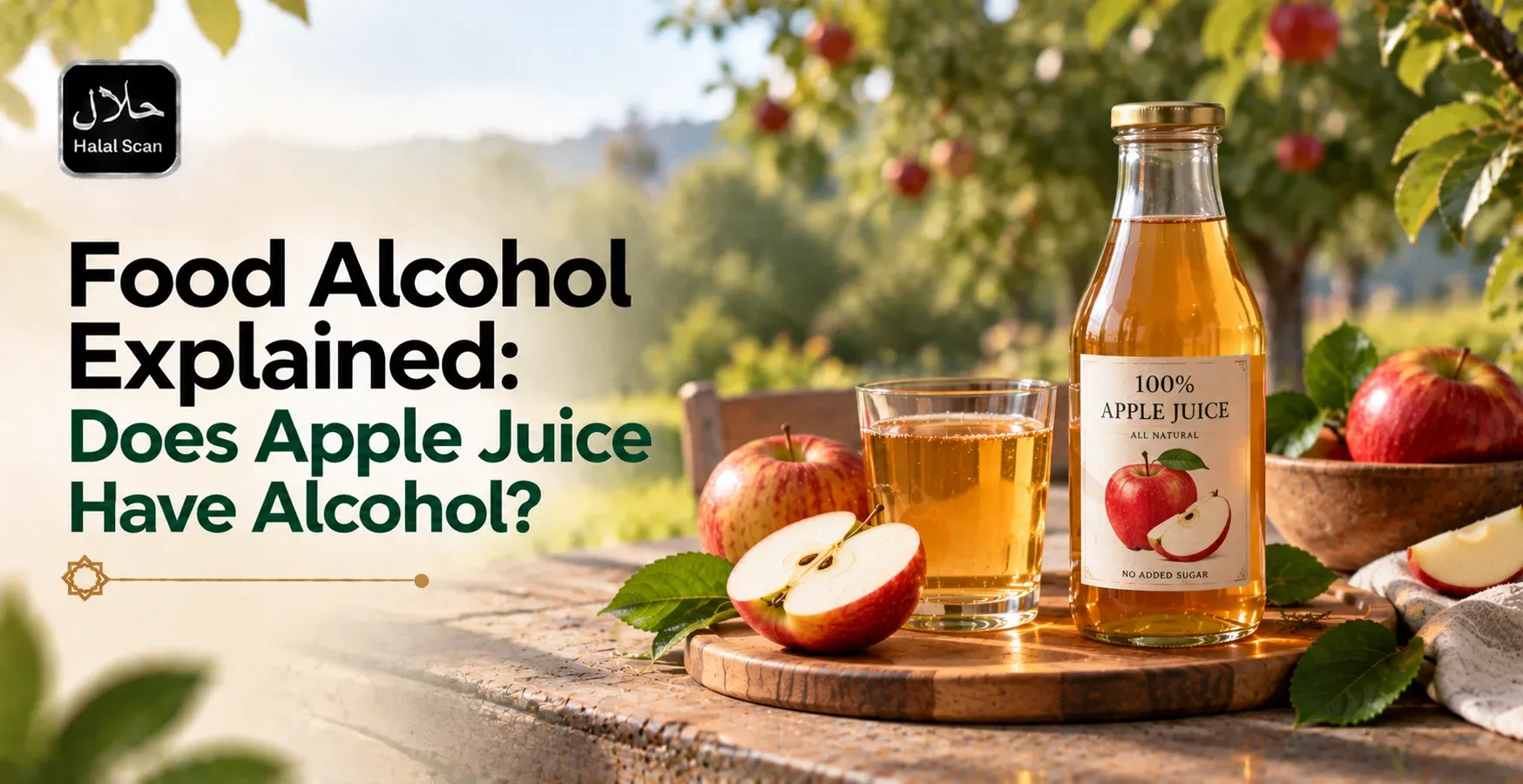
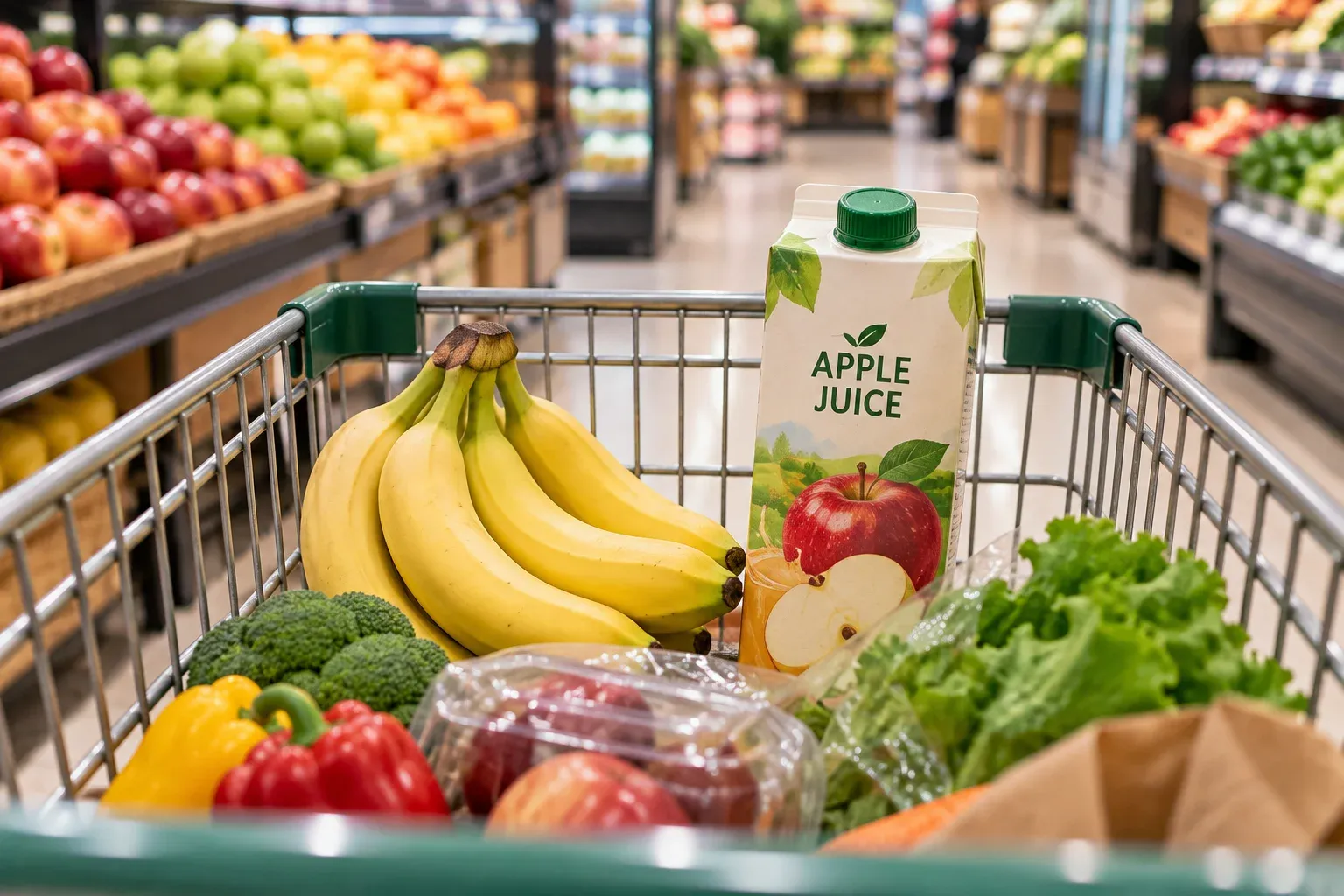
You grab a carton of apple juice or a bunch of ripe bananas, and someone mentions they contain "alcohol." For a Muslim shopper, that word immediately triggers alarm. But you do not need to panic, and you certainly do not need to stop eating fresh fruit.
In Islamic dietary law, there is a massive difference between khamr (intoxicating, haram alcohol) and the microscopic, naturally occurring ethanol that forms inside everyday fruits.
Islamic scholars are clear: the trace amounts of natural ethanol in a ripe banana or fresh juice are non-intoxicating and generally halal. The real confusion—and the reason you have to be careful in the grocery aisle—is when manufacturers artificially add industrial alcohol to packaged foods as a hidden solvent.
Here is how to tell the difference between harmless natural chemistry and doubtful added ingredients, and how to verify your groceries in seconds.
What Foods Contain Alcohol Naturally?
If you leave fruit on the counter, it ferments. This means several everyday groceries are technically foods that contain alcohol naturally.
The banana alcohol content changes as the fruit matures. People often ask how much alcohol is in a ripe banana. A standard ripe banana contains roughly 0.02 grams of ethanol per 100 grams. If the skin has dark brown spots, the ripe banana alcohol content doubles to about 0.04 grams per 100 grams. Shoppers asking do bananas contain alcohol or is there alcohol in bananas can rest easy. This natural trace amount is non-intoxicating.
Fruit juices undergo a similar biological process. Researchers found the alcohol content in apple juice ranges from 0.06 to 0.66 grams per liter, depending on the brand and storage time. You might also ask: does orange juice have alcohol? Yes. Fresh orange juice can contain up to 0.73 grams per liter. If you are wondering does orange juice contain alcohol naturally, the science confirms it does.
Many other staples belong on a list of foods that contain alcohol. Burger rolls, rye bread, and certain vinegars are all things that contain alcohol natively.
Does Yogurt Have Alcohol?
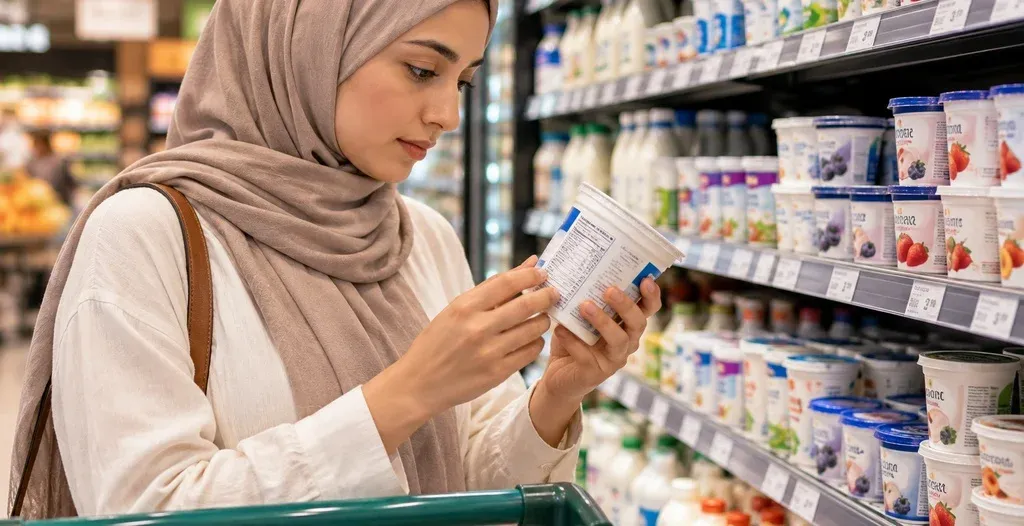
Lactic acid bacteria ferment dairy, prompting the question: does yogurt have alcohol? Commercial cherry yogurts or kefir can show trace amounts of ethanol, typically around 0.02 grams per 100 grams. Like the fruit juices, these microscopic traces are natural byproducts of the fermentation process, not haram additives.
Natural Alcohol Content in Everyday Foods
Food Item | Natural Ethanol Content | Intoxicating Risk |
|---|---|---|
Ripe Banana | ~0.02g per 100g | None |
Apple Juice | 0.06 – 0.66g per Liter | None |
Orange Juice | 0.16 – 0.73g per Liter | None |
Packaged Bread | Up to 1.28g per 100g | None |
(Data source: Journal of Analytical Toxicology)
What Type of Alcohol Is in Foods? Natural vs. Added
To understand what foods have alcohol in them, you must separate natural fermentation from industrial solvents. The alcohol type dictates the halal status.
The ethanol on supermarket shelves generally falls into two categories:
- Naturally Occurring Ethanol: This forms biologically in fruit and grains. Recognized Islamic bodies, including the International Islamic Fiqh Academy and Indonesia's MUI, generally rule that non-intoxicating, naturally occurring ethanol is halal.
- Added Ethanol (Solvents): Manufacturers buy industrial ethanol to extract flavors like vanilla. They add this liquid to candies, soft drinks, and baked goods. Because the origin of the ethanol is rarely listed on Western packaging, this makes the ingredient Doubtful (mashbooh).
Halal Status of Food Alcohol Types
Type of Food Alcohol | Source | Islamic Ruling Status |
|---|---|---|
Natural Fermentation | Fruit, grain, or dairy fermenting over time | Generally Halal (Non-intoxicating) |
Added Ethanol Solvents | Industrial extraction for "natural flavors" | Doubtful (Mashbooh) |
Khamr (Intoxicants) | Wine, beer, liquor added for taste | Non-Halal (Haram) |
Manufacturers frequently use ethanol as an additive in processed foods. When you see "natural flavors" on a juice box or snack pack, ethanol was likely used during production.
Common Hidden Sources of Added Ethanol
Ingredient on Label | Common Manufacturing Purpose | Typical Halal Scanner Status |
|---|---|---|
Natural Flavors | Ethanol used as a liquid extraction solvent | Doubtful (Mashbooh) |
Vanilla Extract | Ethanol often required by law to extract vanilla beans | Doubtful / Non-Halal |
Liquid Food Coloring | Ethanol used to stabilize liquid chemical dyes | Doubtful (Mashbooh) |
Soy Sauce (Traditional) | Natural fermentation exceeding acceptable alcohol limits | Non-Halal (Haram) |
Rather than memorizing every chemical reaction or stressing over "natural flavors," you can scan the barcode and get the exact result for the specific product in your hand.
How to Check Added Ethanol With Halal Scanner
You cannot rely on the naked eye to identify what foods contain ethanol as an added solvent. Instead of guessing in the aisle, use Halal Scanner.
Here is how to check your groceries:
- Open the app while standing in the grocery aisle.
- Scan the barcode on the back of any packaged food or drink.
- Read the result. The app instantly cross-references the ingredients and returns a clear status: Halal, Doubtful, or Non-Halal.
- Save safe items. Add verified halal products to a shared list so your spouse knows exactly what to buy next time.
If you are shopping without your phone, your best defense is sticking to fresh whole foods or looking for a certified halal stamp from recognized bodies.
Recognized Halal Certification Bodies to Look For
Certification Body | Primary Region | Certification Scope |
|---|---|---|
IFANCA | North America / Global | Packaged foods, supplements, cosmetics |
HFA (Halal Food Authority) | UK / Europe | Meat, poultry, processed supermarket foods |
JAKIM | Malaysia / Southeast Asia | Global standard for food, consumer goods |
MUI | Indonesia / Southeast Asia | High-authority global standard |
For everything that lacks one of these official stamps, the scan takes less time than reading the label. The app is free to download with premium via subscription on the App Store or Google Play.
Why 500,000+ Users Trust Our Database
Navigating what foods contain ethanol shouldn't be a guessing game. Halal Scanner draws on a database of over 1 million+ verified products across 50+ countries.
With 100,000+ daily scans, our community relies on accurate, three-state classifications to feed their families with confidence. Tap the App Store or Google Play badge below to verify your next shopping trip.
Learn more about reading ingredient labels on the Halal Scanner Blog site!