

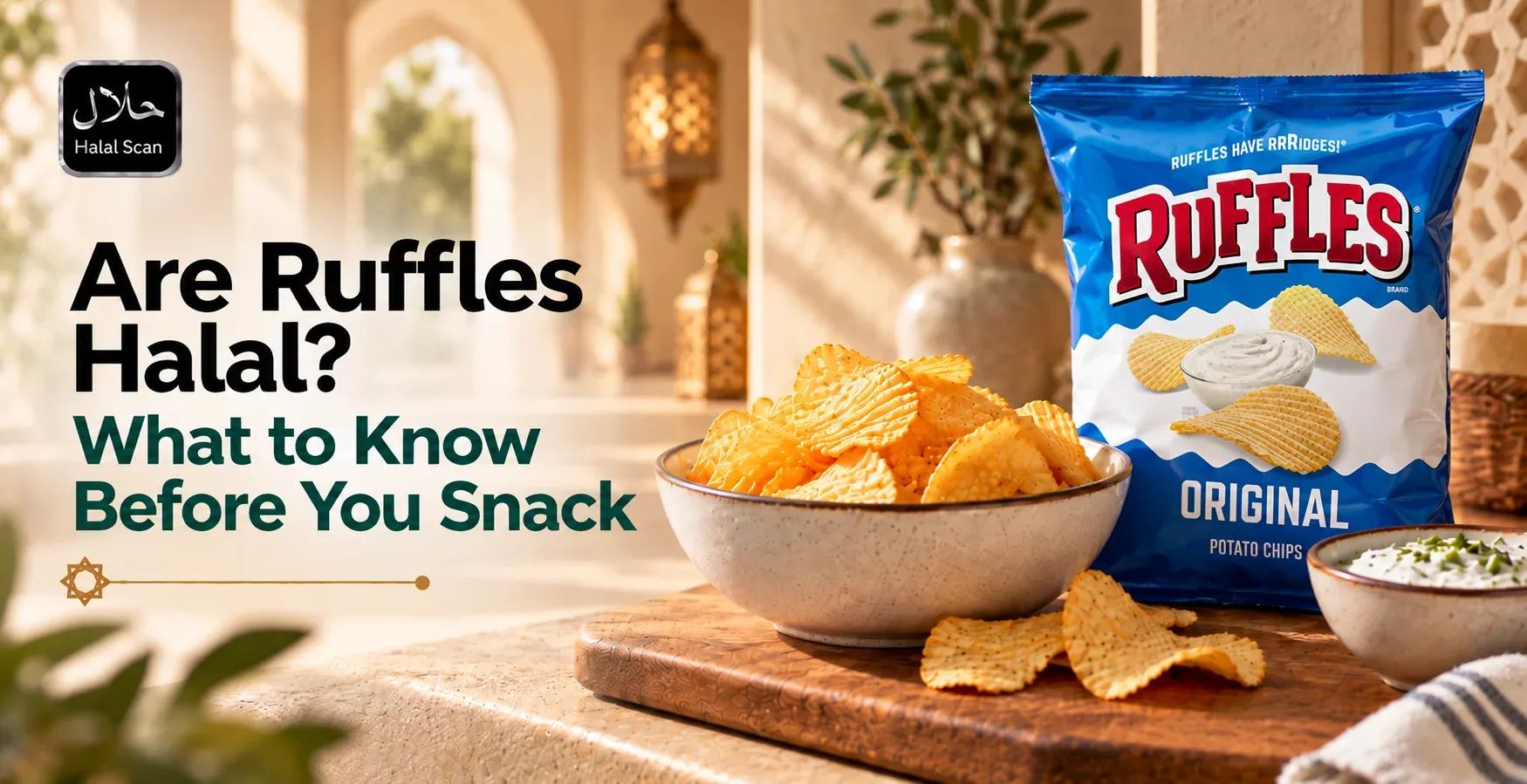
Are Ruffles halal? The answer depends entirely on the flavor and your location. Plain Ruffles generally classify as Halal, but dairy-heavy flavors like Cheddar and Sour Cream frequently flag as Doubtful or Non-Halal. This happens because cheese seasonings often rely on animal-derived enzymes. To get an accurate reading, you must evaluate the exact bag you are holding.
When you stand in the snack aisle, grabbing a bag of chips feels simple. But if you practice strict dietary compliance, packaged snacks represent a minefield of hidden ingredients. You cannot rely on brand name alone. You have to look at the sourcing behind the seasoning.
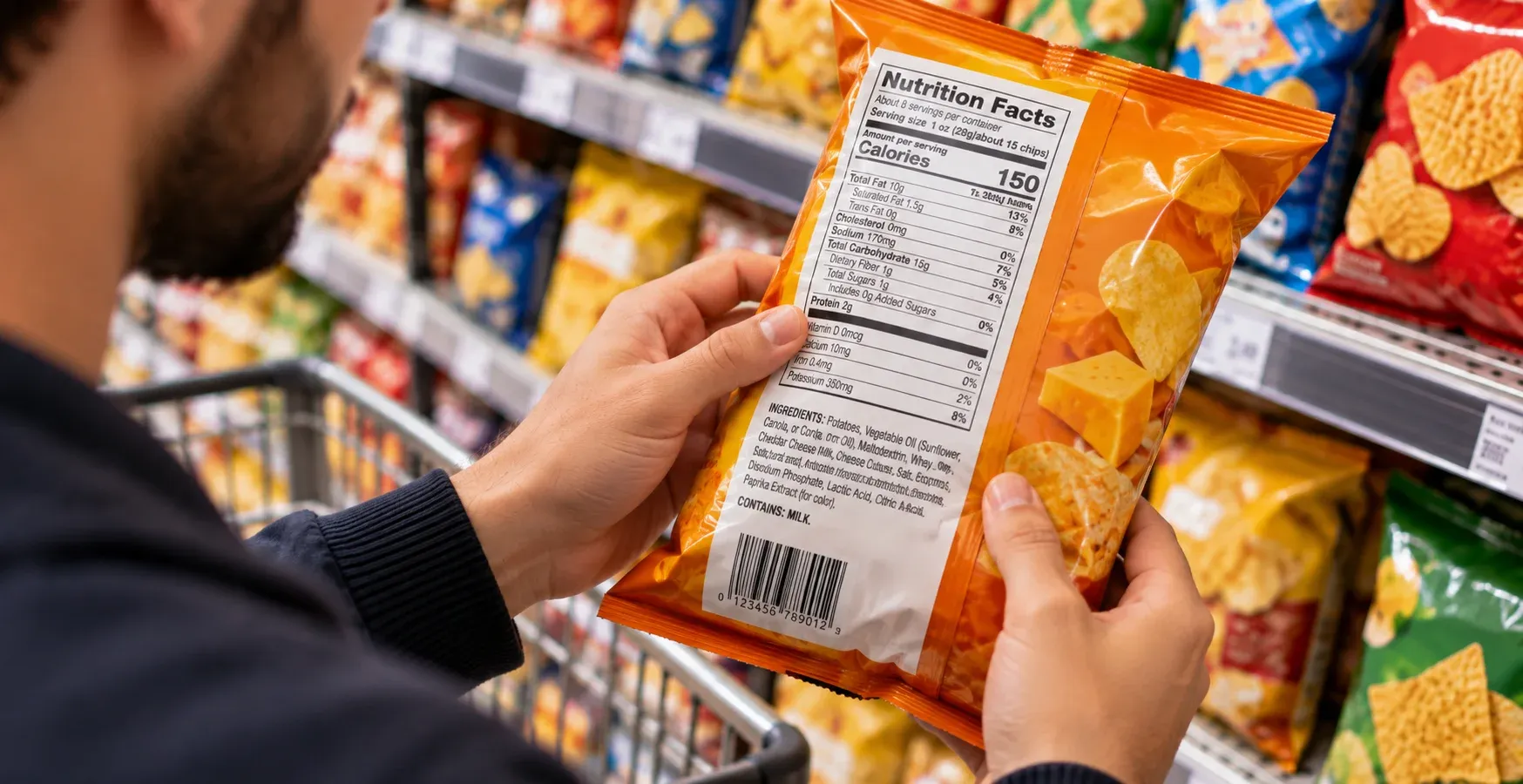
Why Flavor and Region Change Everything
Food manufacturers do not use a single global recipe for their products. A bag of chips sold in Dubai uses different ingredient suppliers than a bag sold in Chicago.
In Muslim-majority regions, major brands ensure their supply chain meets local certification standards. In Western markets like the United States and Canada, those same brands optimize for cost. They source enzymes, flavor enhancers, and whey from the cheapest available suppliers, which frequently introduces animal byproducts into otherwise vegetarian-looking snacks.
If you read the label on a bag of chips, potatoes and oil are not the problem. The risk lives in the seasoning dust.
Common Snack Ingredients That Trigger a "Doubtful" Status
When scanning snacks through the database, several recurring ingredients push a product from Halal to Doubtful (mashbooh).
Ingredient | Found In | Halal Risk Factor |
|---|---|---|
Rennet (Enzymes) | Cheese powders, Cheddar | Often sourced from calf or pig stomachs to curdle milk. Unless specified as microbial or plant-based, it is mashbooh. |
Whey | Sour cream, Ranch, Cheese | A byproduct of cheese making. If the original cheese used animal rennet, the resulting whey is compromised. |
Natural Flavors | BBQ, Meat-flavored chips | Can be extracted from plant or animal sources. The US FDA does not require companies to list the specific source on the label. |
E-Numbers (e.g., E471) | Emulsifiers, textured chips | Can be derived from plant fats or animal fats (including pork). |
Data sourced from general halal food science principles. For specific E-number tracking, check your region's local certifying body.
Is Ruffles Cheddar and Sour Cream Halal?
This is one of the most common questions from Muslim shoppers. If you buy Ruffles Cheddar and Sour Cream in North America, the product contains cheese seasoning, whey, and enzymes.
Because the manufacturer does not publicly guarantee that the enzymes used in the cheese powder come from microbial (plant) sources, many halal food scholars and verification tools flag this specific flavor as Doubtful or Non-Halal.
You might notice a "U" with a circle around it on the bag, followed by a "D". This is a Kosher symbol (OU-D), meaning the product contains dairy. However, Kosher certification does not automatically equal halal. While Kosher standards restrict pork, they allow for certain animal enzymes that do not meet standard Islamic zabiha requirements. You cannot use a Kosher dairy symbol as a blank check for halal compliance.
How to Check This With Halal Scanner
Memorizing complex chemical names and enzyme sources is exhausting. Formulations also change without warning. A flavor that was safe last year might use a new supplier today.
Rather than guessing, you can verify the exact bag in your hand. Halal Scanner checks your product against a database of over 1 million verified items to give you a clear, three-state result: Halal, Doubtful, or Non-Halal.
- Open the app while you are in the store aisle.
- Scan the barcode on the back of the specific bag of chips.
- Read the result. If the app flags the item as Doubtful, it will highlight the exact ingredient causing the issue—like animal enzymes or an ambiguous E-number.
- Save it. If the snack clears, add it to your [shared halal list]([BLOG URL]) so your family knows it is safe to buy next time.
The scan takes less time than reading the label. Halal Scanner is free to download with premium via subscription on the App Store and Google Play.
Making Safe Choices Without a Scanner
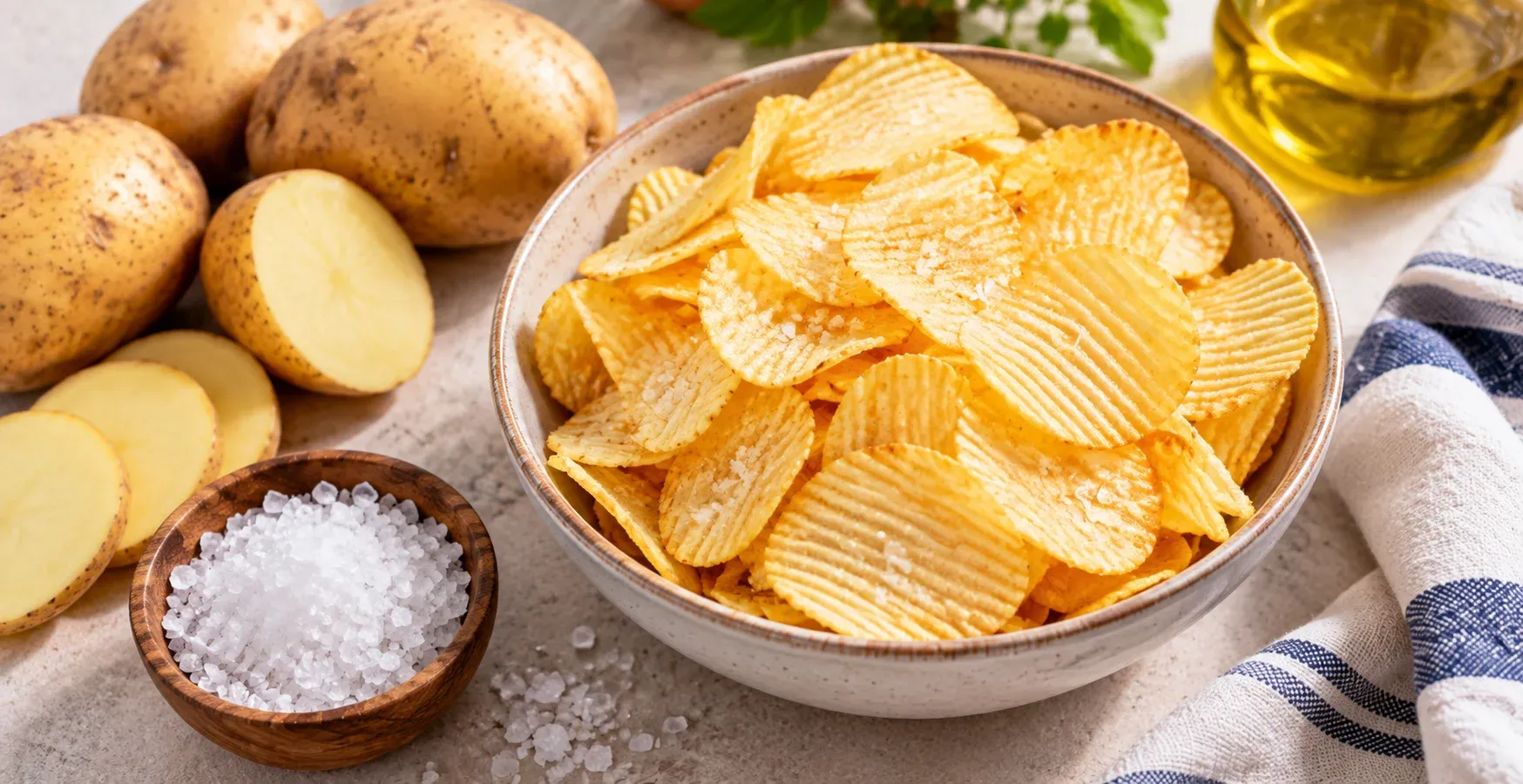
If you don't have your phone handy, stick to two rules. First, prioritize plain potato chips. Products containing only potatoes, vegetable oil, and sea salt carry almost zero risk of hidden animal byproducts. Second, look for explicit vegan certification. A certified vegan label guarantees the absence of animal rennet and animal-derived whey.
Halal diet compliance does not require you to stop snacking, but it does require vigilance. By understanding what goes into cheese powders and utilizing barcode technology, you can protect your deen without the stress.