

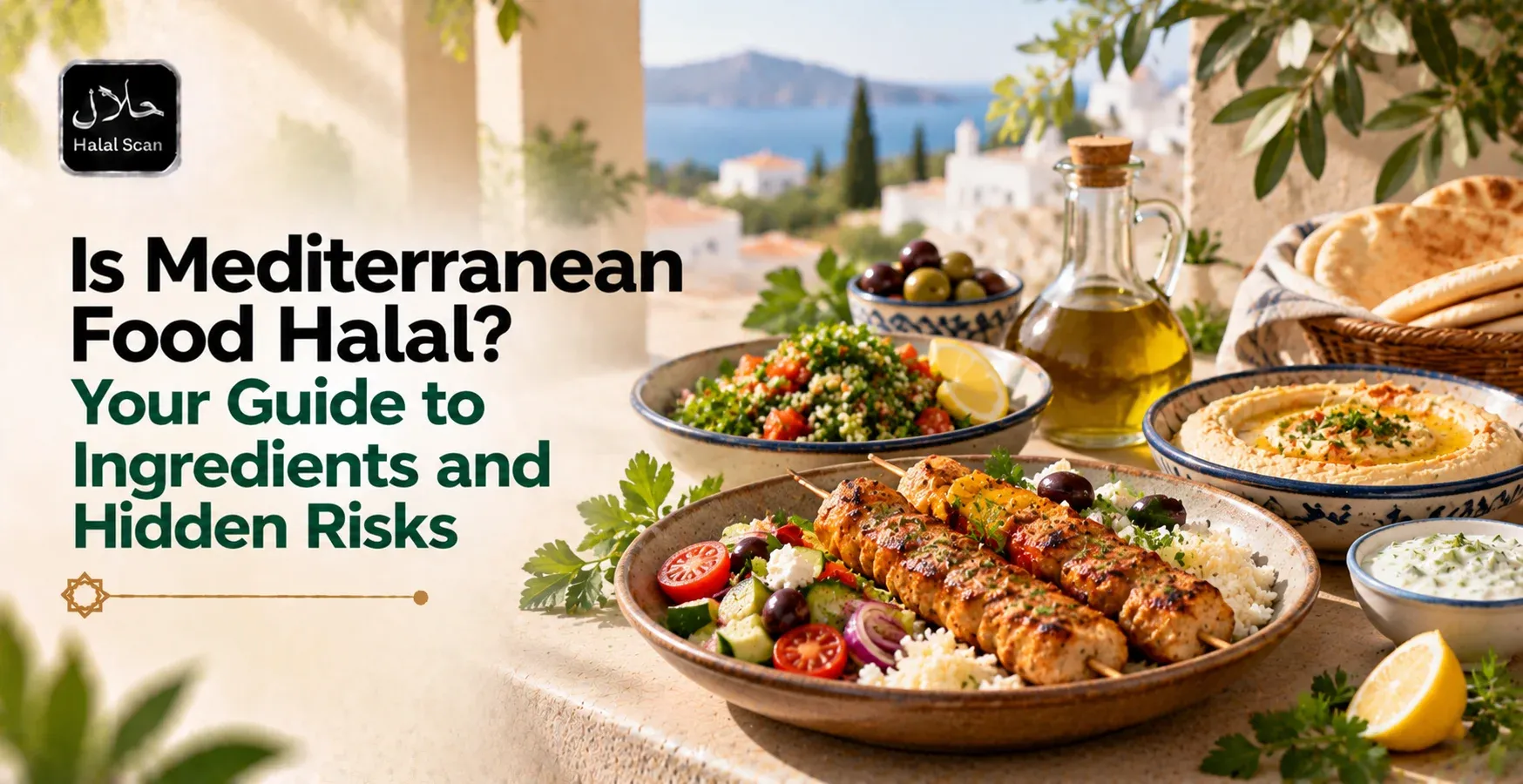
Mediterranean food is not automatically halal. While the cuisine relies heavily on naturally halal plant foods and seafood, restaurant dishes and packaged goods often contain hidden risks. You must watch out for wine in marinades, non zabiha meats, and Doubtful animal rennet in traditional cheeses.
What exactly is Mediterranean food? This cuisine spans the regions bordering the Mediterranean Sea. It includes Southern Europe like Greece and Italy, the Levant including Lebanon and Syria, and North Africa like Morocco and Egypt. The diet features staples such as olive oil, chickpeas, eggplant, grilled meats, and flatbreads. Popular dishes include hummus, falafel, gyros, and dolmas.
Authentic Middle Eastern or North African dishes usually adhere to Islamic dietary laws. However, when you visit a general Mediterranean restaurant in a Western country, you encounter Greek and Italian influences. These European culinary traditions frequently use alcohol for cooking and incorporate pork products, creating significant cross contamination risks.
By understanding exactly which ingredients fall into the Halal, Doubtful, and Non Halal categories, you can protect your family and enjoy this cuisine safely.
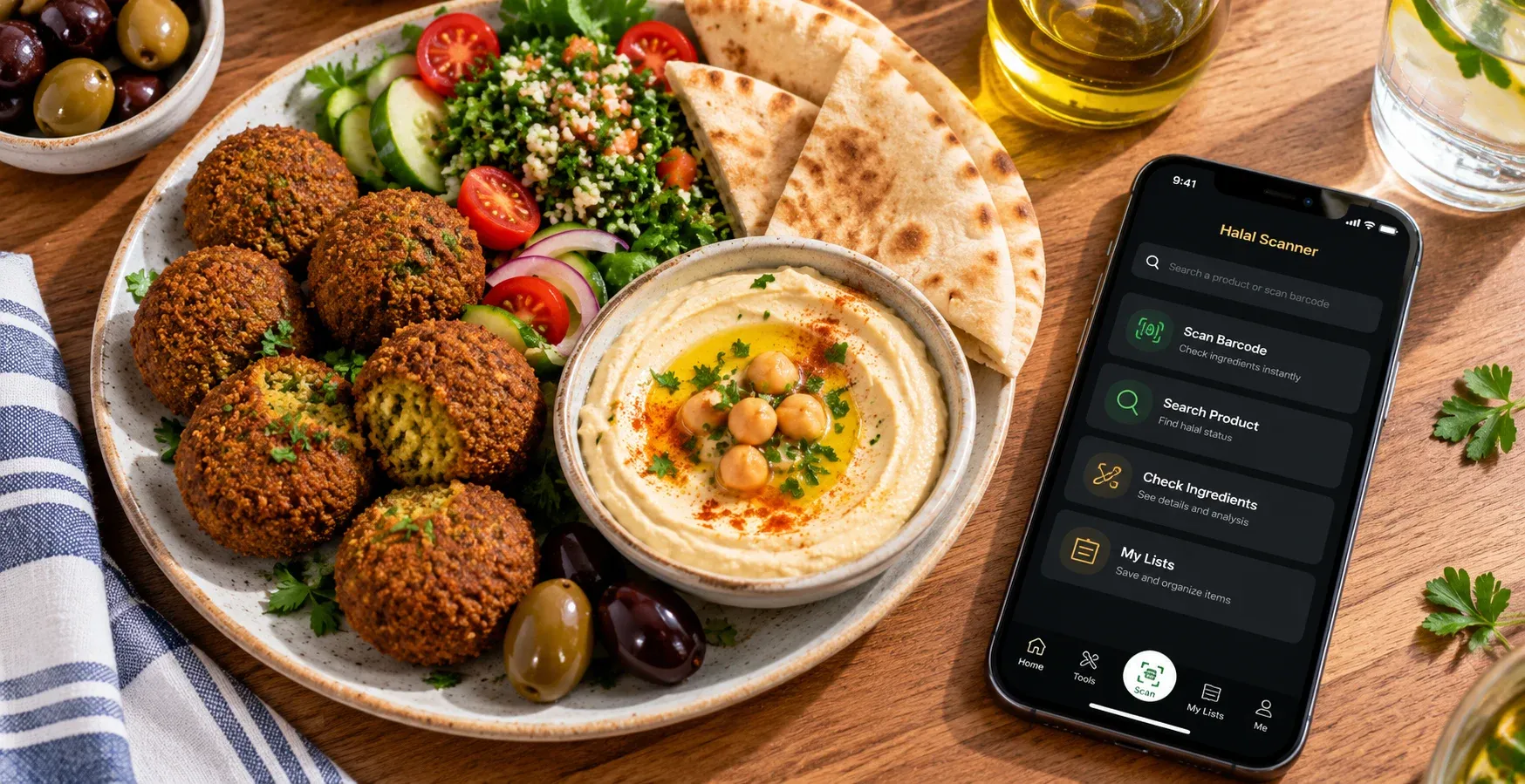
Hidden Risks in Mediterranean Meats
The most obvious concern on any menu is the meat. Many people assume that because a dish originates from the Middle East, the meat served in a Western restaurant is acceptable. This is a dangerous assumption.
If a restaurant serves gyros, shawarma, or kebabs, you must ask where they source their meat. Unless the establishment explicitly displays a halal certificate from a recognized body, the chicken, beef, or lamb is likely standard commercial meat. This makes it Non Halal.
Additionally, traditional Greek gyro meat is sometimes a mixture of beef and lamb, but authentic Greek recipes often use pork. Always verify the meat source before ordering.
The Feta Cheese Problem
Cheese is a staple in Mediterranean diets. Feta, halloumi, and parmesan style cheeses appear in salads and wraps. The risk here lies in the enzymes used to curdle the milk.
Traditional cheese making often uses animal rennet extracted from the stomach lining of calves. If the calf was not slaughtered according to zabiha guidelines, the resulting rennet is Non Halal. According to the Islamic Food and Nutrition Council of America (IFANCA), consumers should look for microbial rennet or plant derived enzymes. Unless a packaged feta cheese explicitly states it uses microbial enzymes or carries a halal certification, its status remains Doubtful.
Alcohol in Marinades and Sauces
Alcohol frequently hides in Mediterranean cooking. Greek and Italian influenced dishes often use white wine to deglaze pans for seafood dishes or pasta sauces.
Red wine vinegar is another common ingredient in Mediterranean salad dressings. While the acetic acid transformation process alters the alcohol, scholarly opinions differ on its consumption. Many standard cooking wines and extracts contain residual alcohol, pushing these sauces into the Doubtful or Non Halal categories depending on the specific fatwa you follow. You can read more about chemical transformations in food science through verified resources like the Halal Research Council.
Common Mediterranean Ingredients Risk Table
Ingredient | Typical Dish | Risk Classification | Reason for Classification |
|---|---|---|---|
Falafel | Wraps, platters | Usually Halal | Made from chickpeas and spices. Cross contamination in fryers is the main risk. |
Feta Cheese | Greek salads | Doubtful | Often made with animal rennet. Requires verification of microbial enzymes. |
Gyros Meat | Pita sandwiches | Non Halal | Commercial meat is rarely zabiha unless specified. May contain pork. |
Tzatziki | Dips, sauces | Doubtful | Yogurt base is safe, but commercial brands may use gelatin for thickening. |
Grape Leaves | Dolmas (stuffed) | Doubtful | Rice stuffing is Halal, but meat versions require zabiha verification. |
How to Check Packaged Foods with Halal Scanner
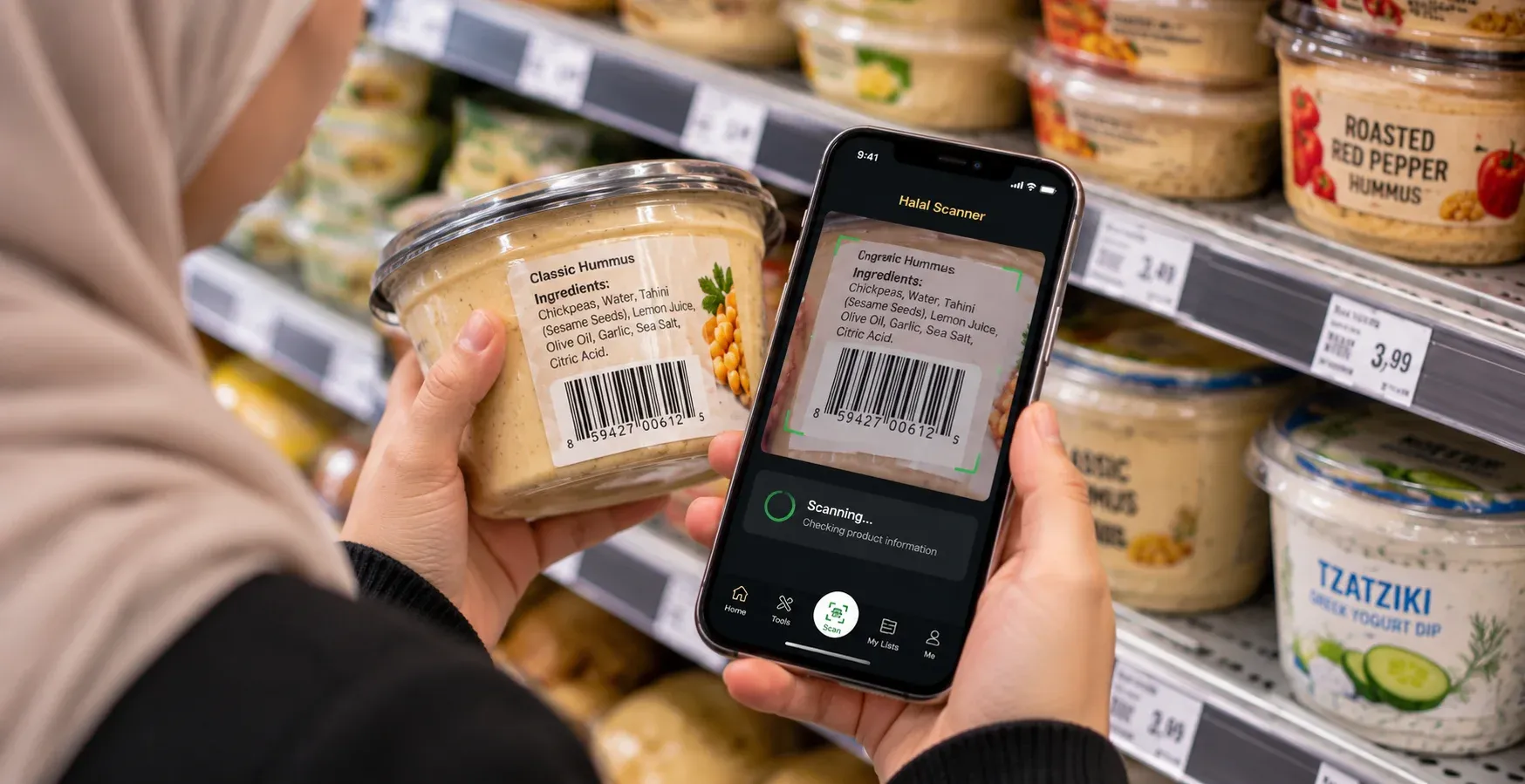
When you buy packaged hummus, pita bread, or feta cheese from the grocery store, reading the label is exhausting. Food manufacturers use complex E numbers and vague terms like natural flavors.
Instead of guessing, use Halal Scanner to verify the ingredients instantly.
- Open the app: Launch Halal Scanner on your phone while in the grocery aisle.
- Scan the barcode: Point your camera at the packaged Mediterranean food item.
- Read the result: The app references our database to classify the product as Halal, Doubtful, or Non Halal.
- Review Doubtful flags: If a product like feta cheese is flagged as Doubtful, the app will highlight the specific ingredient causing concern, such as animal rennet.
- Share with family: Add safe items to a shared halal list so your spouse knows exactly which brand of hummus to buy next time.
Looking for the right halal symbol takes time. The scan takes less time than reading the label. Halal Scanner is free to download with premium via subscription on the App Store or Google Play.
Why Muslims Trust Our Database
When your deen is at stake, you need data you can rely on. The Halal Scanner database contains over 1 million verified products across 50 plus countries.
More than 500,000 trusted users rely on the app to make safe grocery decisions. We process over 100,000 daily scans, constantly updating our ingredient profiles to ensure you get accurate, geographically relevant answers.
Finding safe food should not be stressful. Tap the App Store or Google Play badge below to verify your next meal in seconds.