


The best halal chocolate relies strictly on plant-based cocoa, sugar, and halal-certified milk derivatives, entirely avoiding alcohol-based vanilla extract, insect-derived E120 (carmine), and animal-fat emulsifiers like E471. While pure cacao is naturally permissible, popular milk chocolates often introduce whey powder processed with non-zabiha animal rennet, placing them in the doubtful (mashbooh) category.
You are standing in a supermarket in London or Toronto, craving a sweet treat. You flip the premium chocolate bar over. The ingredients list is packed with E-numbers, "natural flavorings," and whey powder. Is the emulsifier from plants or pork? Is the vanilla extracted using alcohol? When you live in a non-Muslim-majority country, buying halal food and chocolate requires vigilance. You need to know exactly what to look for and what to avoid to protect your deen while checking your grocery list.
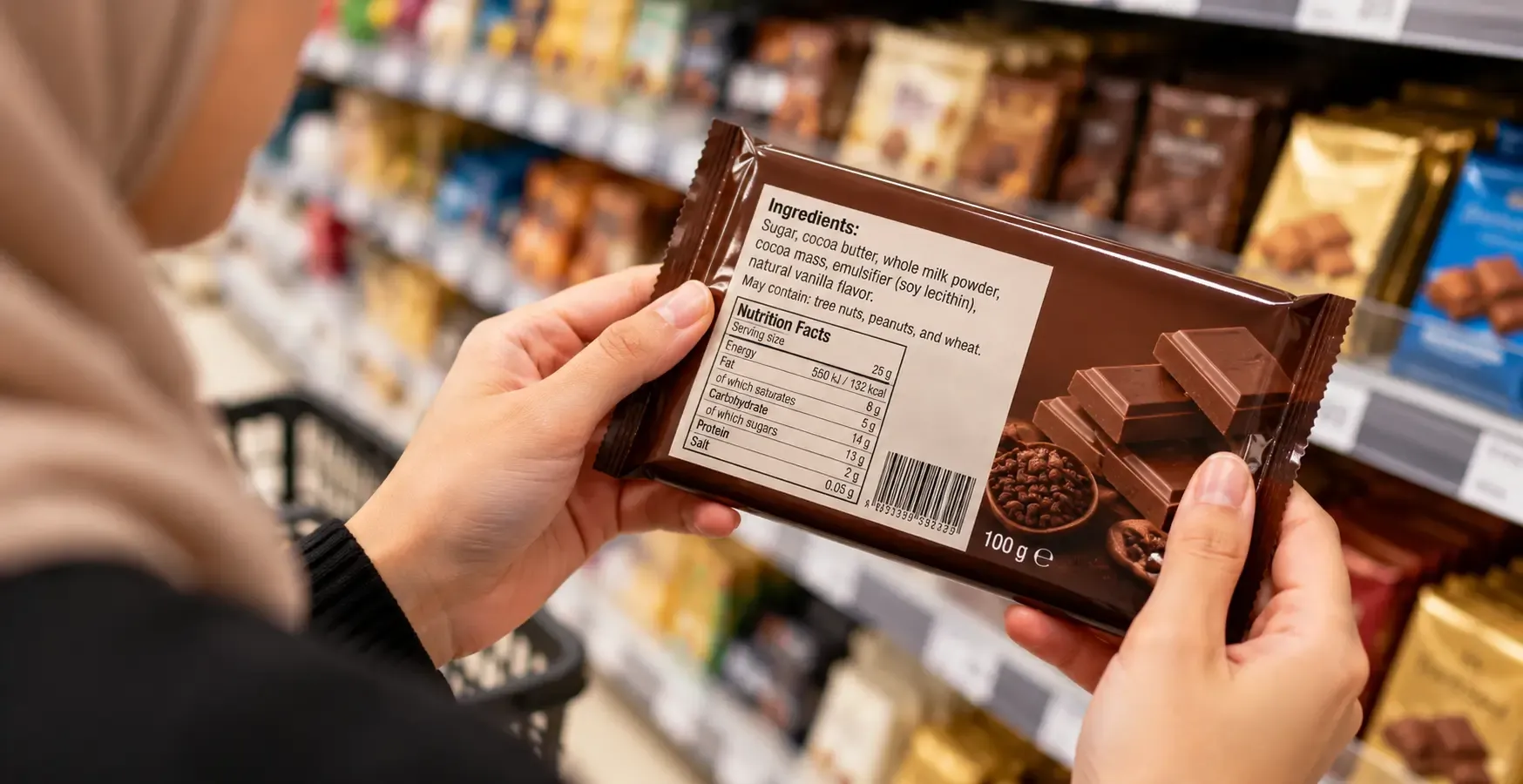
What Makes Chocolate Doubtful or Non-Halal?
To buy halal chocolate confidently, you must understand the most common hidden ingredients that shift a product from clear halal status to doubtful (mashbooh) or definitively non-halal. Plain chocolate, at its core, is permissible; the trouble begins on the manufacturing line.
- Whey Powder: Used heavily in milk chocolate to add creaminess, whey is a byproduct of cheese-making. This process frequently relies on animal rennet. If the rennet originates from a non-zabiha calf, the whey becomes doubtful.
- E471 (Mono- and diglycerides): This emulsifier prevents cocoa butter from separating. E471 can be derived from plant oils (halal) or animal fats, including pork (non-halal). Without a trusted certification logo, E471 remains doubtful.
- E120 (Carmine or Cochineal): Often used to color ruby chocolate or red-coated candies, E120 is extracted from crushed cochineal insects. Many scholars classify it as definitively non-halal.
- Alcohol-Based Flavorings: Premium chocolates frequently use vanilla extract suspended in ethanol. Even trace amounts of alcohol render the chocolate non-halal.
- Cross-Contamination: A clean ingredient list does not guarantee a safe bar if it is manufactured on shared equipment with liquor-filled chocolates or gelatin-based nougats.
Instead of memorizing a permanent list of safe brands, since formulas frequently shift over time, you can scan the barcode and get the result for this specific product in the app. Halal Scanner is free to download with premium features via subscription on iOS and Android.
Certified Halal Chocolate Brands and Regional Differences
If you want to know where to buy halal chocolate, your safest strategy is finding products bearing a recognized certification logo, such as HFA in the UK, HMA in Canada, or JAKIM globally.
In Western markets, dedicated Muslim-friendly brands are expanding. However, mainstream commercial chocolate varies wildly based on geography. For example, a commercial chocolate bar manufactured in a Malaysian facility might hold a valid JAKIM certification, meaning its E471 is audited and plant-derived. Meanwhile, the exact same brand produced in a European facility for the UK market might lack certification and use animal-derived emulsifiers.
Because of this geographic variance, you cannot rely on a blanket statement that a specific global brand is universally halal. Always check the packaging in front of you.
Halal Lindt Alternative, Halal Kinder Chocolate, and Swaps
Finding a halal snickers alternative or a halal kinder chocolate swap means seeking out brands that explicitly use plant-based emulsifiers and certified dairy. Here is how to navigate the most common cravings.
Popular Craving | Halal-Friendly Swap Strategy | Ingredients to Watch Out For |
|---|---|---|
Halal Lindt Alternative | Look for vegan dark chocolates or artisan brands with clear HFA or IFANCA certifications. | Liqueur fillings, unverified whey powder, unspecified flavorings. |
Halal Kinder Chocolate | Seek out halal chocolate uk specialty stores offering zabiha-certified milky bars. | Unspecified emulsifiers (E471). |
Halal Snickers Alternative | Choose peanut-nougat bars explicitly labeled vegan or certified halal. | Gelatin in the nougat layer. |
When searching for the best halal chocolate canada has to offer, local zabiha grocers and dedicated online retailers are highly reliable sources. Vegan chocolate is a helpful starting point because it skips dairy and animal fat, but it is not automatically halal. Alcohol-based vanilla flavoring and cross-contamination can still apply to vegan bars.
How to Check Chocolate with Halal Scanner
Memorizing E-numbers is tedious, and corporate recipes change constantly. Rather than guessing if an emulsifier is plant-based, here is how to verify your chocolate in the aisle:
- Read the Label First: Always check for obvious non-halal ingredients like liqueur, rum extract, or E120.
- Look for the Logo: Spotting a trusted certification logo on the back of the wrapper is your fastest green light.
- Scan the Barcode: Open Halal Scanner and point your phone camera at the chocolate barcode.
- Review the Classification: The app cross-references the ingredients against verified halal data sources, returning an immediate result: Halal, Doubtful, or Non-Halal.
- Save to Your Shared List: Add safe chocolates to your family's shared grocery list so whoever goes to the store knows exactly what to buy.
The scan takes less time than reading the label. Tap the App Store or Google Play badge to download Halal Scanner—it is free to download with premium features via subscription.
Trust in Numbers
With over 1 million+ verified products and 100,000+ daily scans across 50+ countries, Halal Scanner relies on verified data to help 500,000+ users navigate the grocery aisle with confidence.
Conclusion
Identifying the best halal chocolate shouldn't require a food science background. By understanding high-risk ingredients like whey powder and E471, and by leveraging modern verification tools, your family can enjoy sweets without compromising your religious practice. Ready to shop with certainty? Download Halal Scanner free on the App Store or Google Play today.