
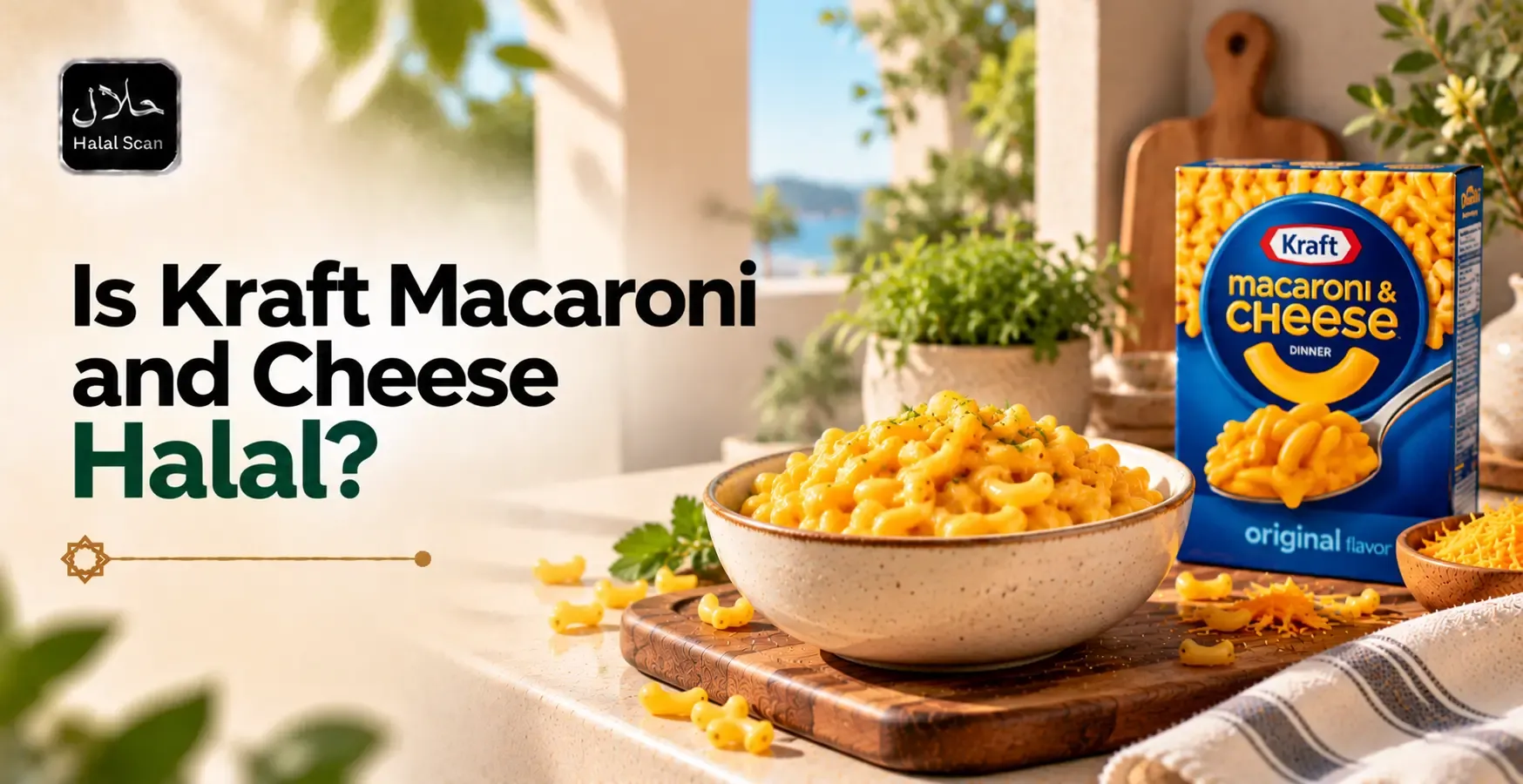
Is Kraft Macaroni and Cheese halal? The standard North American Kraft Mac and Cheese is not officially halal-certified, and its status falls into the Doubtful (mashbooh) category. The cheese powder contains enzymes (rennet) that can come from mixed animal and microbial sources, making it problematic for strict halal observers.
When you stand in the grocery aisle looking at that familiar blue box, the ingredients list does not give you the full story. While the pasta itself is a simple mix of wheat flour, the cheese sauce mix contains hidden complexities.
Here is exactly what you need to look for when checking if your specific box is permissible.
The Main Concern: Cheese Enzymes (Rennet)
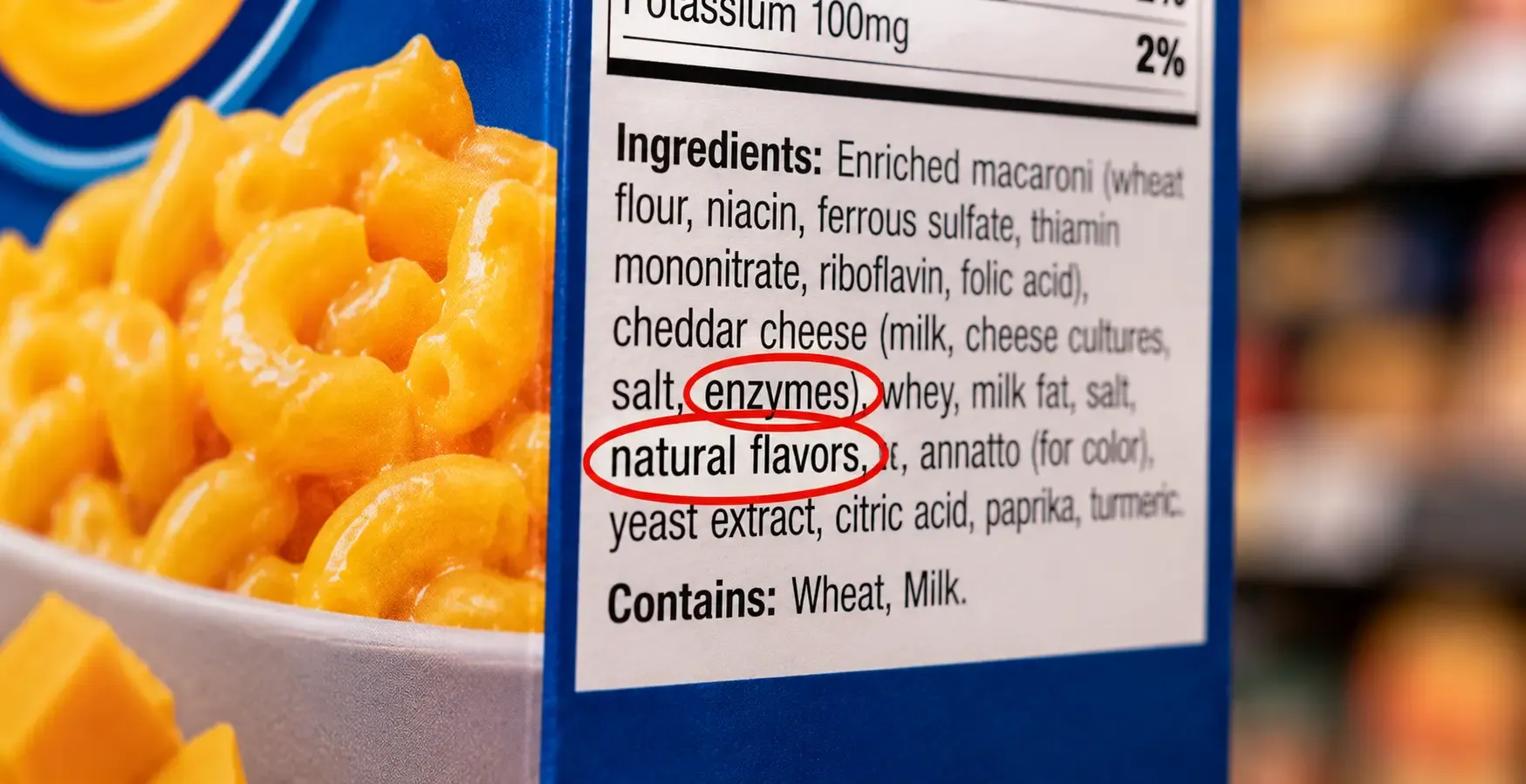
The core issue with most commercial cheese powders comes down to one ingredient: enzymes.
To turn milk into cheese, manufacturers use rennet to curdle the dairy. According to the Islamic Food and Nutrition Council of America (IFANCA), rennet derived from microbial or plant sources is halal. However, rennet derived from calves or pigs is haram unless the animal was slaughtered according to zabiha standards.
In North America, Kraft has historically sourced their enzymes from both microbial and animal origins, depending on supplier availability. The U.S. Food and Drug Administration (FDA) labeling guidelines do not require food brands to specify the exact origin of "enzymes" on the nutrition panel. Because animal and microbial enzymes are mixed in the supply chain, the cheese powder enters the Doubtful (mashbooh) category.
Hidden Additives and Natural Flavors
Beyond the cheese cultures, commercial mac and cheese often lists "natural flavors."
In food science, a natural flavor can be extracted from plants, dairy, or meat. Furthermore, alcohol is sometimes used as a solvent to extract these flavors. Without a recognized halal certification stamp from a body like IFANCA, HFSAA, or JAKIM, you cannot verify the extraction method of these proprietary flavor blends just by reading the cardboard box.
Halal vs. Doubtful Ingredients Breakdown
Ingredient | Typical Source | Halal Status |
|---|---|---|
Enriched Macaroni | Wheat flour | Halal |
Enzymes (Rennet) | Microbial or Animal (Calf/Porcine) | Doubtful (Unless specified microbial) |
Natural Flavors | Plant, Animal, or Alcohol-extracted | Doubtful |
Whey / Milkfat | Dairy | Halal |
Regional Differences: US/Canada vs. Imported
Your location changes the ruling entirely. A box of Kraft Macaroni and Cheese bought in a supermarket in Chicago is not manufactured in the same facility as a box sold in Dubai.
- North America: Standard boxes lack halal certification and use mixed-source enzymes.
- MENA Region: Kraft products manufactured for the Middle East are often formulated to meet local regulations and carry official halal certification.
- Vegetarian Labels: Some regional variations may carry a certified Vegetarian label. This guarantees no animal rennet was used, though you still need to check for alcohol-based solvents in flavors.
Relying on a static internet search is dangerous because a web article does not know which factory produced the box in your hands.
How to Check Your Box With Halal Scanner
Instead of guessing the enzyme source or trying to memorize regional supply chains, you can check the exact product you want to buy. Here is how to use Halal Scanner to verify your mac and cheese:
- Open the App: Open Halal Scanner (free to download with premium via subscription).
- Scan the Barcode: Point your camera at the UPC barcode on the bottom of the Kraft box.
- Read the Result: The app cross-references that specific barcode against a database of over 1 million verified products, returning a clear Halal, Doubtful, or Non-Halal result based on that exact regional formula.
- Review the Ingredients: If the result is Doubtful, the app flags the specific ingredients causing the issue so you can consult with your local scholar.
The scan takes less time than reading the label. Tap the App Store or Google Play badge below to get started.
Halal Scanner processes over 100,000 daily scans across 50+ countries. Our database does not guess; it relies on verified halal data sources and community reporting to keep your family's weekly shop secure.