

Sausage is haram if it contains pork, non-zabiha meat, blood, or is stuffed into a haram casing. Even a package labeled 100% beef falls into the Doubtful category if the manufacturer uses pork intestines for the casing or hides haram E-numbers in the spice mix.
Determining the status of processed meat goes far beyond reading the primary meat type on the front label. When you buy groceries in the US, UK, or Europe, the meat industry standardizes production in ways that introduce hidden cross-contamination risks.
A beef sausage might contain authentic zabiha beef, but the factory processing it might ruin its halal status through shared equipment or prohibited binding agents. You need to verify the entire ingredient list, the production environment, and the casing material before putting it in your shopping cart.
What Makes Sausage Haram? The Casing and Filler Problem
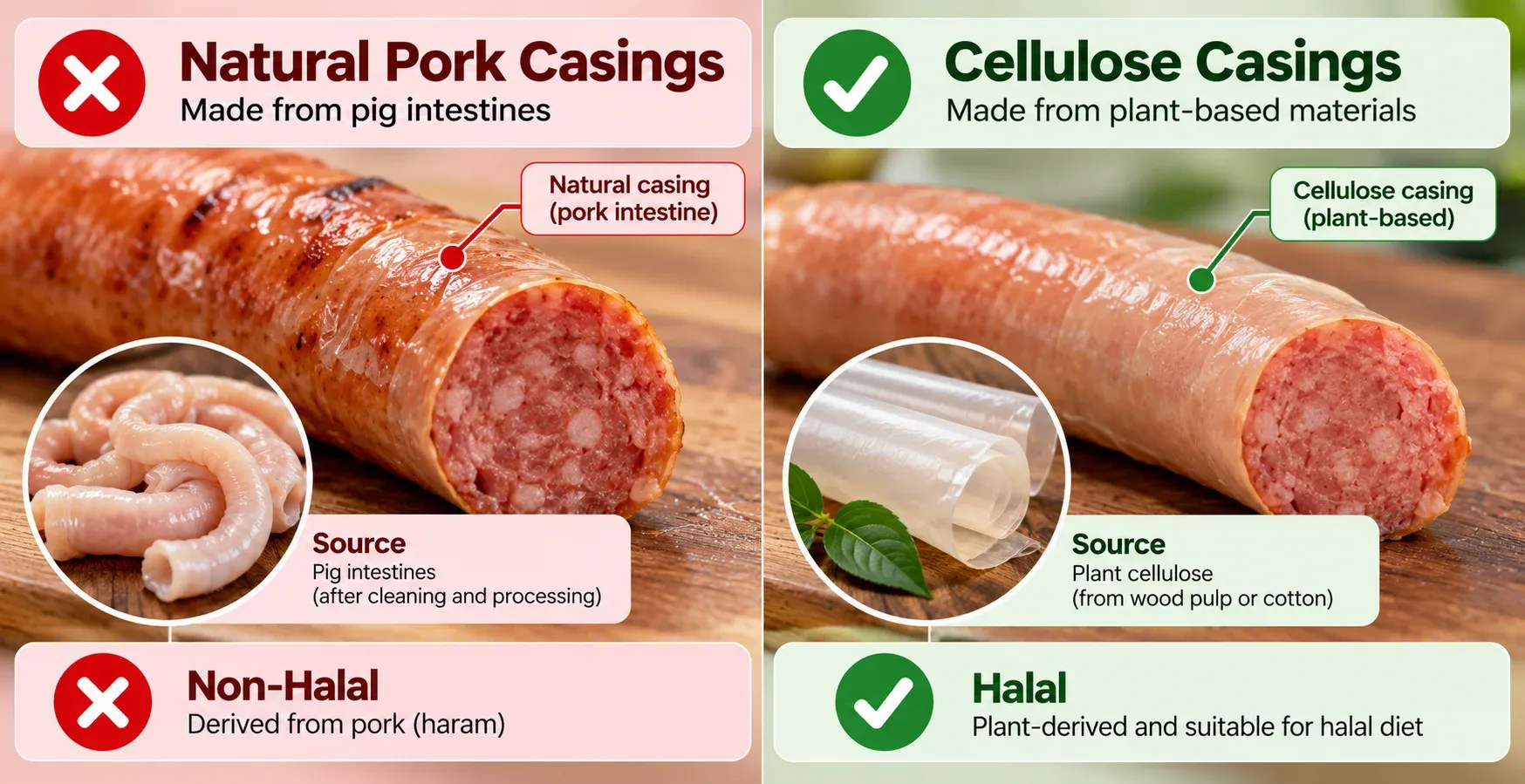
The most common reason a non-pork sausage becomes haram is the casing. Manufacturers need a thin, edible membrane to hold the ground meat together.
The industry typically uses natural casings derived from the submucosa layer of animal intestines. According to food processing benchmarks, pork intestines remain the most popular choice for commercial natural casings because of their high elasticity and low cost. If a beef or chicken sausage uses a pork casing, the entire product is non-halal.
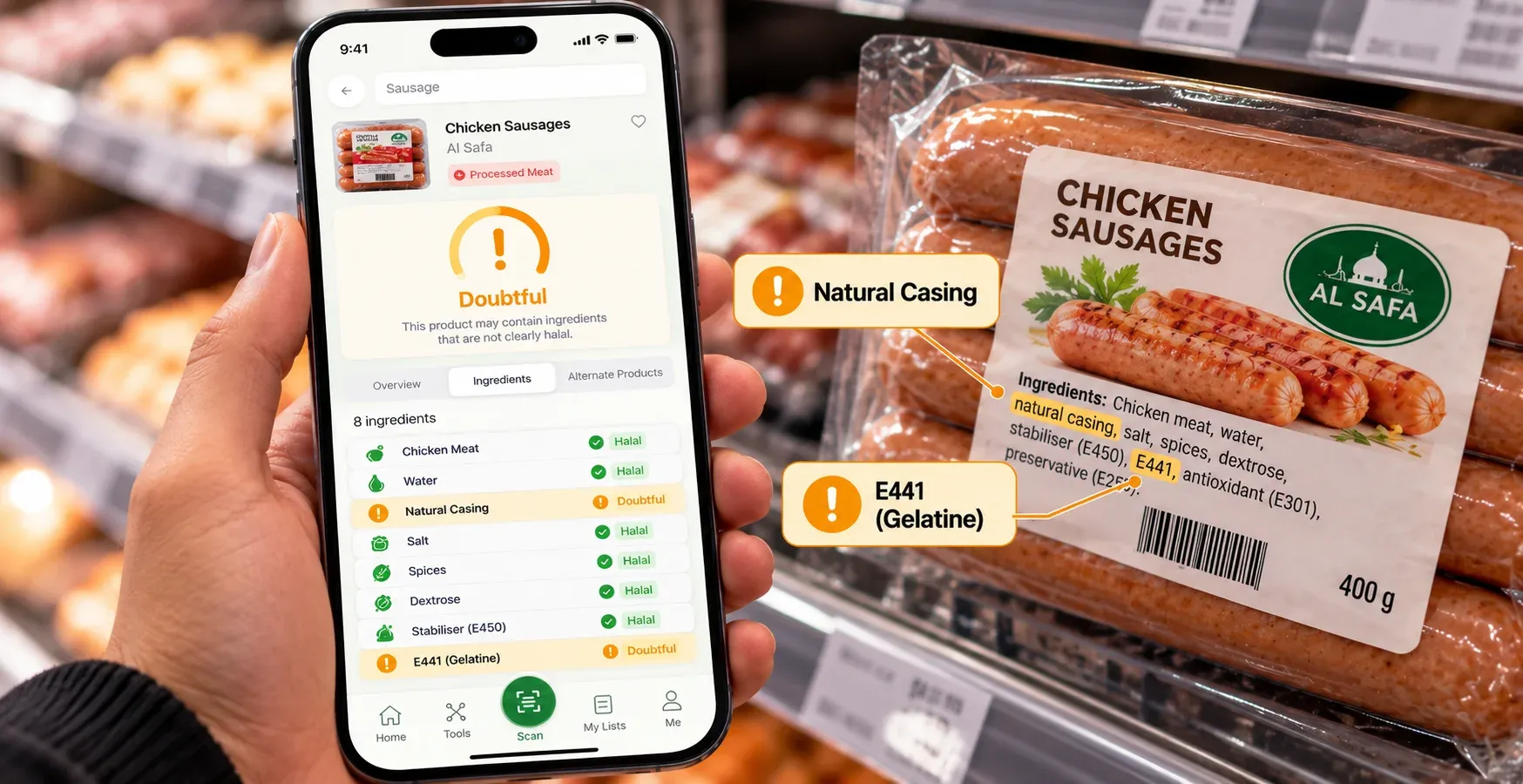
Fillers and flavorings present another major hurdle. Manufacturers often use gelatine (E441) as a binding agent or carmine (E120) to give the meat a fresh red color. If the gelatine comes from a porcine source, the product is haram. Because labeling laws in many Western countries do not require companies to list the animal origin of these E-numbers, these ingredients immediately trigger a Doubtful status.
Instead of guessing the origin of every filler, you can check the barcode directly. Halal Scanner is free to download with premium via subscription on iOS and Android, allowing you to instantly flag Doubtful ingredients at the store.
The Pork Casing Issue: Can You Just Peel It Off?
A frequent debate among shoppers is whether you can buy a beef sausage with a pork casing, peel the casing off before cooking, and eat the beef inside.
Islamic scholars and major certifying bodies, including the Halal Food Authority (HFA), classify this practice as impermissible. The moisture from the ground meat rests directly against the pork intestine for weeks during packaging and transit. This causes deep cross-contamination.
Removing the outer layer does not purify the meat inside. If the casing is haram, the entire sausage is haram.
Are Beef and Chicken Sausages Always Halal?
A "100% Beef" label only legally means the meat itself is beef. It does not mean the product is halal.
First, the animal must be slaughtered according to strict zabiha rules. Standard commercial beef and poultry in Western supermarkets do not meet this standard.
Second, manufacturers often inject sausages with liquid flavorings or preservatives. Some commercial flavor enhancers use ethyl alcohol as a carrier solvent. If the alcohol concentration exceeds the limits set by bodies like the Islamic Food and Nutrition Council of America (IFANCA), the product cannot be certified.
This is why generic beef sausages sit firmly in the Doubtful or Non-Halal categories until verified. Halal Scanner's database covers over one million verified products across 50 countries, taking the guesswork out of reading complex spice blends.
Are Plant Based Sausages Safe?
Vegan and vegetarian sausages offer a safer alternative, but they still require careful review. While they eliminate the zabiha meat requirement, they introduce different risks.
Plant based meats often rely heavily on complex artificial flavorings and colorings to mimic the taste of real meat. If the factory uses shared equipment to process both pork sausages and vegan sausages without proper sanitization protocols, cross-contamination occurs. Look for a trusted halal certification mark even on vegan products to guarantee the facility maintains strict separation.
Ingredient Risk Table for Sausages
Component | Common Sources | Classification Risk |
|---|---|---|
Natural Casing | Pork, lamb, or beef intestines | High. Frequently pork in Western markets. |
Collagen Casing | Animal hides and bones | Doubtful. Requires zabiha verification. |
Cellulose Casing | Plant fibers | Low. Generally safe. |
E120 (Carmine) | Crushed cochineal insects | Doubtful/Non-Halal. Varies by madhab; many avoid. |
E441 (Gelatine) | Pig or cow bones | High. Often haram unless certified halal. |
How to Check Sausage Ingredients with Halal Scanner
Reading processed meat labels requires advanced food science knowledge. Halal Scanner automates this process for you.
- Open the app: Tap the camera icon to launch the scanner.
- Scan the barcode: Point your phone at the back of the sausage package.
- Read the result: The app immediately returns a Halal, Doubtful, or Non-Halal ruling based on cross-referenced data.
- Review the Doubtful flags: If a sausage triggers a Doubtful warning, tap the ingredient (like E441) to read exactly why the sourcing is unclear.
- Add to a shared list: Found a safe brand? Add it to your shared halal list so your family knows exactly which one to buy next time.
If you prefer to verify items manually, you can still protect your family by looking for two things. First, search the packaging for a verified halal logo from a recognized regional body. Second, if no logo exists, actively avoid any product listing "natural casing" or "E120" in the ingredients.
The scan takes less time than reading the label. Tap the App Store or Google Play badge below to get started. Halal Scanner is free to download with a premium subscription.