
Yes, pure, unadulterated honey is completely halal. In Islam, raw honey is celebrated as a pure food and a natural source of healing. However, commercially processed honey products can become doubtful (mashbooh) or haram if they are mixed with unverified artificial flavorings, cut with non-halal syrups, or left to ferment and produce alcohol.
You are standing in the baking aisle comparing three different bottles of honey. One says "100% Raw Manuka," another is a "Honey Flavored Syrup," and the third lists natural flavorings you do not recognize. Knowing whether that specific bottle belongs in your cart requires looking past the front label.
The Islamic Perspective on Pure Honey
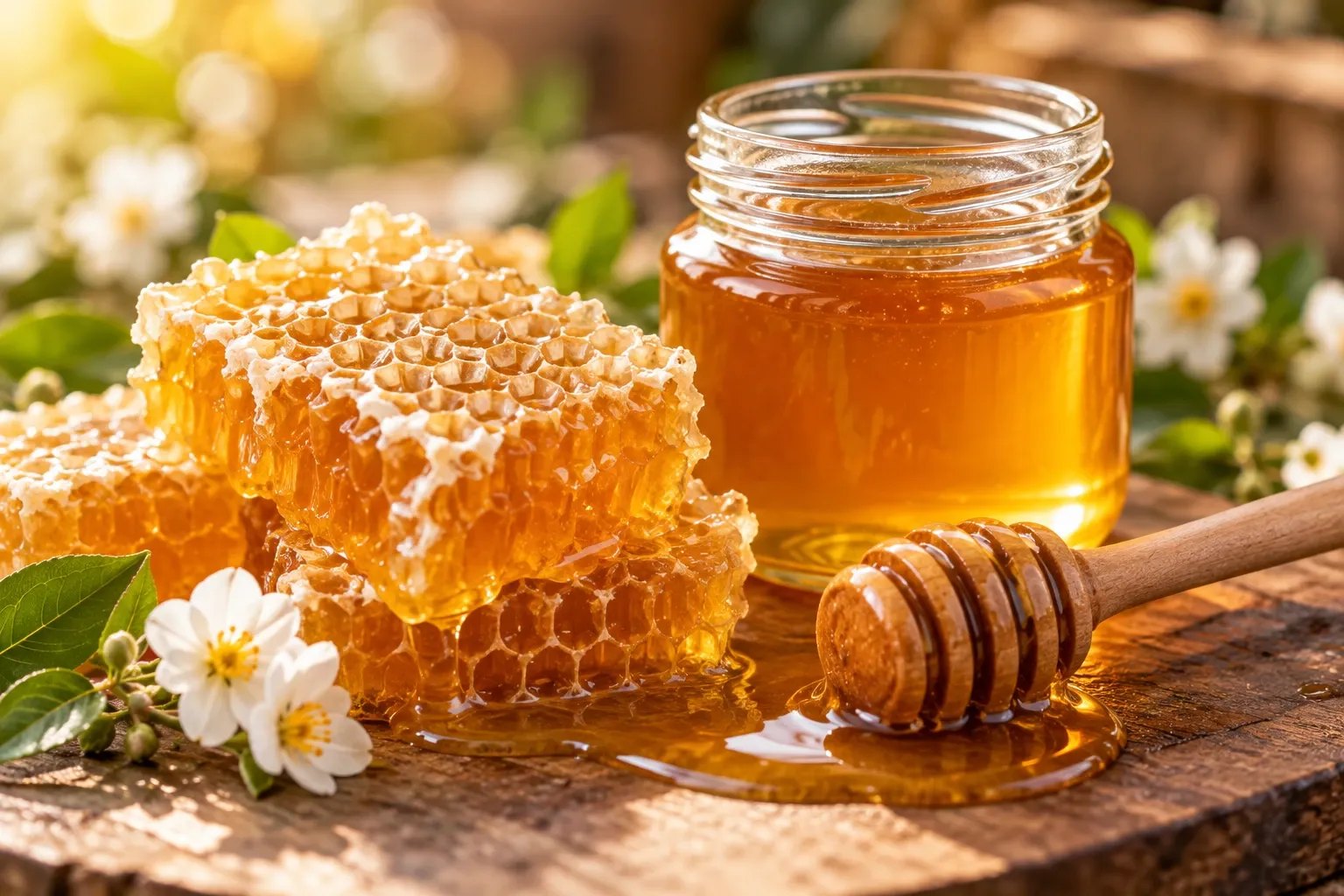
In its natural state directly from the hive, honey is universally accepted as halal. The Quran explicitly mentions honey in Surah An-Nahl (The Bee), describing it as a drink of varying colors containing healing for mankind.
Because it is naturally produced by bees from flower nectar, pure raw honey—whether it is Manuka, Sidr, or local clover honey—requires no special halal slaughter or complex certification. According to major halal certification bodies, as long as the honey is 100% pure and raw, it remains entirely permissible.
When Does Honey Become Doubtful (Mashbooh) or Haram?
The confusion arises when honey leaves the hive and enters commercial manufacturing. Modern food processing introduces variables that can change a product from Halal to Doubtful or Non-Halal.
1. Fermentation and Alcohol
Can honey become haram on its own? Yes, under specific conditions. If raw honey is mixed with water and left at certain temperatures, it can ferment. Islamic rulings on fermented honey state that if the fermentation process produces alcohol and results in an intoxicating substance (like mead), it becomes haram to consume. Proper storage prevents this, but fermented honey products must be avoided.
2. Commercial Honey Syrups and Blends
Many cheaper products labeled as "honey" are actually blends. Manufacturers often stretch pure honey with high-fructose corn syrup, glucose, or artificial sweeteners. While plain corn syrup is generally halal, the manufacturing process for these blends frequently introduces doubtful additives.
3. Flavorings and Clarifying Agents
Flavored honeys—such as chili honey, vanilla honey, or fruit-infused varieties—often use "natural flavorings." In food science, natural flavorings can sometimes be extracted using alcohol. Additionally, some commercial filtering processes use non-halal clarifying agents.
Ingredient Risk Table for Honey Products
Ingredient / Condition | Halal Status | Reasons |
|---|---|---|
100% Pure Raw Honey | Halal | Natural state; universally permitted in Islam. |
Fermented Honey (Mead) | Non-Halal | Contains intoxicating alcohol. |
"Natural Flavorings" | Doubtful (Mashbooh) | Carrier solvents may contain alcohol; origins are unverified. |
Commercial Honey Syrup | Doubtful (Mashbooh) | Often contains synthetic additives or unverified clarifying agents. |
How to Check Honey with Halal Scanner
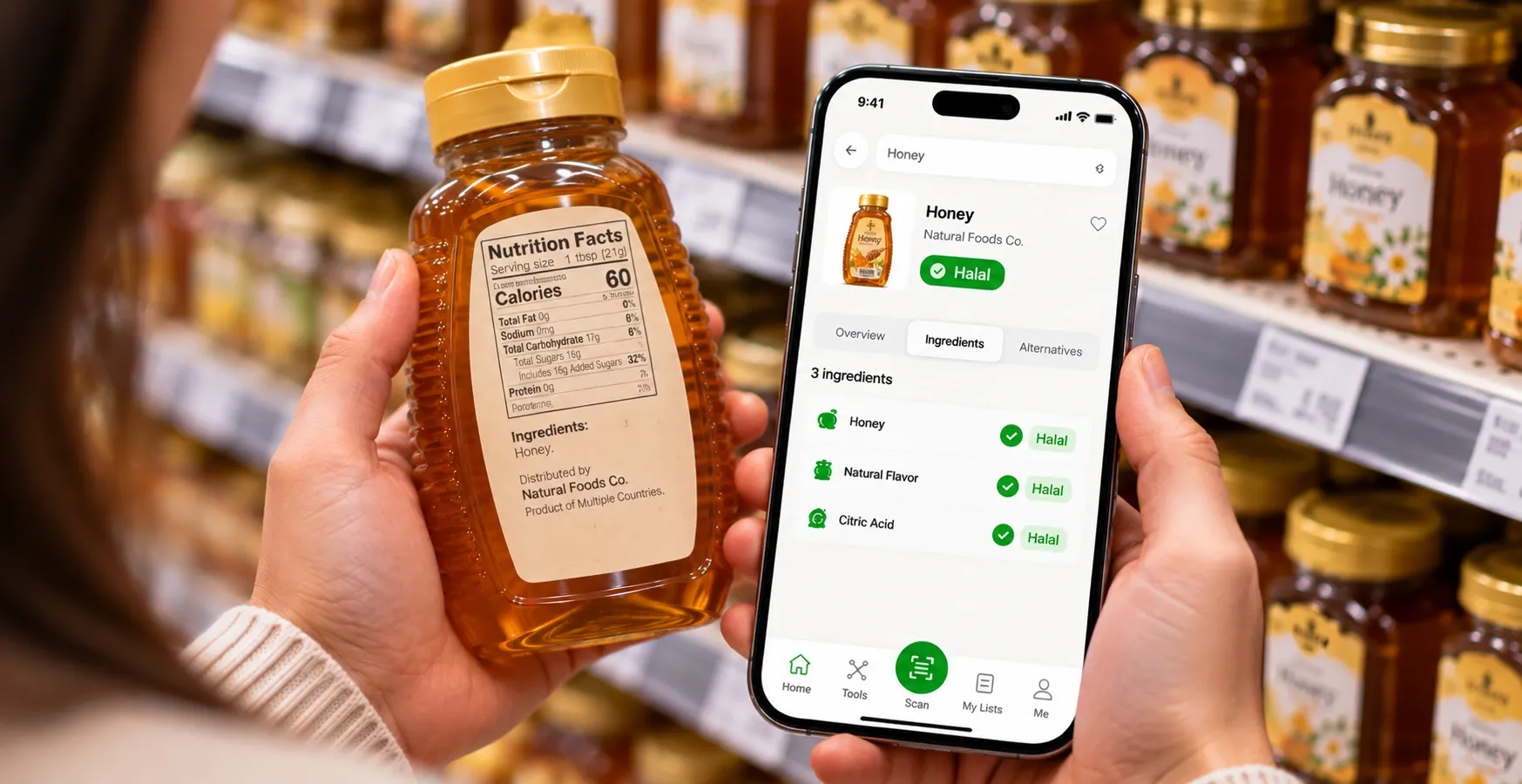
Rather than guessing whether the "flavorings" in a bottle of infused honey are permissible, you can verify the exact product while standing in the aisle.
Here is how to check your groceries using Halal Scanner:
- Open the App: Launch Halal Scanner on your phone.
- Scan the Barcode: Point your camera at the barcode on the back of the honey bottle.
- Read the Result: In seconds, the app cross-references the ingredients against verified halal data sources. It will return a clear result: Halal, Doubtful, or Non-Halal.
- Save to Your List: If the item is Halal, tap to add it to your shared family shopping list. One person builds the list; another shops from it.
Tips for shopping without your phone:
- Always check the ingredient list for the phrase "100% pure honey" with no other listed ingredients.
- Look for an official halal certification logo from recognized bodies like MUI, IFANCA, or HFA on processed honey blends.
The scan takes less time than reading the label. Halal Scanner is free to download with premium via subscription on the App Store or Google Play.
Trusted by Global Muslim Shoppers
When it comes to family groceries, guesswork is not an option. Halal Scanner's database covers over 1 million verified products across 50+ countries. With more than 100,000 daily scans and 500,000+ trusted users relying on the platform, you are joining a global community committed to dietary compliance. By utilizing data backed by recognized certifiers, we ensure you have the facts you need.
Whether you are checking a specialty imported honey or an everyday baking syrup, transparency matters. Eliminate the uncertainty in your weekly shop. Download Halal Scanner today—free to download with premium via subscription—by tapping the App Store or Google Play badge.