
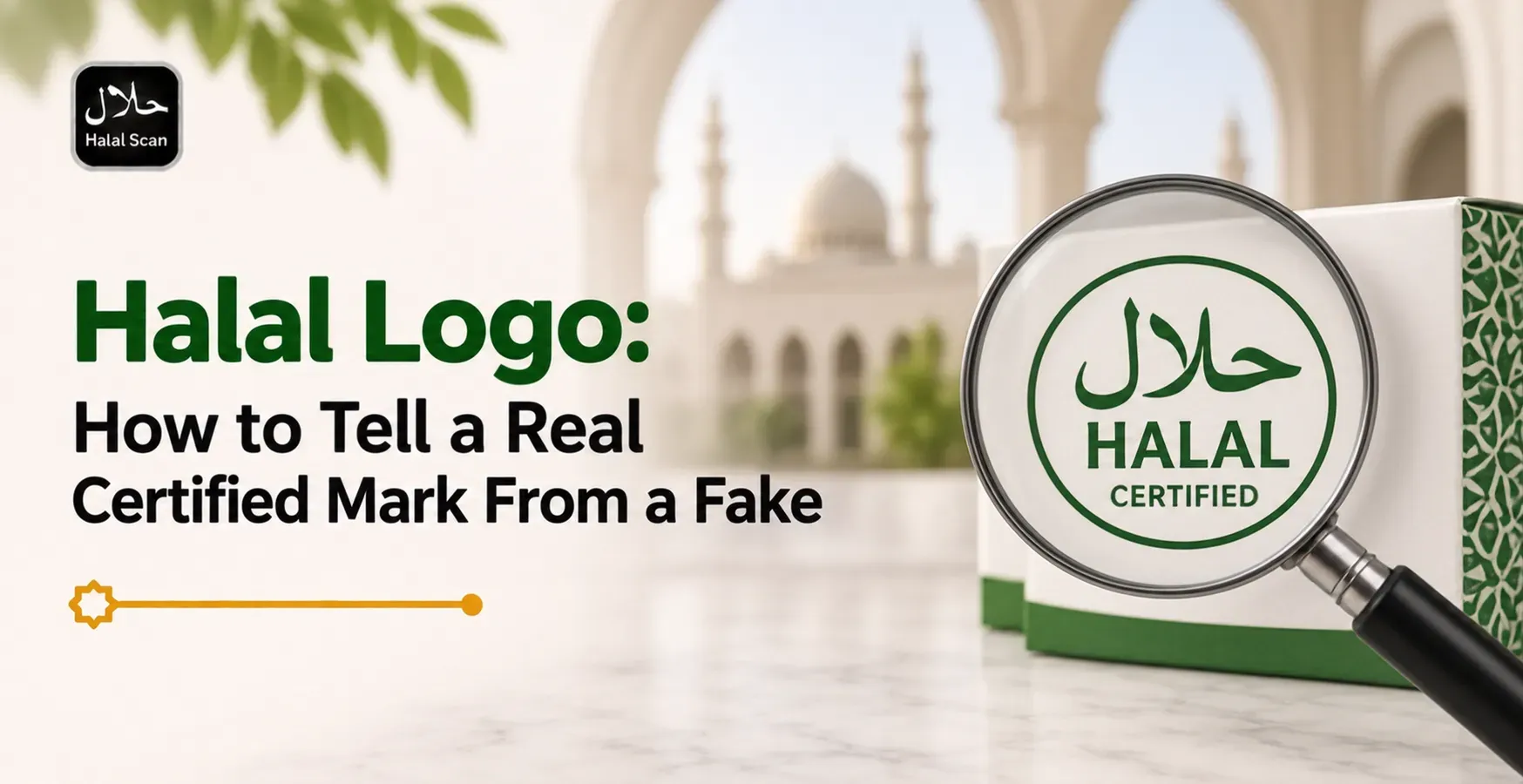
A halal logo is a mark on packaging or a shop window. It shows that an independent halal body has audited the product or premises. There is no single official halal logo worldwide. Every certifier uses its own mark, and a logo only means something if you can trace it to a real certifier whose approval is still active.
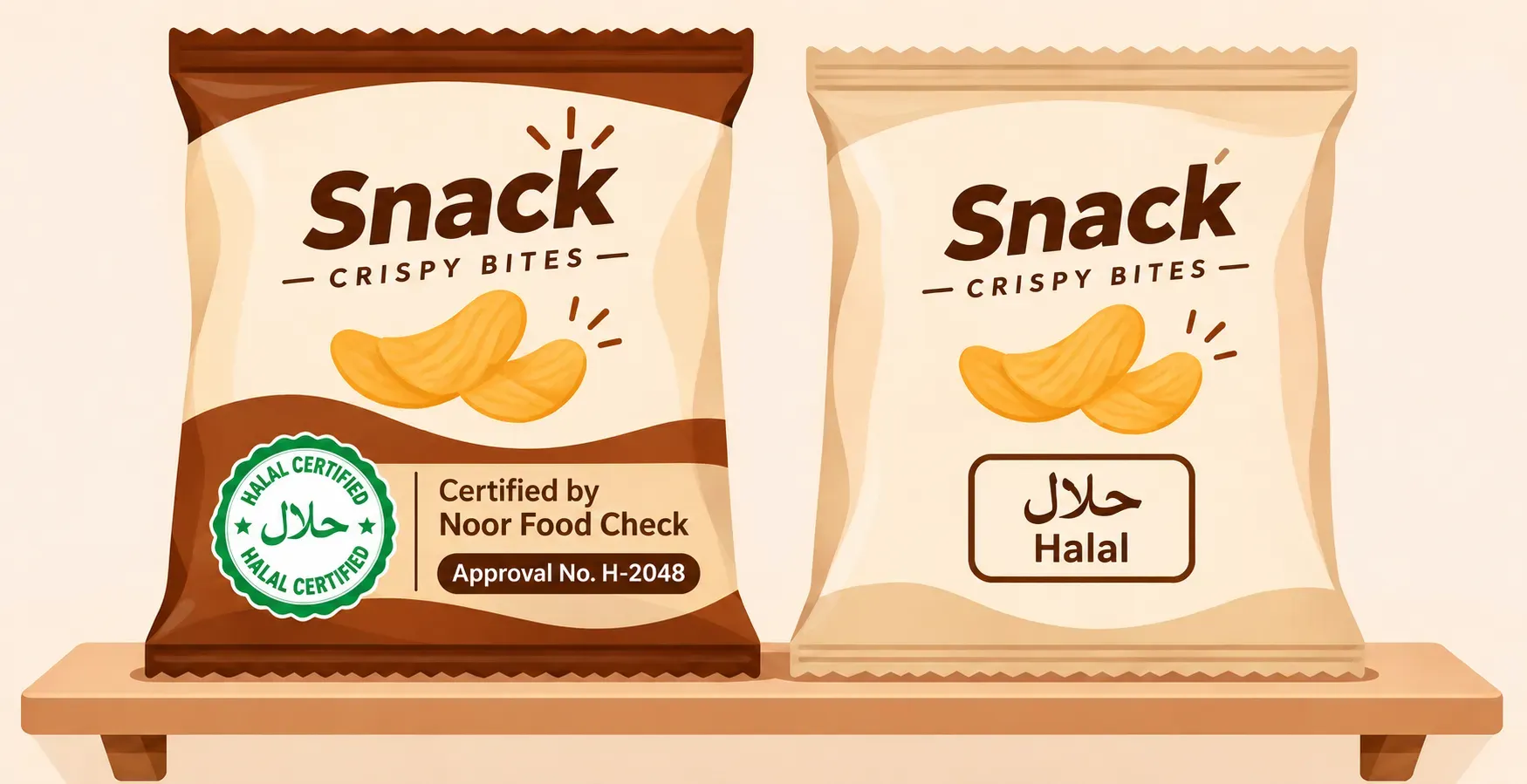
Picture two packs of chicken nuggets in a supermarket in Birmingham or Chicago. One carries a named certifier's mark. The other has a small green box that just says "Halal." If you search "halal logo png," you'll find thousands of free images, and that is exactly why the second pack deserves a closer look.
Want a faster first check? Halal Scanner reads the barcode and shows the ingredient status in seconds. It's free to download.
What Does a Halal Logo Actually Mean?
A halal certified logo is a licensed trademark. A certification body inspects the facility, reviews every ingredient and supplier, and then lets the company print its mark on approved products only.
Who runs that system depends on the country:
- UK and US: Certification is private and voluntary. No government department issues halal logos, so the mark is only as trustworthy as the organization behind it.
- Malaysia and Indonesia: The state runs it. Indonesia's BPJPH (Halal Product Assurance Agency) made its purple national halal label mandatory from 1 March 2022 under Decree No. 40 of 2022. It replaced the older MUI logo.
Even certifiers say the word alone isn't enough. In a 2014 interview, the head of the UK's Halal Food Authority said the word "halal" on a pack "means next to nothing" unless a recognized body has certified it.
Halal Certified Logos by Region
These are logos you're likely to meet on shelves and restaurant windows. Designs change over time, so always check against the certifier's own website.
Region | Certifier | What to look for | How to check it |
|---|---|---|---|
Malaysia | JAKIM | Round mark with Arabic "حلال", "HALAL" and "MALAYSIA" | JAKIM's Verify Halal app or halal.gov.my |
Indonesia | BPJPH | Purple mark shaped like a gunungan (a mountain form from Javanese shadow puppetry), with Arabic calligraphy and "Halal Indonesia" | halal.go.id |
United States | IFANCA | Crescent wrapped around the letter "M" (the Crescent-M) | IFANCA product search |
United States | HMS (Halal Monitoring Services) | "HMS Certified Hand Zabiha" mark | HMS "Certified Near Me" listings |
United Kingdom | HMC (Halal Monitoring Committee) | HMC lettering with the word "Halal" | QR code on HMC certificates |
United Kingdom | HFA (Halal Food Authority) | HFA name with the word "Halal" | HFA certified client list |
Malaysia is a useful benchmark. Its government reported recognizing 88 foreign halal bodies across 49 countries in October 2024, and it reviews that list in batches.
How Do I Spot a Fake or Generic Halal Logo?
A generic halal emblem carries no certifier name, no certificate number and no way to check it. Treat it as a claim, not a certification.
Look out for these warning signs:
- No named body. A crescent, a green circle or the word "Halal" on its own tells you nothing.
- Spelling errors or blurry print. Brands that work with a real certifier usually print the mark correctly.
- Not listed online. Search the certifier's website for the brand and the exact product. Approval often covers only some products in a range.
- Lapsed approval. Recognition can end. In February 2025, Malaysia revoked recognition for three foreign certifiers, and products certified by them were barred from entering the country.
Certifiers also publish misuse alerts. Halal Monitoring Services in the US keeps public "Fraud Alert" and "Incorrect Use of HMS Logo" notices next to its certified listings.
Can I Download a Halal Logo PNG for My Business?
No, not a certifier's mark. Logos such as IFANCA's Crescent-M and the HFA logo are registered trademarks. You can use them only after you've been certified, and only on approved products. A free "halal food logo" image from a stock site doesn't certify anything.
If you run a food business and want to reach Muslim shoppers, partner with Halal Scanner or apply to a recognized certifier in your market.
Do All Halal Logos Follow the Same Standard?
No. Certifiers differ on several points, most clearly pre-slaughter stunning and machine slaughter of poultry. In the UK, HMC certifies only hand-slaughtered meat without stunning, while HFA accepts certain recoverable stunning methods.
Both positions have scholarly support. Pick the certifier that matches the standard you follow, and ask your local scholar if you're unsure.
A product with no logo isn't automatically haram either. Many everyday foods are never certified. Their status depends on the ingredients, so some may be fine and others may fall into the "doubtful" (mashbooh) category because an additive's source is unclear.
Halal Logos at Restaurants: Using a Halal Map
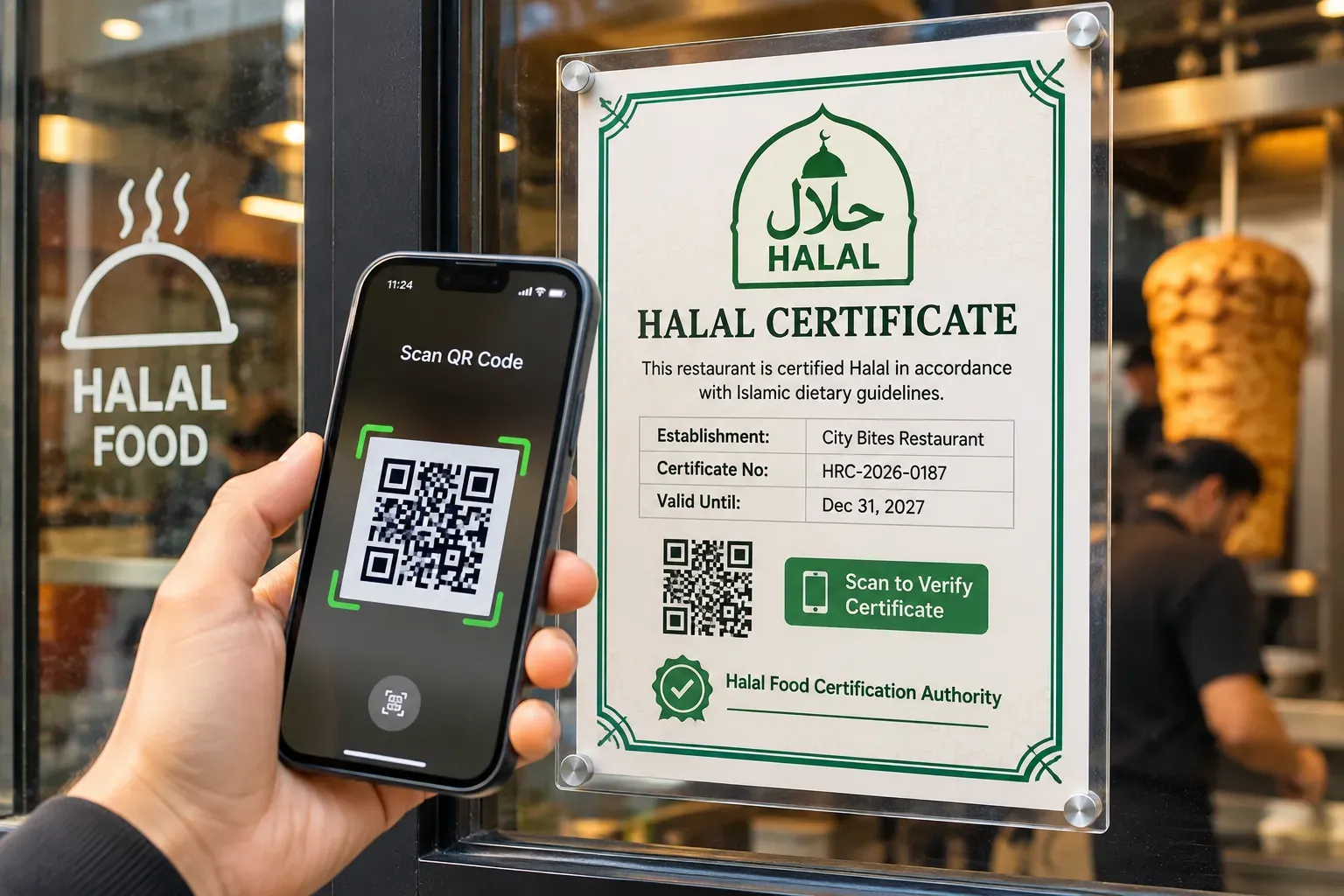
A window sticker is easy to copy. Before you order, take three quick steps:
- Ask to see the current certificate and check the expiry date.
- Scan the QR code if the certificate has one. HMC's QR certificates show the shop's status and its inspection history.
- Search the certifier's directory or halal map. HMS restaurants are listed under "Certified Near Me", and HMC lists its members through its HMC Now app.
These checks take less than a minute, and you don't need any app for them.
How to Check a Product With Halal Scanner
The halal logo tells you who certified a product. Halal Scanner helps when there's no logo, or when you want a second check on the ingredients.
- Open the app and tap scan.
- Point your camera at the barcode, or type an ingredient into the search bar.
- Read the result: Halal, Doubtful or Non-Halal.
- For Doubtful results, check the certifier's site or ask your scholar before buying. Some doubtful ingredients, like alcohol used in flavorings, have different scholarly views.
- Save the product to a shared halal list so your family can shop from it too.
The scan takes less time than reading the label. Download it free on the App Store or Google Play. Premium features are available through a subscription.
Why Shoppers Use Halal Scanner
Halal Scanner checks ingredients against verified halal data sources. Its database holds:
- 1 million+ verified products
- 100,000+ scans every day
- 500,000+ users
- 50+ countries covered
It's a research tool, not a certifier. It doesn't replace an official halal logo from a recognized body.
Final Word
A real halal logo names its certifier and is backed by a certificate you can look up. If a logo fails that test, check the ingredients yourself. When there's no logo at all, a quick scan saves you reading every E-number.
Download Halal Scanner free on the App Store or Google Play, and see more guides on the Halal Scanner blog.