

Pizza is halal only when every layer is halal: cheese made with microbial or halal-sourced rennet, halal-slaughtered meat, and dough and sauce free of pork, lard and alcohol. Standard pepperoni contains pork, so it isn't halal. A plain cheese or veggie pizza from a non-halal kitchen is usually treated as Doubtful.
Below, you'll find what to check in each layer, why veggie pizza isn't automatically safe, how to confirm a pizzeria is genuinely certified, and how to check frozen pizza in seconds.
If the office is ordering pizza on Friday, or your friends want to split a large one after class, this is the quick checklist you need.
What Makes Pizza Halal or Haram?
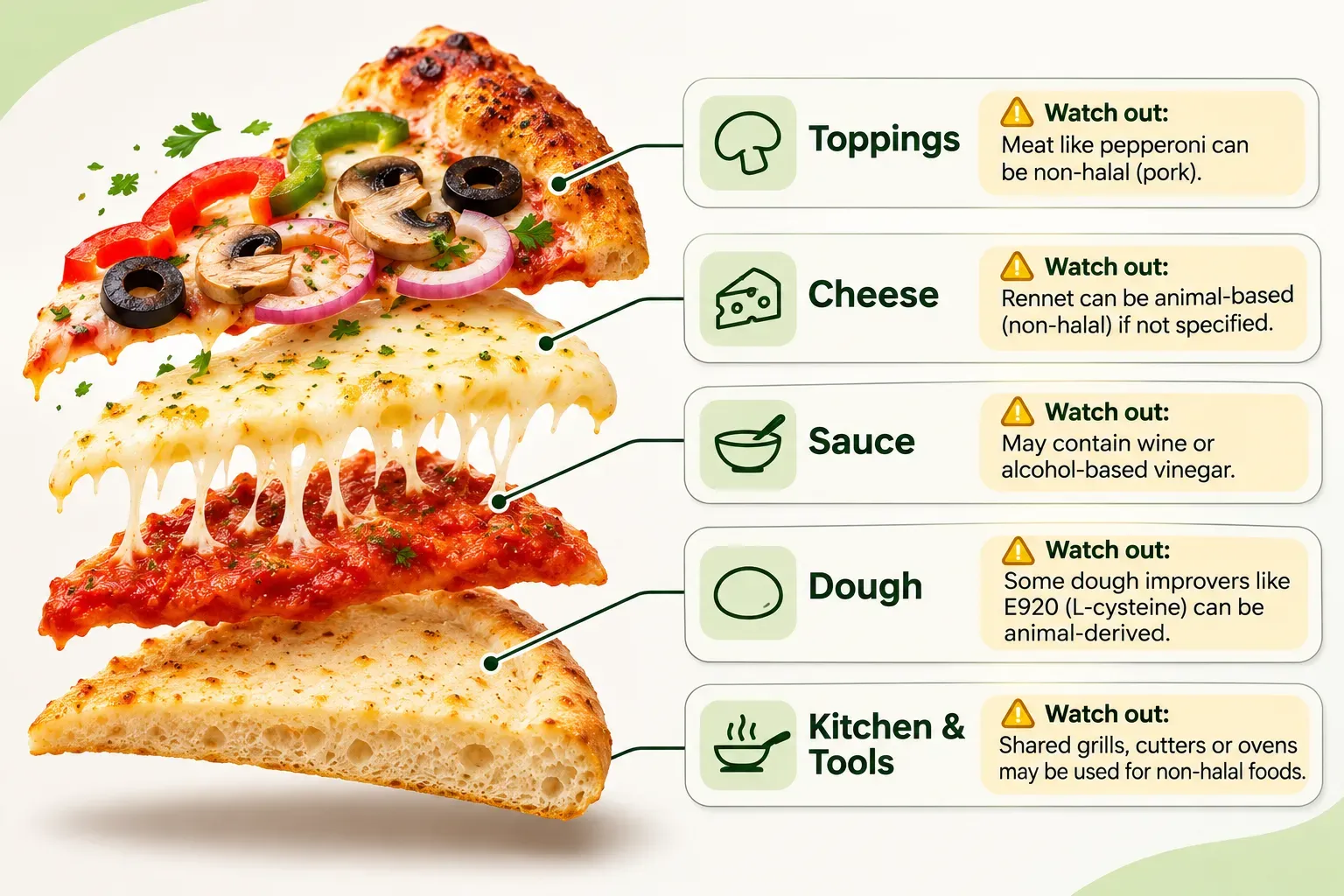
A pizza has five layers, and each one can change its status. The dough, sauce and cheese matter as much as the toppings.
Layer | What to watch for | Usual status if unverified |
|---|---|---|
Dough | Lard, L-cysteine (E920), animal-based emulsifiers like E471 | Doubtful |
Sauce | Wine, vodka or other alcohol | Non-Halal if alcohol is added |
Cheese | Animal rennet from an unknown source | Doubtful |
Meat toppings | Pepperoni, ham, bacon, non-zabiha chicken or beef | Non-Halal or Doubtful |
Kitchen | Shared ovens, pans, cutters and gloves | Doubtful |
Doubtful, or mashbooh, means the source can't be confirmed. It isn't a final ruling; it's a signal to check before you eat.
Is Cheese Pizza Halal?
Cheese pizza is halal when the cheese uses a halal enzyme. Rennet is the enzyme that sets milk into cheese, and it can come from microbes, plants or an animal's stomach.
Most cheese no longer uses animal rennet. A June 2025 ruling from Darul Iftaa Chicago notes that roughly 90% of American cheese is made with non-animal rennet. It confirms that cheese made with plant, microbial or fermentation-produced rennet is halal.
Scholars differ on animal rennet.
The same Hanafi ruling also accepts non-pork animal rennet, provided it is purified of stomach particles. Many halal certifiers take a stricter line and accept only microbial rennet or rennet from zabiha animals. Our guide to cheese enzymes explains each enzyme type and how certifiers treat it.
Pork rennet is haram in every view.
Is Pepperoni Halal?
No, standard pepperoni is not halal. It's usually a cured sausage made from pork and beef.
You can see this in US labelling rules. The USDA Food Safety and Inspection Service uses "5% Pepperoni (60% pork, 20% beef)" as a standard labelling example. Ham and bacon are pork outright.
Halal pepperoni does exist. It's made from beef or chicken slaughtered by halal rules, and it carries a certifier's mark.
Even beef pepperoni without that mark is Doubtful, because the slaughter can't be confirmed. Our guide on when beef is halal covers why.
What About the Dough and Sauce?
Pizza dough
Plain dough is flour, water, yeast, salt and oil, which is halal. The problems come from additives.
The big one is L-cysteine, labelled E920, an amino acid that softens dough. The Vegetarian Resource Group reports that it's most common in pizza dough and bagels. Its main commercial sources are duck feathers and human hair, with hog hair used when supply runs low.
Scholars disagree here too.
IslamQA permits L-cysteine from any source, because it is chemically transformed into a new substance. Many certifiers accept only plant-fermented or halal-sourced L-cysteine. Some dough also uses lard instead of oil, which is haram.
Pizza sauce
Most tomato sauce is just tomatoes, herbs, oil and salt. Watch for vodka sauce, wine-based sauces and some imported "Italian-style" blends. Our ethyl alcohol guide explains how halal bodies treat alcohol added to food.
Is Vegetarian Pizza From a Non-Halal Restaurant Halal?
Not automatically. A veggie pizza can still contain animal rennet or L-cysteine, and it's baked on the same surfaces as pepperoni and ham.
The Islamic Services of America describes exactly this worry: shared pans, utensils, cutting boards and counters, plus unknown ingredients in the crust. Mufti Ebrahim Desai of Askimam advises Muslims to be cautious: ask what the company uses, and stay away until you know.
If you do order from a non-halal shop, ask three questions:
- Is the cheese made with microbial or vegetarian rennet?
- Does the dough contain lard or L-cysteine?
- Can they use a clean cutter and tray for your order?
Is Homemade Pizza the Safest Option?
Yes. Making pizza at home is the simplest way to control every layer, and it doesn't take much.
- Dough: flour, yeast, water, salt and olive oil. Skip shop-bought dough unless it's certified or the label is clean.
- Sauce: passata, garlic, oregano and salt. No wine.
- Cheese: pick a mozzarella labelled "suitable for vegetarians" or carrying a halal mark. Vegetarian labels usually mean microbial rennet, but they don't rule out other additives.
- Toppings: certified halal chicken or beef, or vegetables, olives and paneer.
Kids can help top their own, and you know exactly what went into it.
How to Tell If a Pizzeria Is Really Halal
A halal sign in the window isn't enough. The UK's Halal Monitoring Committee warned in November 2019 that some uncertified shops claim to buy from an HMC supplier when HMC isn't checking them at all.
HMC gives three ways to check a genuine outlet:
- A yellow A3 HMC sticker on the window or door
- A valid, up-to-date certificate on display
- The outlet listed on HMC's own website
The same logic works anywhere. Look for a named certifier, then confirm the listing on that certifier's site. Big pizza chains vary by country and even by branch, so check the specific outlet rather than the brand.
How to Check Frozen and Packaged Pizza With Halal Scanner
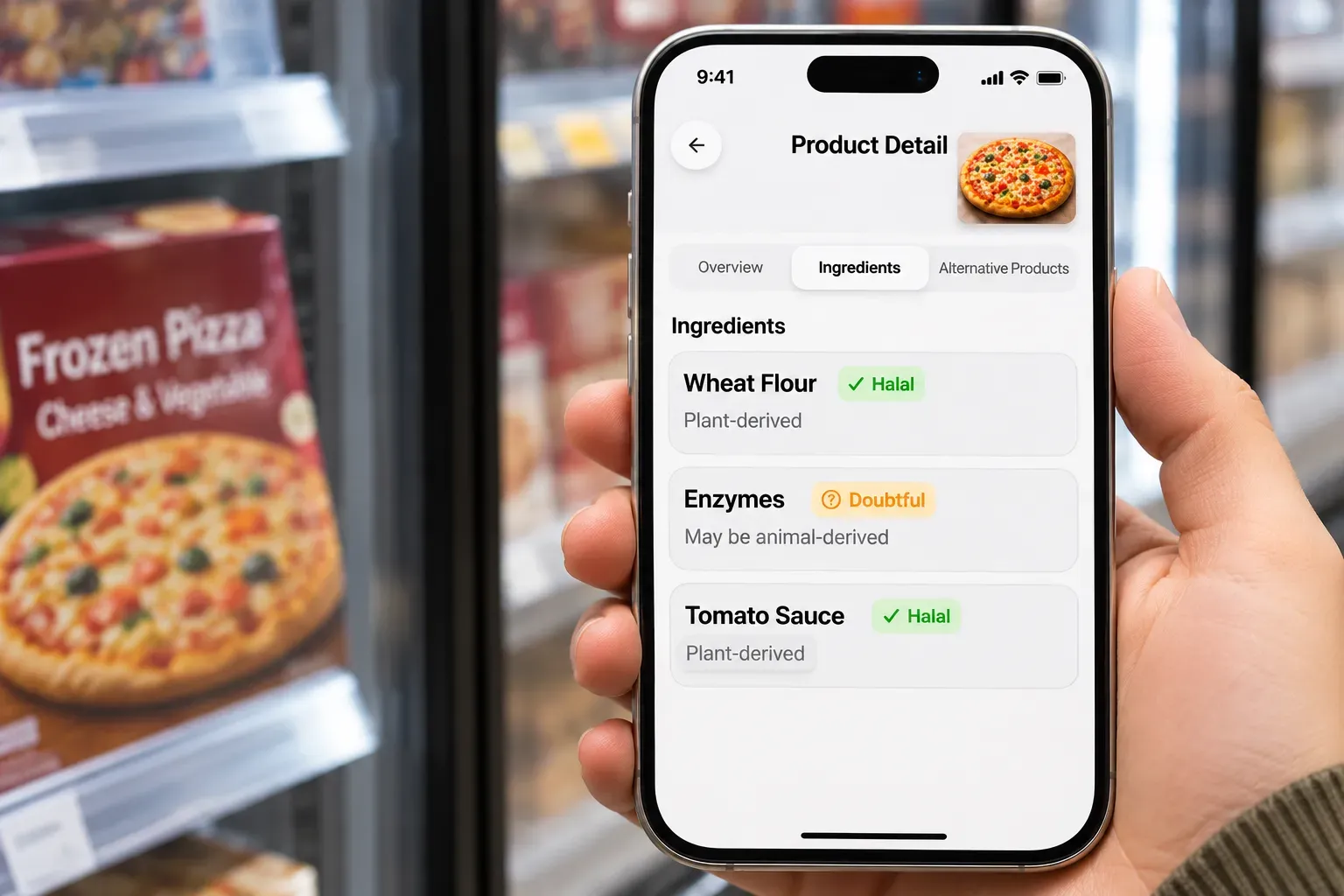
Frozen pizza lists every ingredient on the box, but E920, "enzymes" and "natural flavour" don't tell you where they came from. Halal Scanner reads the full list for you.
- Scan the barcode on the box.
- No barcode? Search an ingredient such as "rennet", "E920" or "pepperoni".
- Read the result: Halal, Doubtful or Non-Halal, checked against verified halal data sources.
- Tap a Doubtful result to see which ingredient caused it, then look for a certifier's logo on the box.
- Save safe pizzas to a shared list, so everyone at home buys the same ones.
Halal Scanner is free to download, with premium features via subscription. Get it on the App Store or Google Play.
The app covers 1 million+ verified products in 50+ countries, with 100,000+ daily scans from 500,000+ users. It's a checking tool, not a certifying body.
The Bottom Line
Pizza can be fully halal, but only when the cheese, meat, dough, sauce and kitchen all are. Skip standard pepperoni, ask about rennet and shared tools when eating out, and confirm a pizzeria's certificate with the certifier itself.
For frozen pizza, download Halal Scanner free on the App Store or Google Play.