
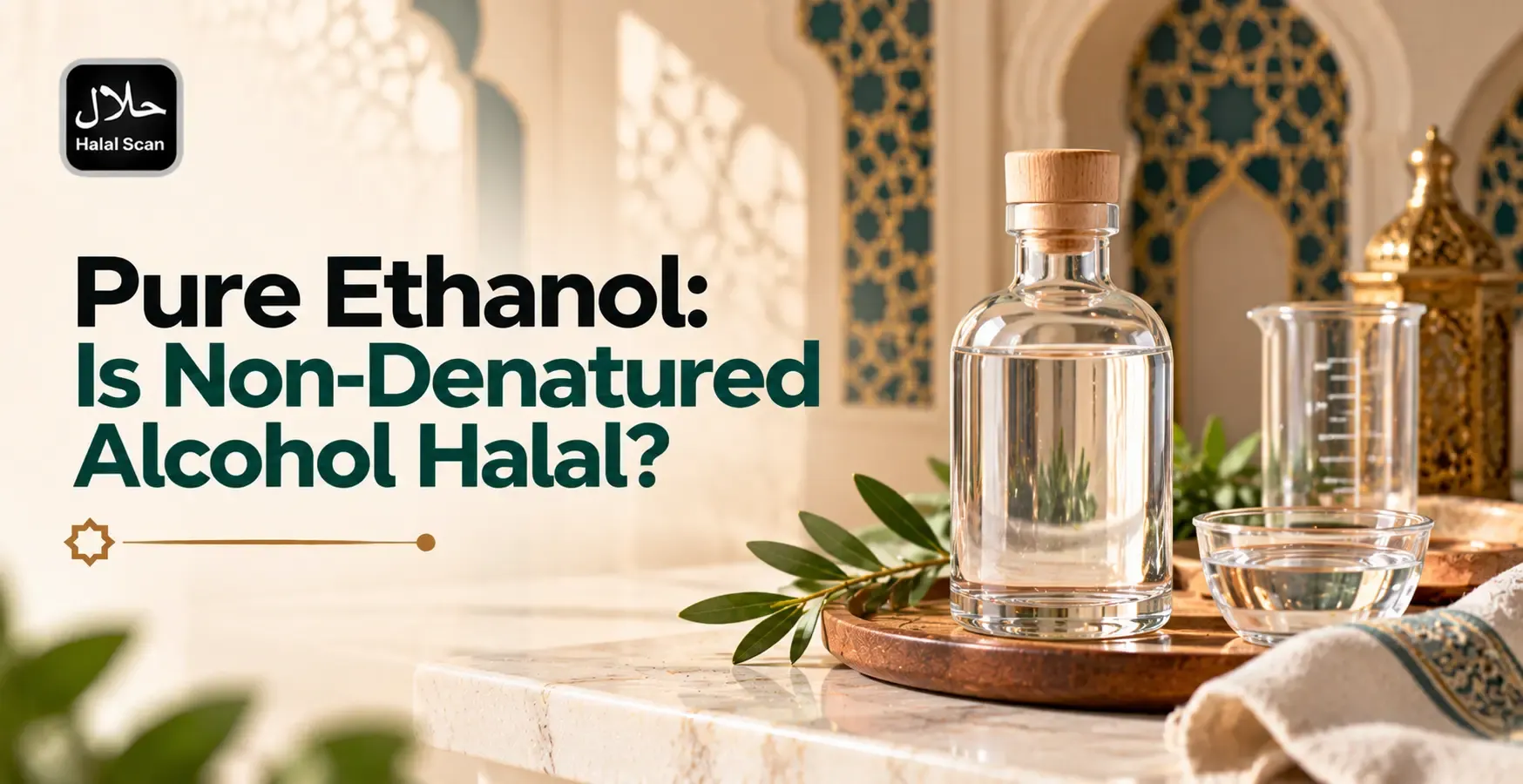
Pure ethanol (also listed as non-denatured ethyl alcohol) is a chemically pure alcohol free from toxic additives. Its halal status depends entirely on its source and concentration. Pure ethanol fermented from grapes or dates is strictly non-halal. However, synthetic ethanol used in trace amounts as a solvent in "ethanol food grade" flavorings is classified as doubtful (mashbooh) or halal by major certifying bodies, depending on the exact percentage.
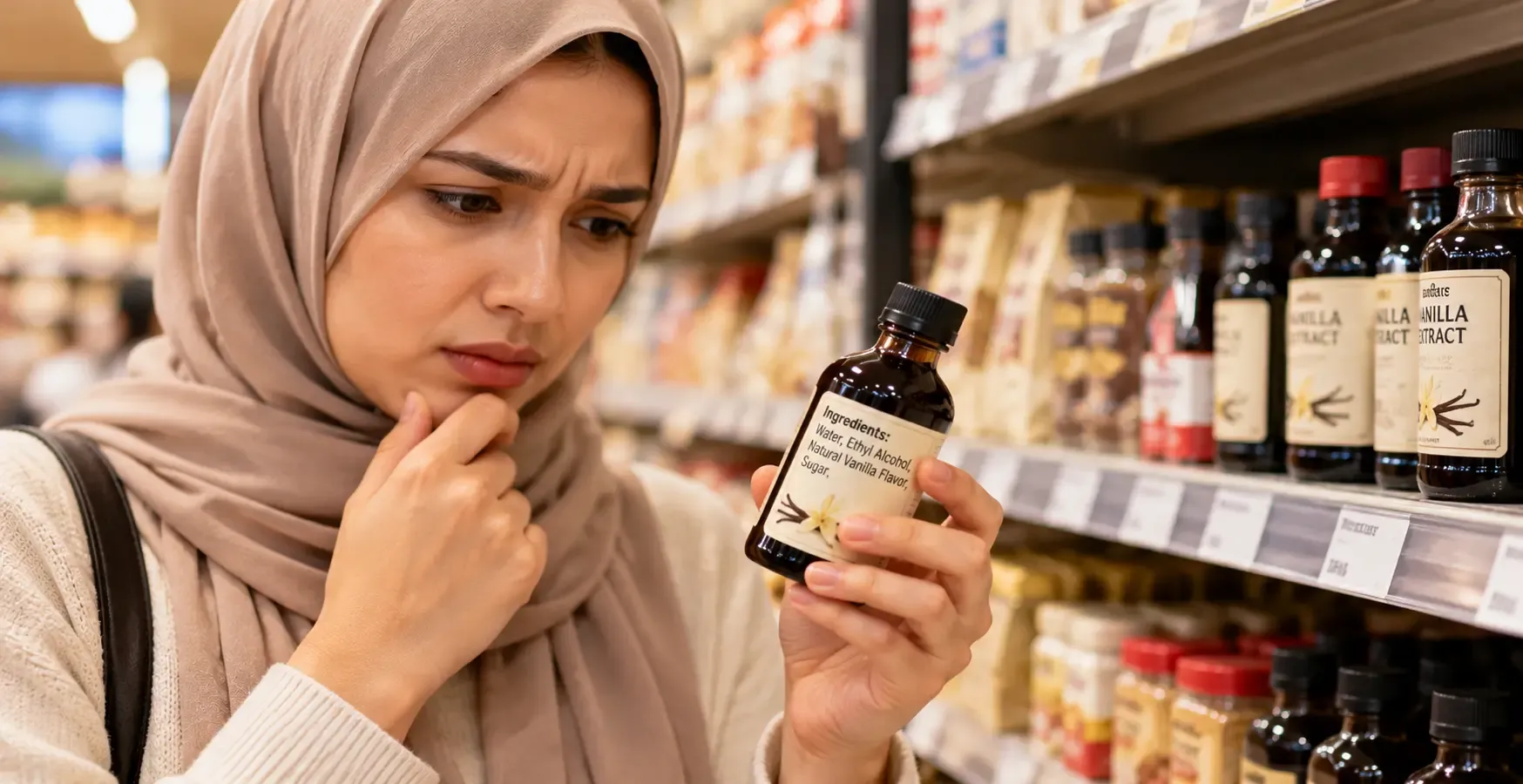
Standing in the baking aisle reading a label that says "contains pure ethanol" can immediately trigger red flags. You need to know if the vanilla extract in your hand is permissible for your family, or if it crosses the line into non-halal territory.
The industrial food system relies heavily on ethanol. It extracts flavors, preserves liquids, and stabilizes colors. But the chemical definition of alcohol and the Islamic jurisprudential definition of khamr (intoxicant) require careful navigation.
What is Non-Denatured Ethyl Alcohol?
In food chemistry, ethanol is a highly effective solvent. Chemical suppliers often categorize it into two distinct types: denatured and non-denatured.
Non-denatured alcohol is pure ethanol. It contains no bittering agents, toxins, or poisons. Because it is chemically pure and safe for human consumption, food manufacturers use it to create extracts, syrups, and liquid flavorings. Conversely, denatured alcohol contains toxic additives (like methanol) to prevent human consumption, restricting its use to cleaning supplies and cosmetics.
When a food label mentions "pure ethanol" or "non denatured ethanol," it confirms the alcohol is food-grade. It does not automatically confirm it is halal.
The Halal Status of Ethanol Food Grade
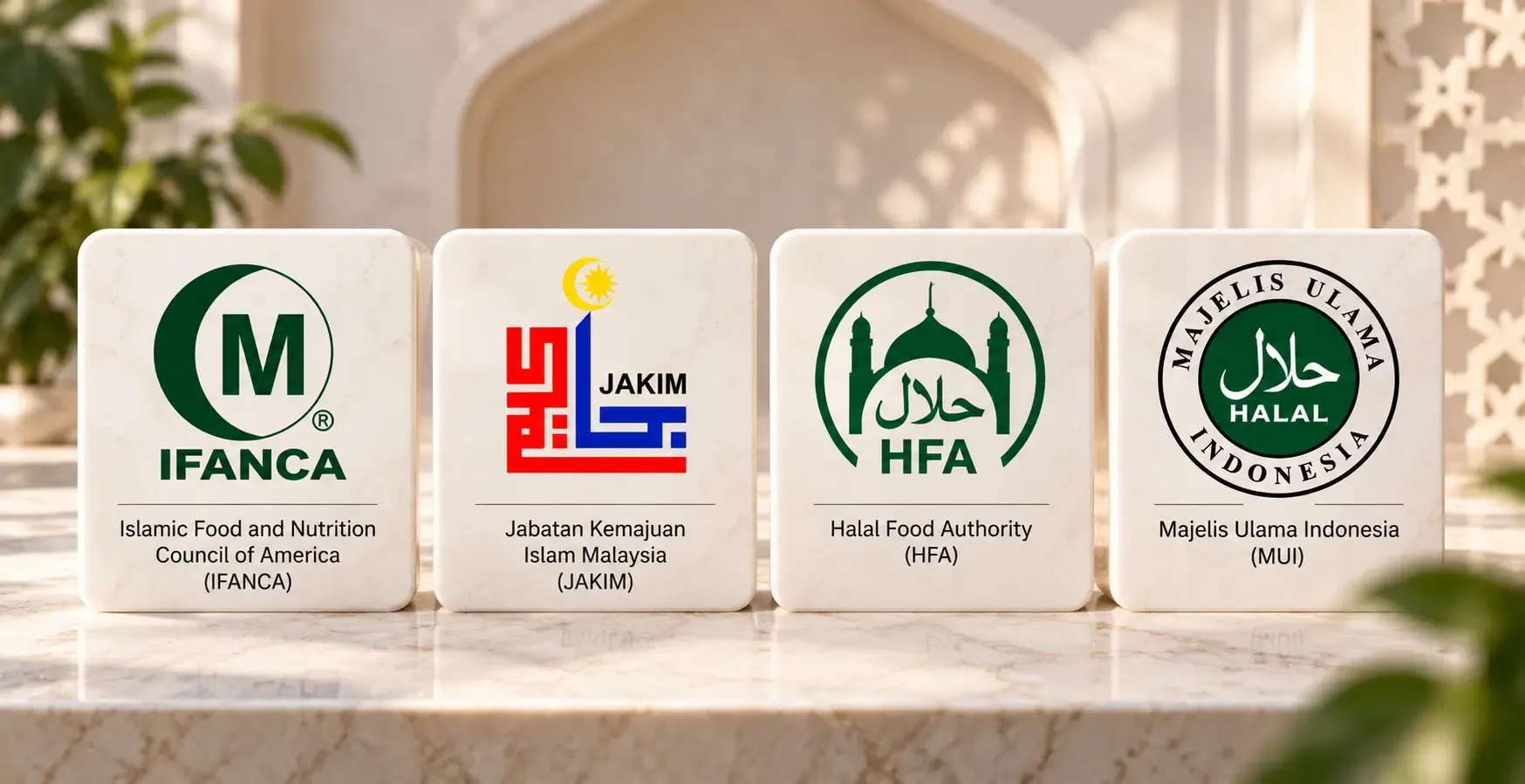
The source of the ethanol dictates its permissibility. Islamic scholars and major halal certification bodies, such as the Islamic Food and Nutrition Council of America (IFANCA) and Malaysia's JAKIM, evaluate ethanol based on its origin.
- Fermented from Dates or Grapes (Khamr): Pure ethanol derived from the fermentation of dates or grapes is strictly non-halal (haram), regardless of the quantity used.
- Synthetic or Non-Khamr Plant Sources: Ethanol created synthetically (from petrochemicals) or fermented from sugar cane or corn is often permitted if used strictly as a solvent, provided it does not intoxicate in the final product.
Major certifying bodies generally allow synthetic or plant-derived ethanol in food if the residual amount in the final product is less than 0.1%. For example, if ethanol food grade is used to extract vanilla flavor, the final baked cake will contain a microscopic, non-intoxicating trace of the solvent. Products exceeding this threshold, or lacking clear sourcing data, remain doubtful (mashbooh).
Ethanol Types and Halal Risk
Understanding industrial terms helps clarify the ingredients list.
Chemical Name | Food Industry Use | Halal Status Risk |
|---|---|---|
Pure Ethanol | Solvents, flavor extracts | Doubtful: Source determines status. |
Non-Denatured Alcohol | Liquid colorings, syrups | Doubtful: Must verify if from grapes/dates. |
Denatured Alcohol | Perfumes, surface disinfectants | Halal for External Use: Toxic for consumption, permissible for topical application. |
Ethanol Food Grade | Baking aisles, synthetic flavors | Halal or Doubtful: Permissible if synthetic and <0.1% of final product. |
Data sourced from industrial chemical standards and general IFANCA/JAKIM threshold guidelines.
How to Check This With Halal Scanner
Memorizing chemical thresholds and tracking down a manufacturer's synthetic ethanol supply chain is incredibly frustrating. You don't have to guess.
Here is how you can verify complex ingredients instantly:
- Open Halal Scanner: The app is free to download with premium via subscription.
- Scan the Barcode: Point your camera at the food packaging in the grocery aisle.
- Read the Result: The app cross-references the barcode against over 1 million verified products. It returns a clear classification: Halal, Doubtful, or Non-Halal.
- Check the Breakdown: If the product is flagged as Doubtful due to pure ethanol, the app will highlight the specific ingredient causing the concern.
If you are shopping without your phone, always look for a trusted halal certification logo on the packaging. Additionally, you can search the brand's official website for their halal compliance certificates.
The scan takes less time than reading the label. Tap the App Store or Google Play badge to download Halal Scanner.
Trusted by the Global Muslim Community
Relying on accurate information protects your deen and your family. Halal Scanner operates across 50+ countries, processing over 100,000 daily scans for a community of 500,000+ users. The database prioritizes the three-state model, ensuring you know exactly when an ingredient like non-denatured ethyl alcohol falls into the doubtful category.