

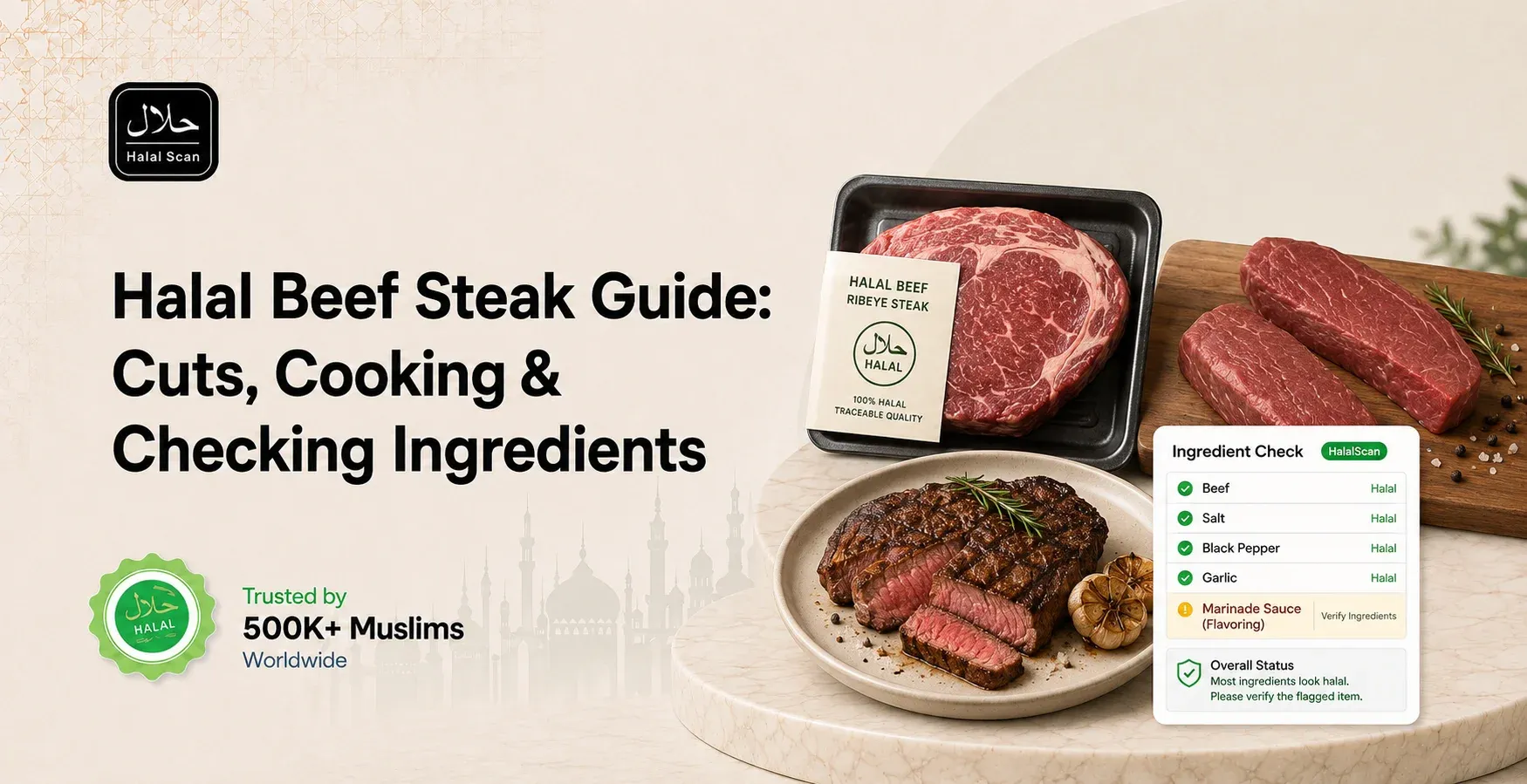
You are standing at the meat counter of your local grocery store. The ribeye looks fresh, the marbling is excellent, and you are planning a weekend family dinner. But the label lacks a trusted certification stamp, and the pre-seasoned steaks next to it have an ingredients list reading like a chemistry textbook.
Buying a halal beef steak in a mainstream supermarket requires more than just picking a good cut. From cross-contamination on the butcher’s block to doubtful additives in the steak rub, your weekly shop demands strict attention to detail.
What is a halal beef steak?
A halal beef steak is a cut of meat sourced from cattle raised, treated, and slaughtered according to Islamic law (zabiha). This requires a swift, humane process by a Muslim slaughterman invoking the name of Allah, ensuring complete blood drainage, and maintaining strict physical separation from non-halal items throughout processing.
Not sure if a product on your shelf is halal? Scan any barcode with HalalScanner and get an instant Halal, Doubtful, or Non-Halal result — free on iOS and Android.
What Makes a Steak Halal vs. Regular?
The physical cut of the beef whether sirloin, ribeye, or filet mignon—is identical. The difference lies entirely in the spiritual and physical processing of the animal.
First, the animal must be treated humanely during its life, fed a natural diet, and kept free from distress before slaughter. Organizations like the Islamic Food and Nutrition Council of America (IFANCA) and the Halal Monitoring Committee (HMC) audit facilities to ensure these strict zabiha standards are met.
Second, the blood must be fully drained. Blood is explicitly haram to consume. Proper zabiha slaughter ensures maximum blood expulsion, which many home chefs note gives the meat a cleaner, less gamey flavor and a firmer texture when seared.
Finally, the supply chain matters. A regular steak might be cut on the same block, with the same knife, used for pork chops moments earlier. Halal certification ensures dedicated facilities and tools to prevent cross-contamination.
The Hidden Harams: Pre-Seasoned Steaks and Rubs
Finding zabiha beef is only the first step. If you buy pre-seasoned steaks or bottled marinades to cook at home, you introduce a new layer of risk to your deen.
Many commercial steak marinades use alcohol as a flavor carrier. Even if the alcohol burns off during cooking, its initial presence renders the product non-halal. Similarly, steak rubs often contain E-numbers and flavor enhancers. For instance, the emulsifier E471 can be derived from plant sources (halal) or animal fat (frequently pork).
Without knowing the source, these ingredients fall into the category of Doubtful (mashbooh). When an ingredient is doubtful, scholarly consensus advises avoiding it until you can verify its origin.
Don't guess what's hiding in your steak rub. Scan the barcode in HalalScanner and see the exact ingredient breakdown in seconds. Rather than memorizing every chemical code, you can scan the barcode on any steak sauce or rub and get the exact result for that specific product in the app. It takes seconds to download and is entirely free!
Choosing the Best Cuts for Your Table
When you buy from a verified halal butcher, you have options. The cut you choose dictates how you should cook it.
- Ribeye: Richly marbled with fat. It stays tender and is perfect for a hot, fast pan-sear.
- Sirloin: Leaner but highly flavorful. It is more affordable and works beautifully on a backyard grill.
- Filet Mignon (Tenderloin): The most tender cut available. It lacks heavy fat, so it benefits from a halal butter baste infused with fresh garlic and thyme.
Remember to let your steak rest at room temperature for 30 minutes before cooking. This ensures an even crust and keeps the juices inside the meat.
How to Check Your Marinades With HalalScanner
You can buy the best zabiha beef available, but a haram marinade compromises the entire meal. Here is how to keep your family's dinner compliant:
Step 1: Inspect the packaging manually. Always look for a recognized halal certification logo (like HMC or IFANCA) directly on the bottle. If you see it, the certifying body has already audited the ingredients.
Step 2: Watch for red-flag words. Scan the label for "wine reduction," "spirit vinegar," or generic "natural flavors." These require deeper investigation. This applies regardless of whether you use an app.
Step 3: Scan the barcode in HalalScanner. Open the free HalalScanner app and point your camera at the barcode on the rub or sauce. The app cross-references the item against verified halal data sources.
Step 4: Read the three-state result. The screen will instantly return a result: Halal, Doubtful, or Non-Halal. If the result is Doubtful due to a masked E-number like E471, the app will explain why.
Step 5: Build a shared grocery list. Did you find a fantastic, verified halal steak sauce? Tap to save it to your Shared Halal List. When your spouse goes to the store next week, they can buy the exact right bottle without having to scan it again.
The scan takes less time than reading the label. Download free on App Store or Google Play.
A Database Built for Your Peace of Mind
HalalScanner is designed to reduce the uncertainty of grocery shopping in non-Muslim-majority countries. The platform is built on a massive foundation of verified data, processing over 100,000 daily scans from consumers just like you.
With more than 1 million verified products in the database and coverage across 50+ countries, it supports over 500,000 trusted users. While it does not replace a scholar or an official certifying body, it gives you immediate clarity on the complex chemicals printed on the back of your groceries.
Join 500,000+ users who never second-guess a grocery run. Download HalalScanner free and start scanning today!
Shop With Confidence
You should be able to enjoy a high-quality steak dinner without second-guessing every bottle in your pantry. By sourcing your meat from a certified zabiha butcher and verifying your seasonings, you protect your family and your faith.
Your next steak dinner deserves zero guesswork. Download HalalScan for free and scan your pantry before you cook.