
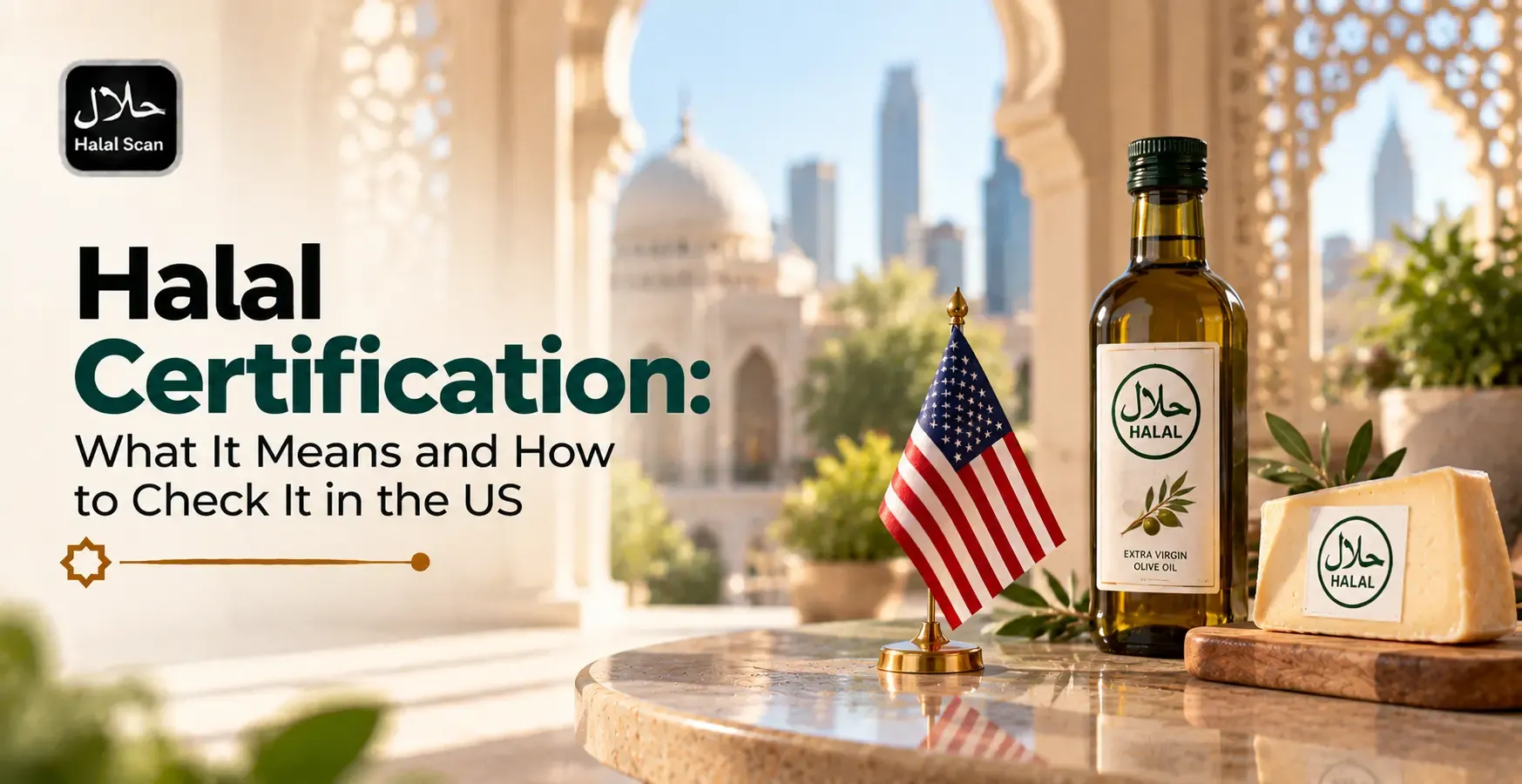
Halal certification means an independent Islamic organization has audited a product, factory or restaurant and confirmed it meets a written halal standard. In the US, no federal agency defines halal. Private certifiers do. So a halal logo is only as strong as the certifier behind it.
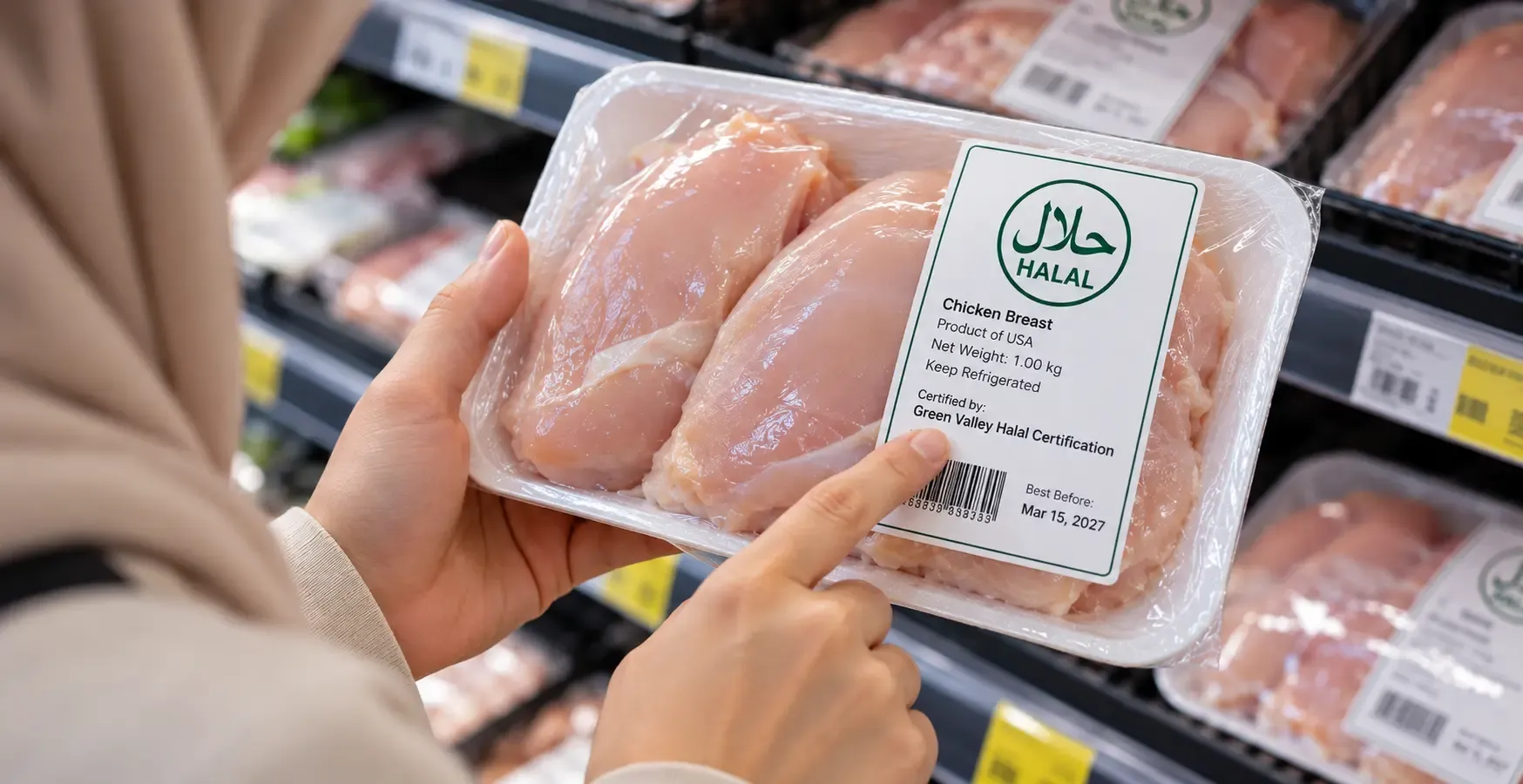
That last part is where most shoppers get stuck. You pick up a pack of chicken in a suburban grocery store. It says "halal" in green letters. There's no logo and no certifier's name. Is that enough?
For a lot of Muslim families in the US, it isn't. Pew Research Center estimated about 3.45 million Muslims lived in the US in 2017, growing by roughly 100,000 a year. Many shop in stores where halal food is on a small shelf, not the norm.
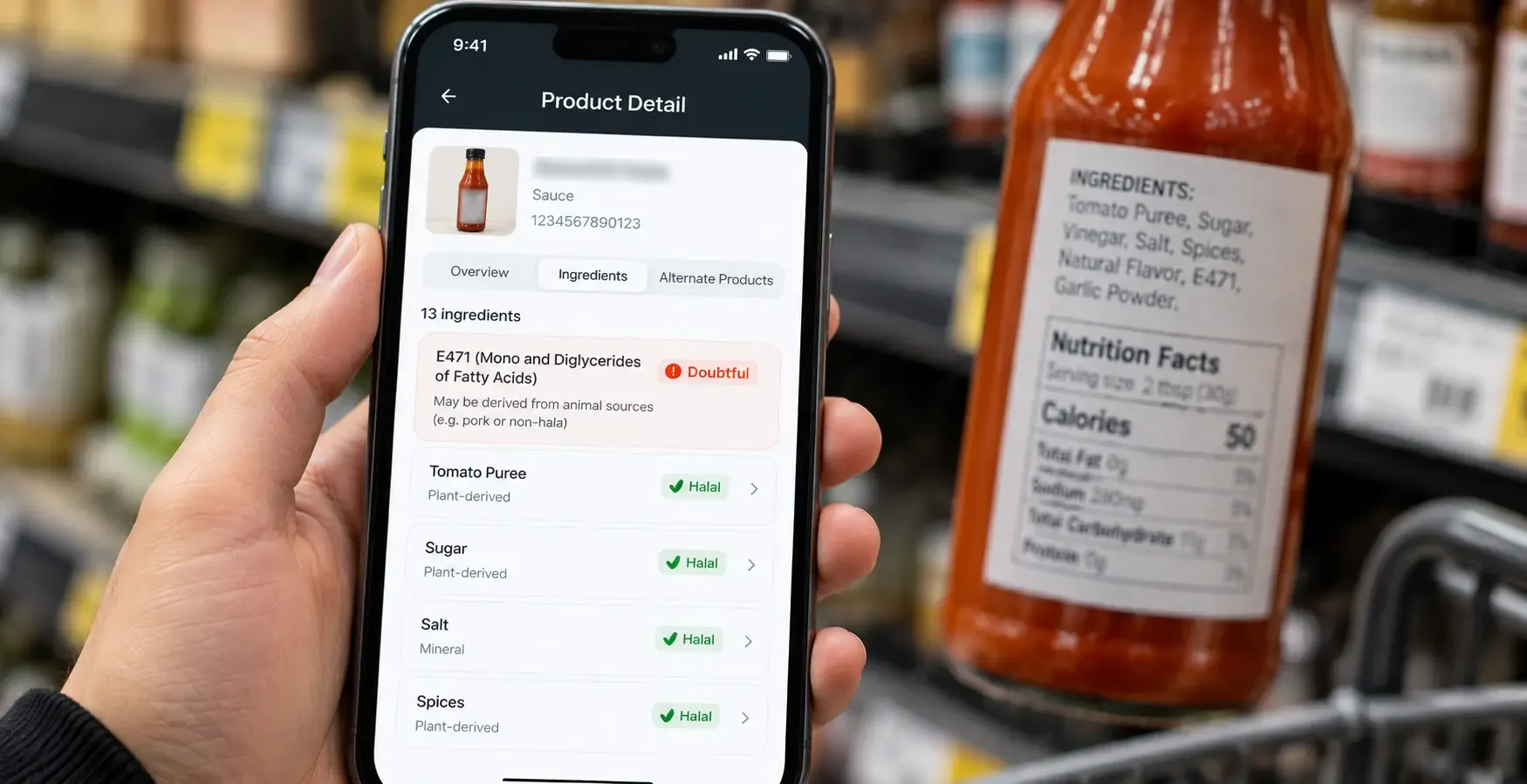
For packaged food with no clear logo, you can scan the barcode in Halal Scanner and see whether the ingredients come back Halal, Doubtful or Non-Halal. It's free to download, with premium features available by subscription.
What does a halal certifier actually check?
A certifier checks three things: what goes into the product, how it's made, and, for meat, how the animal was slaughtered. The goal is to make sure nothing haram enters the product at any stage.
In practice, an audit usually covers:
- Ingredients and their sources. Gelatine, enzymes, emulsifiers like E471 and flavor carriers can come from plant or animal sources. The label rarely says which.
- Production lines. Shared equipment has to be cleaned between halal and non-halal runs, with records to prove it.
- Slaughter. Who slaughters, how, and whether the tasmiyah (saying Allah's name) is recited.
- Paperwork. Supplier certificates and process flowcharts, so the certifier can trace each input.
The Islamic Food and Nutrition Council of America (IFANCA), founded in 1982, describes a five-step process. It runs from application through technical review to an on-site audit and a final committee decision. Its audit team pairs a technical auditor with an Islamic affairs expert.
Certificates also expire. Under RINA's halal scheme, for example, certified companies face annual reviews and full recertification every three years. A certificate dated two years ago tells you little about today.
Who issues halal certification in the USA?
Private Islamic organizations issue halal certification in the US, not the government. The USDA's Food Safety and Inspection Service inspects meat for safety, but it doesn't define what counts as halal.
Shoppers have pushed for more. Back in 2011, a group petitioned FSIS to make halal and zabiha meat labels state whether animals were hand or machine slaughtered.
So the certifier is your main safeguard. Here are some of the bodies US shoppers see most often:
Certifier | Known for | Typical scope |
|---|---|---|
IFANCA | One of the oldest US certifiers (since 1982) | Food ingredients, packaged products, supplements |
Islamic Services of America (ISA) | Over 50 years in halal auditing | Meat, ingredients, export products |
Halal Food Standards Alliance of America (HFSAA) | Strict zabiha: hand slaughter, no stunning | Restaurants, meat and poultry suppliers |
Halal Monitoring Services (HMS) | Monitoring hand-slaughtered zabiha meat | Meat shops, restaurants, suppliers |
American Halal Foundation (AHF) | Manufacturer and export certification | Food, cosmetics, ingredients |
This table is a starting point, not an endorsement. Scope and standards change, so check each body's current list of certified companies.
Halal certification vs. halal accreditation
These two words get mixed up. Certification is when a certifier approves a product or business. Accreditation is when a higher body approves the certifier itself.
IFANCA, for instance, has been accredited by ANAB against the OIC/SMIIC 2 guideline for halal certification bodies. Importing countries such as Malaysia and Indonesia also keep their own lists of foreign certifiers they recognize.
Is halal certified meat always zabiha?
No. Zabiha refers to the slaughter itself. A halal label tells you a certifier approved the product under its own standard. That standard may or may not require zabiha.
The main differences between certifiers come down to two questions:
- Stunning. Some certifiers accept stunning before slaughter if the animal is still alive when cut. Others, such as HFSAA, require no stunning at all.
- Machine slaughter of poultry. Some accept mechanical blades with the tasmiyah recited. Others require each bird to be cut by hand.
Scholars also differ on whether meat slaughtered by Christians or Jews (People of the Book) qualifies. None of these views is "the" Muslim position. Know which standard you follow, ideally with your local scholar. Then pick certifiers that match it. Islamic Services of America gives a clear breakdown of halal vs. zabiha labeling.
Do US states protect halal shoppers?
Some do, but only on honesty, not definition. New Jersey passed the first state halal law in 2000. Under its Halal Food Consumer Protection Act, the state doesn't decide what halal means. It requires sellers to disclose what their halal claim is based on and then live up to it.
Minnesota, Illinois and New York have their own halal rules too. New York, for instance, collects registration forms from halal certifiers. If your state has no halal law, general food-fraud and consumer-protection laws may still apply.
Checking a restaurant's halal certification
For restaurants, ask what the certificate actually covers. A certificate for the chicken doesn't cover the beef, the sauces or a shared fryer. Look for the certifier's name on the wall certificate, then confirm the restaurant on that certifier's website. Our guide to food truck halal checks walks through the same questions for street food.
Run a restaurant or food brand yourself? See how to partner with Halal Scanner.
How to check a halal certificate yourself
You don't need an app for the basics. These checks work anywhere:
- Find a name. A logo with no certifier name is a red flag. Treat it as unverified.
- Look the certifier up. Most publish a list of certified companies or products on their own site.
- Check the dates. An expired certificate gives no current assurance.
- Check the scope. Does it cover this product, this plant, or only one ingredient?
- Match the standard. If you only eat hand-slaughtered meat, confirm the certifier requires it.
How to check packaged food with Halal Scanner
Certifiers mostly cover meat and big brands. Most of your cart is snacks, sauces and bread with no logo at all. That's where a scan helps.
- Download Halal Scanner from the App Store or Google Play.
- Scan the barcode with your phone camera. No barcode? Type the product name into the search instead.
- Read the result: Halal, Doubtful or Non-Halal, with the ingredients that shaped it.
- Handle Doubtful results. Doubtful (mashbooh) means an ingredient, such as E471 or gelatine, can come from halal or non-halal sources. Check the maker's certificate or skip it, depending on your standard.
- Save it to a shared list so everyone in your home shops from the same checked items.
Halal Scanner isn't a certifier and doesn't replace one. It checks ingredients against verified halal data, so you can decide faster.
The scan takes less time than reading the label. Tap the App Store or Google Play badge to download it free.
Why shoppers use Halal Scanner
- 1M+ product records
- 100K+ scans every day
- 500K+ users
- 50+ countries covered
Figures from Halal Scanner, October 2026.
The bottom line
Halal certification is only as good as the body behind it. Look for a named certifier, check the dates and scope, and match the standard to your own. For everything without a logo, download Halal Scanner free and scan before it lands in your cart.