

You manage a retail grocery or a packaged food brand. You know meat carries the absolute highest risk on your shelves. When a Muslim shopper picks up your store-brand chicken sausages or frozen beef strips, they look straight past the price tag and the marketing copy. They are looking for total certainty.
Standing between you and that consumer trust is a massive global supply chain. If your wholesale halal poultry supplier cuts corners on their audit trail, or if a distributor mixes up pallets in a cold-storage warehouse, your customers will eventually figure it out. In the halal food sector, a single mistake does not just cause a product return; it can trigger a community-wide boycott that permanently damages your store's reputation.
A true halal meat manufacturer is a processing facility that slaughters, processes, and packages meat strictly according to Islamic dietary laws (zabiha). These plants maintain total separation from non-halal items and pass continuous, unannounced audits by recognized certification bodies. They exist to legally and ethically supply halal retail markets.
For food businesses, mastering this supply chain goes far beyond basic regulatory compliance. It protects your brand from the severe financial hit of a "Non-Halal" or "Doubtful" classification when a shopper stands in your aisle holding their phone.
What Certifications Should Halal Food Distributors Hold?
Sourcing from reliable halal food distributors takes far more than reading a vendor's sales brochure. A basic "halal" stamp printed by a local farm means almost nothing to a consumer packing their weekly shop in a major city. They know that without oversight, a stamp is just ink.
Global consumers look for independent, third-party verification. Depending on where your stores operate, your wholesale distributor should hold active, current certificates from organizations like JAKIM in Malaysia, IFANCA across North America, the Halal Food Authority (HFA) in the UK, or ISNA Halal Certification.
These groups do not just review paperwork. They conduct rigorous physical facility audits. They verify humane animal treatment, ensure hand-slaughter by a practicing Muslim, and confirm the facility is completely isolated from pork or alcohol.
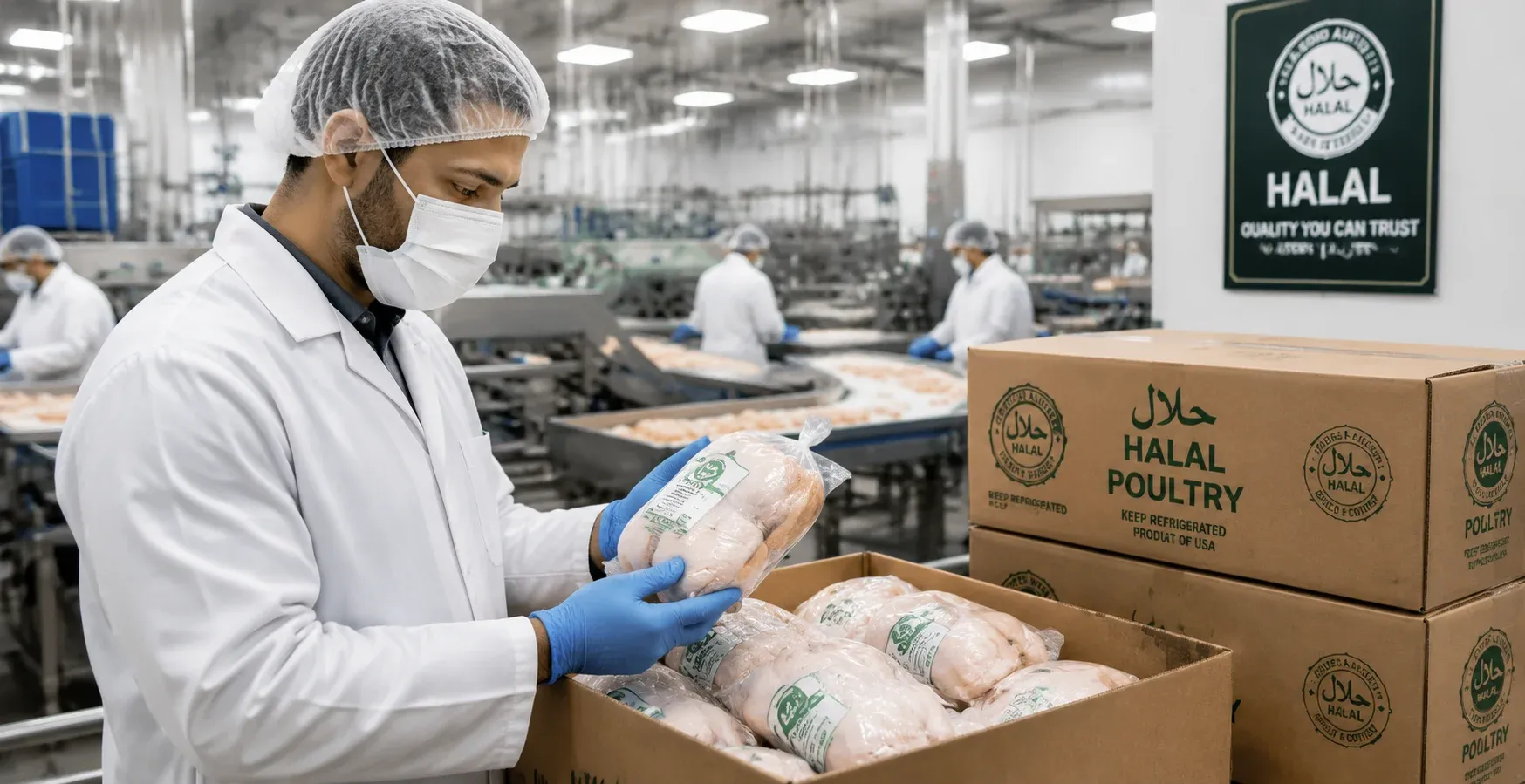
More importantly, certification is not universal. A distributor exporting beef from Brazil to the UAE must meet different governmental standards than a supplier shipping to local butchers in London. Ask your supplier for batch-specific certification tied directly to the shipment you receive. Food businesses that prioritize this level of aggressive transparency rarely struggle to build a fiercely loyal Muslim customer base.
Your customers are already checking your supply chain. See your products exactly how they see them—Halal Scanner is free to download, with premium via subscription on iOS and Android.
Machine vs. Hand Slaughter: Knowing Your Market
Before you sign a contract for wholesale halal poultry, you need to understand the community you serve. The Muslim consumer base is not a monolith, and scholars differ on certain industrial practices.
The biggest dividing line in meat production is the slaughter method. Some regional certification bodies accept mechanical slaughter, where a machine blade cuts the poultry while a recorded or single spoken blessing covers the entire batch. Other scholars and certification bodies strictly demand hand-slaughter, requiring a practicing Muslim to manually process and bless every individual bird.
If you operate in a market where consumers strictly follow a hand-slaughter standard, buying mechanically slaughtered chicken—even if it carries a certification logo from a more permissive body—will cause friction. Your customers read the fine print. Knowing the specific zabiha standards your target demographic expects is just as critical as negotiating the wholesale price.
How Sourcing Impacts Halal Meat Wholesale Prices
Retailers frequently experience sticker shock when comparing conventional meat to certified halal options. Halal meat wholesale prices shift dramatically based on audit strictness, supply chain isolation, and the method of slaughter.
Understanding these variables helps you price your retail goods accurately and clearly explain the value to your buyers.
Pricing Variable | Impact on Wholesale Cost | Sourcing Reality |
|---|---|---|
Slaughter Method | Higher (Hand) vs. Lower (Machine) | Hand-slaughtered zabiha requires highly skilled manual labor and slower production line speeds, raising the baseline cost of wholesale chicken. |
Audit Frequency | High | Facilities audited quarterly by top-tier bodies pass their heavy compliance and travel costs down the supply chain. |
Supply Chain Isolation | Medium to High | Dedicated halal-only facilities cost significantly more to operate than mixed plants that simply pause production to wash down equipment for a halal run. |
When you pay a premium for verified halal meat manufacturers, you are buying consumer confidence. Trying to undercut the broader market with cheap, unverified suppliers usually results in products that fail consumer verification checks at the retail level. In the halal market, cheap meat is almost always expensive in the long run.
Secondary Processing: How "Halal" Meat Becomes "Doubtful"
Here is the exact trap many retailers fall into. You buy premium, perfectly sourced beef from an excellent distributor. You confirm the certificates. But what happens during secondary processing?
When raw meat becomes deli slices, sausages, or marinated ready-to-eat meals, new ingredients enter the mix. Even if the baseline meat is completely acceptable, the final packaged item can easily trigger a Doubtful (mashbooh) or Non-Halal flag if the manufacturer fails to vet the additives.
Common Meat Additive | Typical Function | Halal Risk Classification |
|---|---|---|
Natural Casings | Sausage manufacturing | Doubtful: If the origin of the intestine is not specified as halal-certified sheep or beef, it may be from pork. |
L-cysteine (E920) | Dough conditioner (often in meat pies) | Doubtful / Non-Halal: Frequently derived from poultry feathers or human hair. Requires strict certification to prove synthetic origin. |
E120 (Carmine) | Red food coloring in marinades | Doubtful / Non-Halal: Derived from crushed insects. Scholars differ, but many consumers actively avoid it. |
E471 | Emulsifier in meat glazes | Doubtful: Can be derived from plant or animal fats. Without certification, the origin is unknown. |
Cross-contamination is another massive risk. If a manufacturer processes halal beef patties on the same equipment used for non-halal meats without a verified, audited cleaning protocol, the resulting product is compromised.
If you run a food brand, you can check specific E-numbers and flavorings manually, or you can search the ingredients directly in the Halal Scanner database to see how they are classified across 50+ countries.
How Your Customers Use Halal Scanner to Verify Your Products
Today’s halal-conscious shopper completely ignores flashy packaging and marketing claims. They cross-reference your ingredient list against global databases right in the grocery aisle.
Here is exactly how a customer verifies your retail meat products before putting them in their cart:
- They scan the barcode: Using their phone camera, they scan the barcode on your packaged meat or frozen meal.
- The database cross-references: The system instantly checks the barcode and ingredient list against verified halal data sources.
- They read the three-state result: They see a clear Halal, Doubtful, or Non-Halal classification on their screen.
- They share the result: If the product clears the check, they instantly add it to a shared halal list so their spouse or family member can buy it confidently on the next grocery run.
If your new supplier uses a marinade containing unverified E471, the system flags it as Doubtful. For a practicing Muslim, a Doubtful result means the product goes straight back on the shelf. They will not risk their deen for a quick meal.
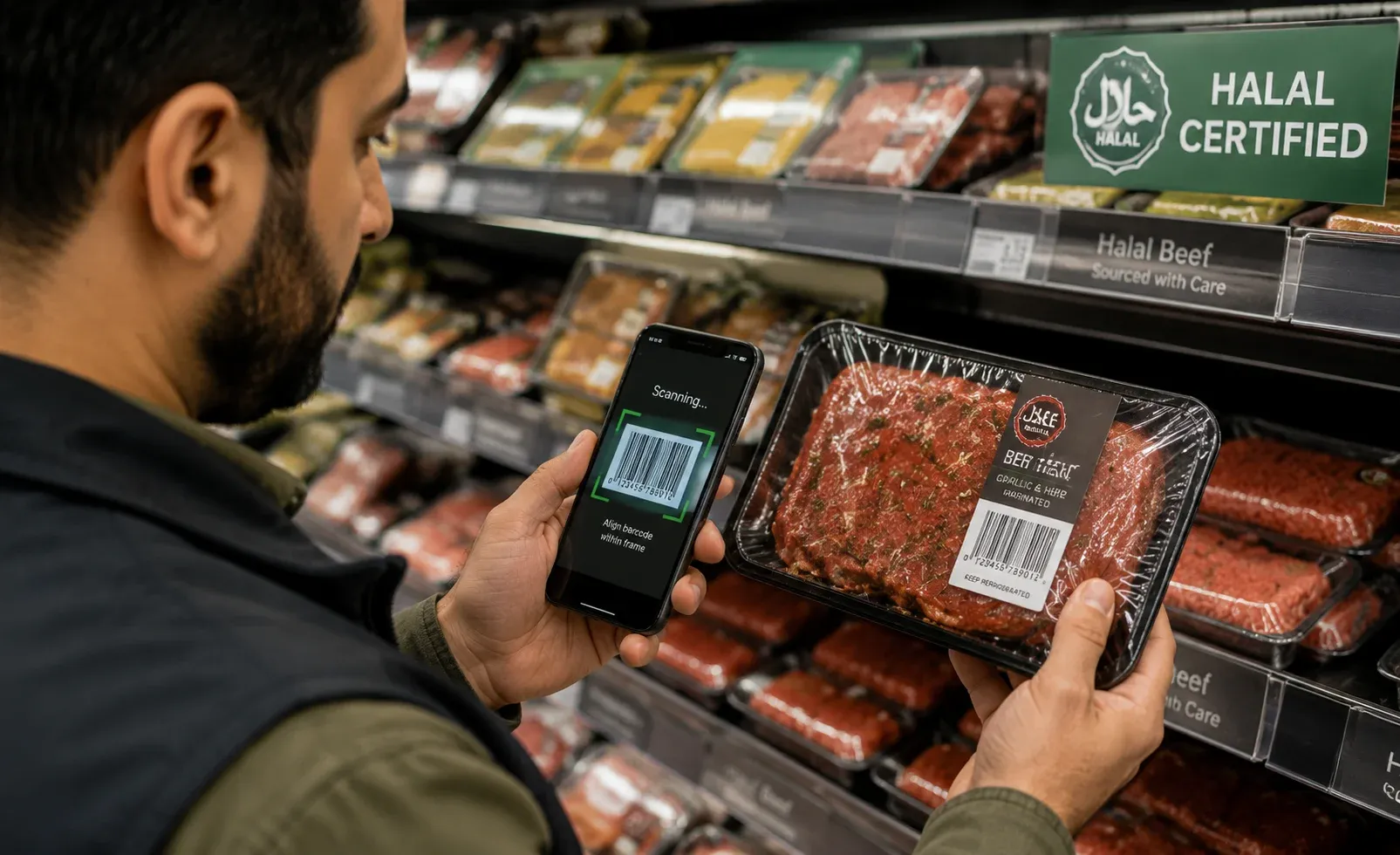
Test your own retail inventory right now, before you finalize a contract with a new distributor. Halal Scanner is free to download, with premium via subscription on the App Store and Google Play.
Partnering for Supply Chain Transparency
Building trust takes years of consistent effort; losing it happens in a single grocery run. Halal Scanner’s database holds over 1 million verified products, handling more than 100,000 daily scans from shoppers who care deeply about what they feed their families.
With over 500,000 trusted users checking labels every single day, transparency is no longer optional—it is your strongest competitive advantage. If you operate as a certified halal meat manufacturer, a food brand, or a retailer, you can bridge this gap directly and prove your standards to the market.
Explore the Partner With Us program to make sure your certified products are represented accurately to the global Muslim consumer base. Stop guessing what your customers want, and start showing them exactly what you deliver.