

You’re standing in the supermarket aisle holding a packet of frozen chicken sausages. The front packaging looks great. The ingredient list on the back tells a different story. You spot beef casing, mechanical separation processes, and an E-number you vaguely remember hearing about.
It leaves you with a familiar sinking feeling. Knowing the rules of halal meat is one thing. Figuring out if those rules were actually followed by the time the product reaches a plastic tray in your local store is entirely different.
If you are going to protect your family from doubtful ingredients, you need to know exactly what halal meat production looks like in the modern era—and how to spot the hidden red flags in packaged foods.
What is halal meat production? Halal meat production requires animals to be raised ethically, fed a clean diet, and slaughtered according to Islamic law (zabiha). A trained Muslim must perform a swift, humane cut to the jugular vein while invoking the name of Allah (tasmiyah), followed by a complete draining of blood.
Here is exactly how the process works, what the science says about animal welfare, and how to verify the meat products in your weekly shop.
What is Halal Meat, Really?
At its core, halal meat is about permission and purity. Halal simply means "permissible" in Arabic. But when applied to meat, it goes hand-in-hand with another Quranic concept: tayyib, meaning wholesome, pure, and good.
For a piece of meat to end up on your plate, it has to pass strict criteria long before the actual slaughter. The animal must be from a permissible species (like sheep, cattle, goats, or poultry). It must be alive and healthy right up until the moment of slaughter.
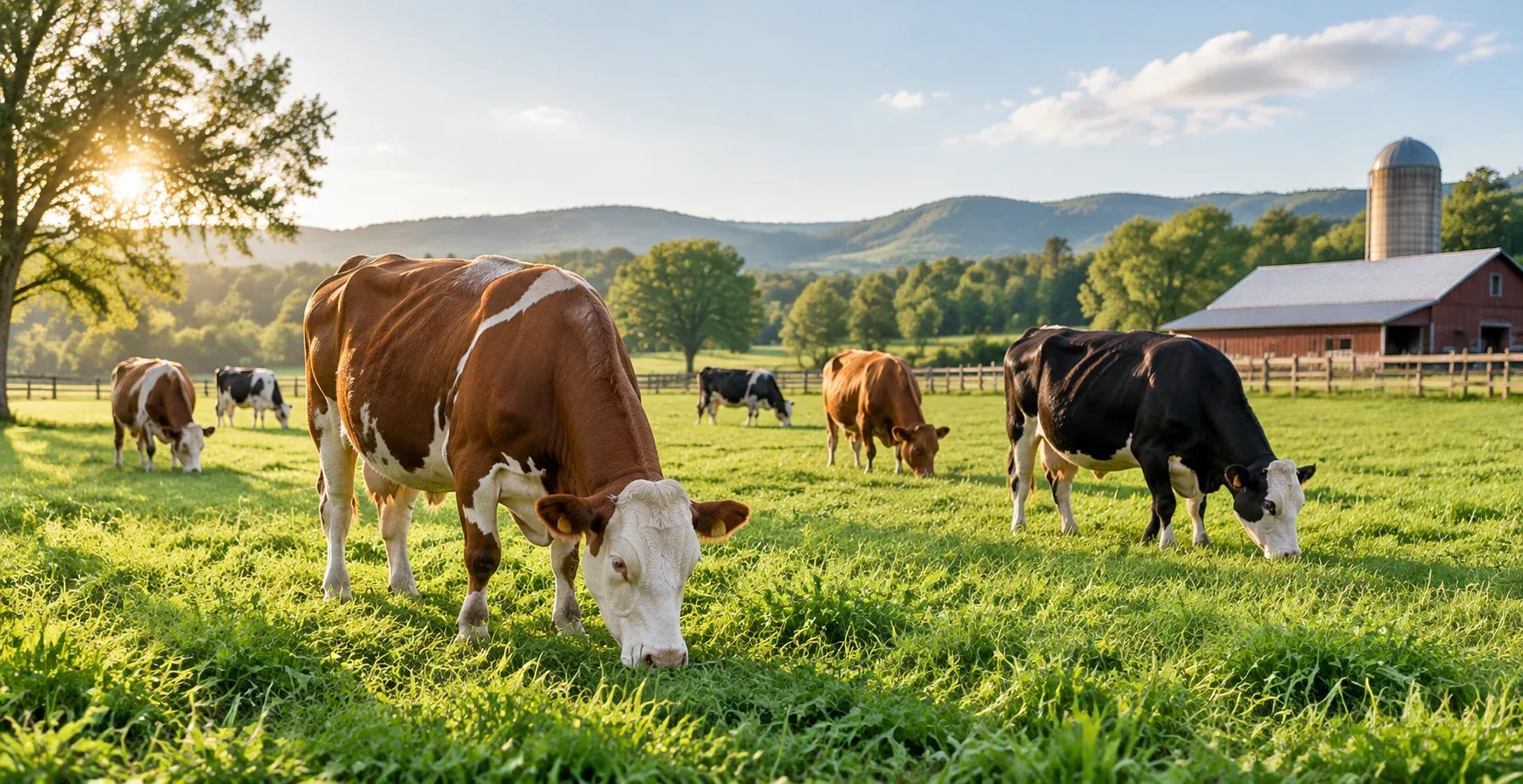
Its diet matters too. If an animal is fed impurities or animal by-products, it falls into a doubtful category known as jalalah. Modern halal meat production standards heavily emphasize the farm-level care of the livestock. A cow kept in abusive conditions or fed contaminated feed violates the principle of tayyib, drawing scrutiny from strict halal certification bodies.
How is Halal Meat Killed? (The Zabiha Process)
The actual slaughter process is called zabiha or dhabihah. It is a highly specific, regulated action designed to respect the animal's life and minimize suffering.
The rules are non-negotiable for practicing Muslims:
- The slaughterman: Must be a sane, practicing Muslim who understands the gravity of taking a life for sustenance.
- The intention (Tasmiyah): The slaughterman must verbally pronounce the name of Allah (usually by saying Bismillah, Allahu Akbar) over the animal. This acknowledges that the animal's life is sacred and is only taken by divine permission.
- The instrument: The knife must be surgically sharp. It cannot have nicks or blemishes.
- The cut: A single, continuous swipe must sever the trachea (windpipe), esophagus, and both jugular veins and carotid arteries, all while leaving the spinal cord intact.
- The bleeding: All flowing blood must be completely drained from the carcass, as consuming flowing blood is strictly prohibited in Islam.
When you buy raw steaks from a local Muslim butcher, this is the process you expect. But what happens in a factory processing thousands of chickens an hour?
The Reality of Industrial Halal Production
Scaling zabiha to feed millions of people requires massive infrastructure. Industrial halal production relies on specialized abattoirs that process meat on a massive scale.
This introduces heavy debate around mechanical slaughter. Some certifying bodies allow a rotary blade to cut the chickens while a Muslim recites the tasmiyah over the batch. Others outright reject mechanical slaughter, insisting on hand-slaughter for every single bird.
Organizations like the Pakistan Halal Authority (PHA) set stringent national benchmarks for these facilities, ensuring that even at an industrial scale, the religious requirements aren't compromised by the speed of the assembly line.
Is Halal Meat Cruel?
This is a question Muslims frequently face, particularly in Western countries. The sight of the zabiha process can be confronting to people used to buying meat on styrofoam trays. But animal welfare is quite literally baked into Islamic law.
The Prophet Muhammad (peace be upon him) laid down strict welfare protocols centuries before modern animal rights movements existed. A slaughterman is forbidden from sharpening his blade in front of the animal. An animal cannot be slaughtered in front of another animal. They must be offered water before the slaughter.
Modern scientific research backs up the efficacy of these methods. Studies exploring the ethics and science of meat processing, such as those published in academic journals via ScienceDirect, often examine the neurological impact of the halal neck cut. A swift, deep incision severs the blood supply to the brain almost instantly, causing a rapid loss of consciousness.
The Stunning Debate
The biggest controversy in modern halal production is stunning—using an electric shock or captive bolt to render the animal unconscious before the cut.
Some European countries mandate stunning by law. Many Islamic scholars reject it entirely, arguing it risks killing the animal before the knife even touches it (which renders the meat haram). Other halal foundations and certifiers accept "reversible stunning" (usually electrical water-bath stunning for poultry), provided the animal would fully recover if the slaughter didn't happen.
Because opinions vary, this is why knowing your certifying body is so critical. A logo from a strict hand-slaughter certifier means something very different from a more permissive authority.
What is Non Halal Meat?
Understanding what falls outside the bounds of halal is just as important. Meat becomes non-halal (haram) if it meets any of the following conditions:
- Pork and Swine: Pigs and all their derivatives are strictly forbidden.
- Carrion: Any animal that dies of natural causes, disease, or blunt force trauma before it can be properly slaughtered.
- Improper Invocation: Meat over which a name other than Allah's was pronounced at the time of slaughter.
- Predators: Animals with fangs (lions, tigers, wolves) and birds of prey with talons (falcons, eagles).
- Blood: Flowing liquid blood is haram, which is why the draining process during zabiha is so crucial.
The Hidden Danger: Processed Meats and Cross-Contamination
If you live in a Muslim-majority country, navigating the meat aisle is relatively straightforward. Reports examining the status and prospects of halal meat in Pakistan or broad analyses of the Pakistan Halal Meat Industry highlight a supply chain entirely built around Islamic compliance. Local producers like Hilal Meat Processing operate in an environment where the baseline is halal.
But for Muslim minorities, or anyone buying imported packaged foods, things get complicated.
A frozen pizza might feature "vegetable toppings," but what kind of animal fat was used in the dough? A bag of gummy candies might look innocent, but the gelatine could be derived from pork bones or non-zabiha cattle. Even European perspectives on halal sourcing emphasize that origin and traceability are decisive factors for consumer trust.
Cross-contamination is a massive issue. If a factory processes halal beef sausages on the exact same equipment used for pork sausages earlier that day, the halal integrity is compromised. This pushes these items into the category of mashbooh (Doubtful).
Rather than playing guessing games with complex supply chains, you need a way to filter out the noise instantly.
How to Check Packaged Meats With Halal Scanner
Raw meat requires you to trust your butcher. But for packaged, processed, and frozen items—where hidden animal derivatives lurk behind obscure E-numbers—you need hard data.
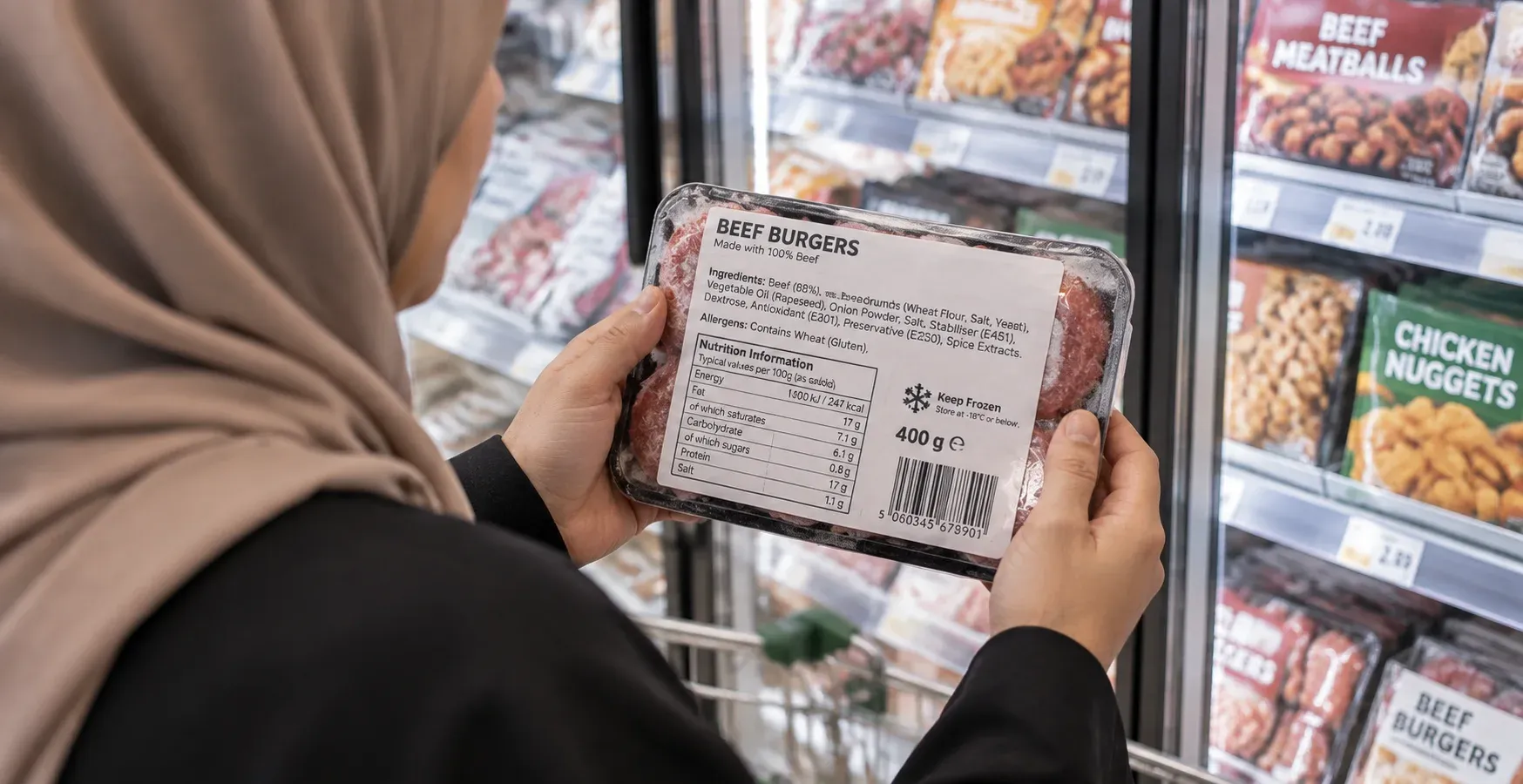
Halal Scanner removes the guesswork from the grocery aisle by cross-referencing ingredient labels against a massive, verified database.
Here is how to use it during your next shop:
- Open the app: Launch Halal Scanner on your phone while standing at the freezer or deli section.
- Scan the barcode: Point your camera at the packaged meat product (like beef patties, hot dogs, or frozen chicken nuggets).
- Read the result: In seconds, the app gives you a clear classification: Halal, Doubtful, or Non-Halal.
- Investigate Doubtfuls: If a product flags as Doubtful, tap to see why. The app might highlight a specific ingredient, like an ambiguous casing or a flavor enhancer that lacks a clear plant or animal origin.
- Save and Share: Building a grocery list? Save safe products to a shared list so your spouse or roommate knows exactly which brand to buy later.
You shouldn't have to carry a magnifying glass and a chemistry degree to buy dinner.
Halal Scanner’s database covers over 1 million products across 50+ countries. The app is free to download with premium via subscription, allowing you to tailor your shopping experience to your family's exact standards.
100,000+ daily scans don't lie. Over 500,000 Muslims trust Halal Scanner to navigate tricky labels. The scan takes less time than reading the ingredients. Tap the App Store or Google Play badge below to get started.
Shop with Total Confidence
The journey from a farm to your local supermarket is long, complicated, and filled with industrial gray areas. While we can't control how factories operate, we have total control over what crosses the threshold of our homes.
Stop staring at confusing labels and second-guessing your purchases. Download Halal Scanner—free to download with premium via subscription—on iOS and Android, and bring peace of mind back to your kitchen.