


The short answer is no. Cooking liquor is not halal. When you add intoxicating alcohol to a recipe, the food becomes haram. Many chefs claim the alcohol burns off in the pan, but food science proves this is false. Up to 85% of the alcohol remains in the dish. If you are a Muslim shopper dealing with imported pasta sauces, marinades, or teriyaki glazes, you need to know how to spot hidden cooking liquor before it ends up on your family's table.
If you frequently buy imported pasta sauces, marinades, or teriyaki glazes, understanding how cooking liquor works is the first step to keeping your kitchen fully halal.
The "Burns Off" Myth
Chefs use cooking liquor to extract flavor compounds that do not dissolve in water or fat. You will often see wine deglazing a pan or liquor added to a dessert. The common advice is that the heat removes the intoxicant, leaving only the flavor.
This is factually incorrect.
The United States Department of Agriculture (USDA) conducted extensive nutrient retention studies on cooking with alcohol. Their data shows exactly how much alcohol remains based on the cooking method:
Cooking Method | Time | Alcohol Retained |
|---|---|---|
Added to boiling liquid & removed | Brief | 85% |
Flamed (Flambé) | Brief | 75% |
Baked or simmered | 15 minutes | 40% |
Baked or simmered | 1 hour | 25% |
Baked or simmered | 2.5 hours | 5% |
Even after hours of simmering a stew, trace amounts of the original cooking liquor remain. The alcohol never fully burns off.
Alcohol in Cooking Islam: The Scholarly View
Because the alcohol remains, the Islamic ruling on cooking liquor is clear. Major certifying bodies including IFANCA and JAKIM state that adding intoxicating alcohol (khamr) to food renders the product non-halal.
There is a distinct difference in Islamic dietary jurisprudence between naturally occurring trace alcohols and intentionally added intoxicants. Ripe fruit naturally contains microscopic amounts of alcohol due to natural fermentation. Scholars broadly accept this. However, taking a known intoxicant like wine, rum, or sake and pouring it into a recipe is strictly forbidden across all major madhabs. The intent and the source matter.
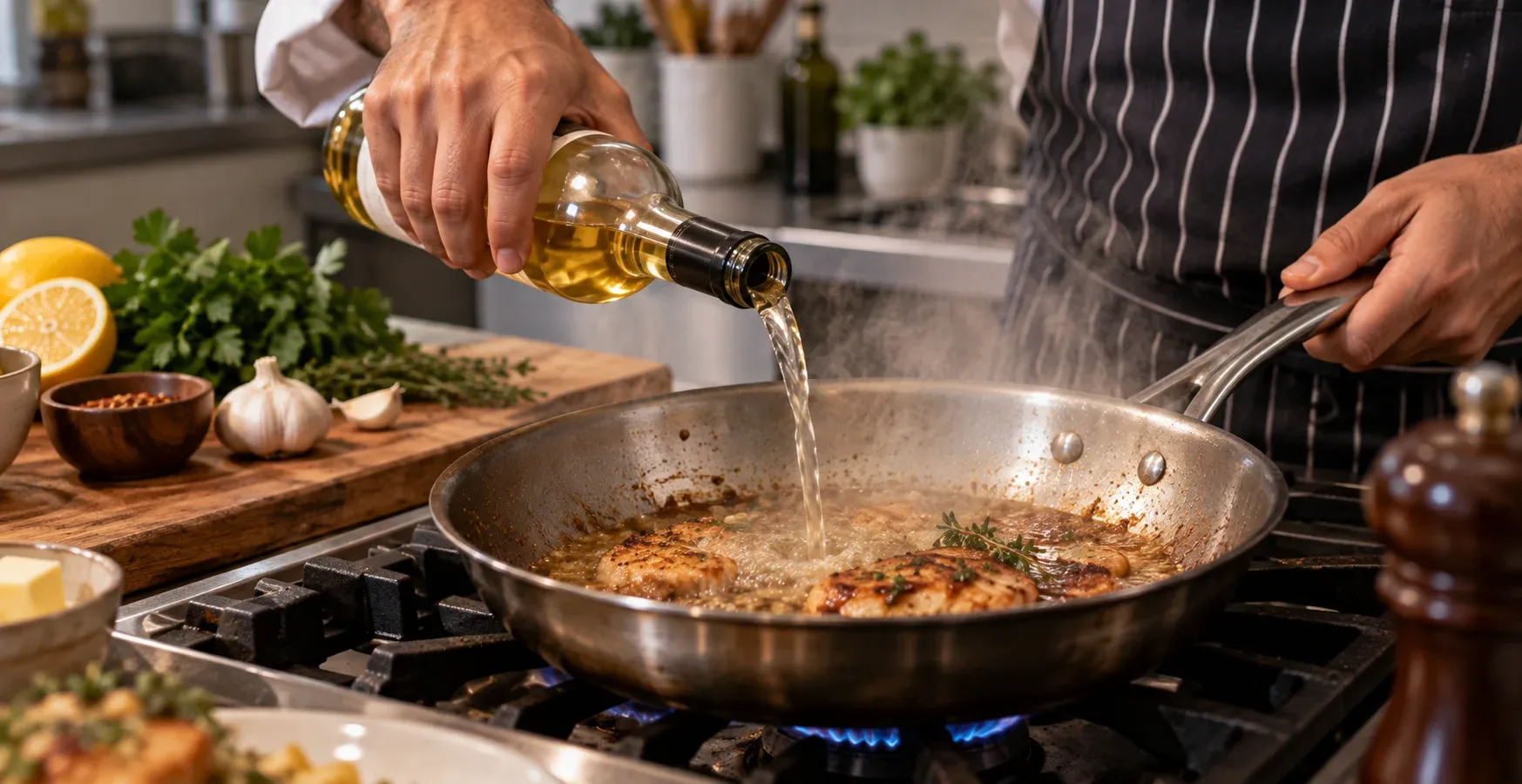
If a store-bought product lists white wine, cooking sherry, or mirin in the ingredients, the product falls into the non-halal category.
High Risk Packaged Foods
You rarely find bottles labeled "cooking liquor" outside of specialized culinary supply stores. Instead, the alcohol hides inside everyday packaged goods.
- Pasta Sauces: Traditional Italian sauces often use red or white wine.
- Asian Marinades: Teriyaki sauce and soy glazes frequently contain mirin or sake.
- Mustards: Authentic Dijon mustard is made with white wine instead of vinegar.
- Desserts: Vanilla extract uses alcohol as a solvent to extract the vanilla bean flavor.
Halal Substitutes for Cooking Liquor
You do not have to compromise on flavor to avoid cooking liquor. You can easily replicate the acidity and depth that alcohol brings to a recipe.
- Instead of White Wine: Use apple cider vinegar mixed with a little water or white grape juice.
- Instead of Red Wine: Use beef broth mixed with red wine vinegar or pomegranate juice.
- Instead of Mirin: Dissolve sugar into water or use a halal certified rice vinegar.
- Instead of Vanilla Extract: Buy alcohol-free vanilla flavoring or use whole vanilla beans.

How to Check Food Items With Halal Scanner
Memorizing the cooking liquor list is difficult when food manufacturers use obscure names for wine reductions and flavor extracts. You can check any packaged food instantly before it goes in your cart.
- Open the app: Launch Halal Scanner on your phone while in the grocery aisle.
- Scan the barcode: Point your camera at the sauce or marinade jar.
- Read the result: The database checks the ingredients and returns a clear Halal, Doubtful (Mashbooh), or Non-Halal classification.
- Save to a list: If the sauce is clean, save it to your shared family shopping list right in the app.
The scan takes less time than reading the label. Halal Scanner is free to download with premium via subscription on the App Store or Google Play.
The Verification Tool You Need
You cannot rely on the old myth that alcohol cooks out of food. With over 1 million verified products in the database and 100,000 daily scans across 50 countries, Halal Scanner does the ingredient research for you. Stop guessing in the pasta aisle.
Tap the App Store or Google Play badge below to get started.